
From super quirky, only-in-Japan experiences to must-see sights and the best food to try, we’ve rounded up the top things to do in Japan on your first visit. Plus we’ve go the perfect Japan itinerary to tie it all together!
Japan is a country with a perfect mix of quirky chaos and tranquil bliss. It’s the kind of place that’ll draw you in and keep you coming back for more.
We’ve been three times now, and every single visit has left us eager to plan the next one before we’ve even unpacked.
There’s just something about this country that keeps pulling us back. Whether it’s the food, the culture, the wild mix of ancient and ultramodern, or the fact that no matter how many times you visit, there’s always something new to discover.
Our favorite things to do in Japan
If we had to choose our very favorite things to do in Japan, this list would be it!
Whether you’re mapping out your first trip or you’re a repeat visitor like us looking for fresh ideas, this list has something for everyone.
Everything on this list comes from real, firsthand experience.
From the kind of quirky, only-in-Japan experiences you simply can’t have anywhere else to the sights and bites you’d genuinely regret missing, these are the things to do in Japan that we just can’t stop talking about.
Let’s jump right in…
Japan Travel Guide
For more tips and advice for planning your trip to Japan, jump to the following sections (or just keep scrolling to see it all!).
- More things to do
- How many days do you need
- Perfect Japan itinerary
- My experience
- More planning resources
Psst! Our 2-Week Classic Japan Itinerary brings all of this to life! Think 14 fully-planned days across Tokyo, Osaka, Hiroshima, and Kyoto with the specific spots, restaurants, and insider tips that make a trip truly unforgettable. See what’s inside our Japan Itinerary →
1. Hike the Kumano Kodo trail
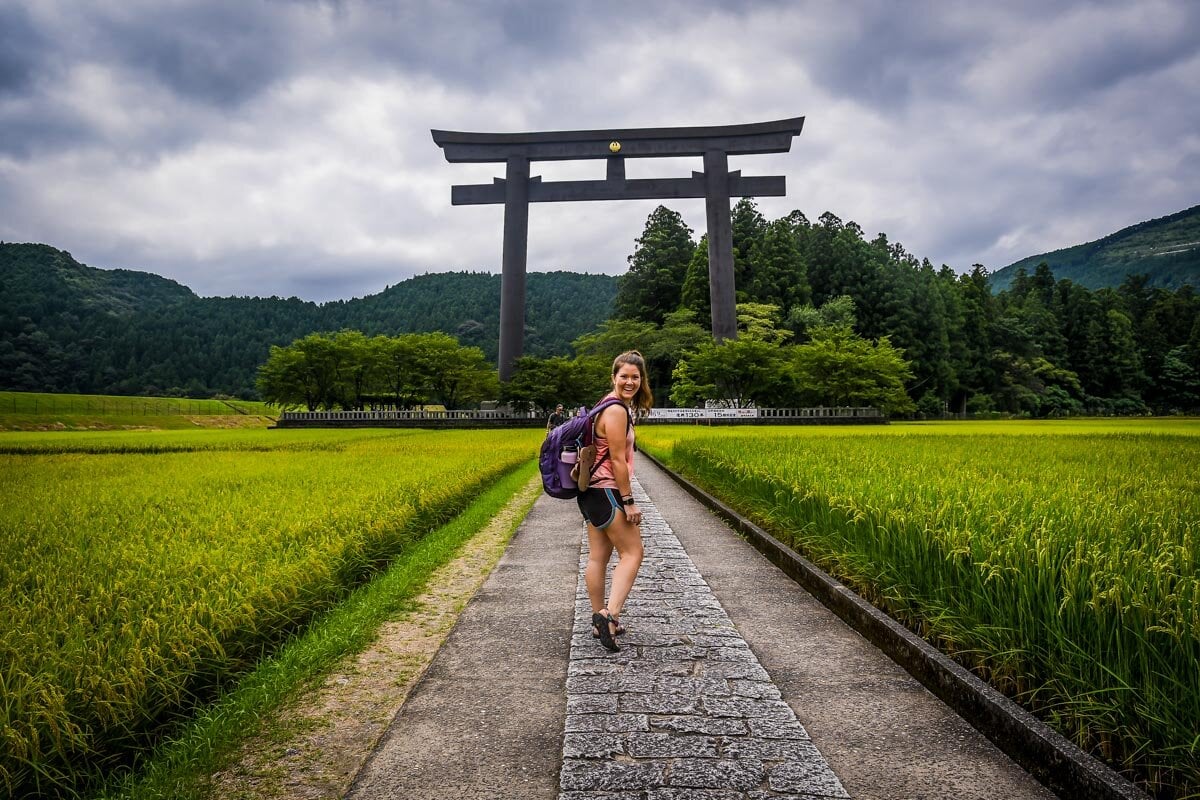
Yes, much of Japan is crowded. But there is also a huge portion of the country where you can find peace, tranquility, and yes, even solitude. If you love nature, hiking, and out-of-the-ordinary experiences, this is JUST the thing to put on your radar.
The Kumano Kodo, sister trail to the Camino de Santiago in Spain, is an ancient pilgrimage trail that weaves through remote mountains and tiny villages, in which you can stay at traditional guesthouses.
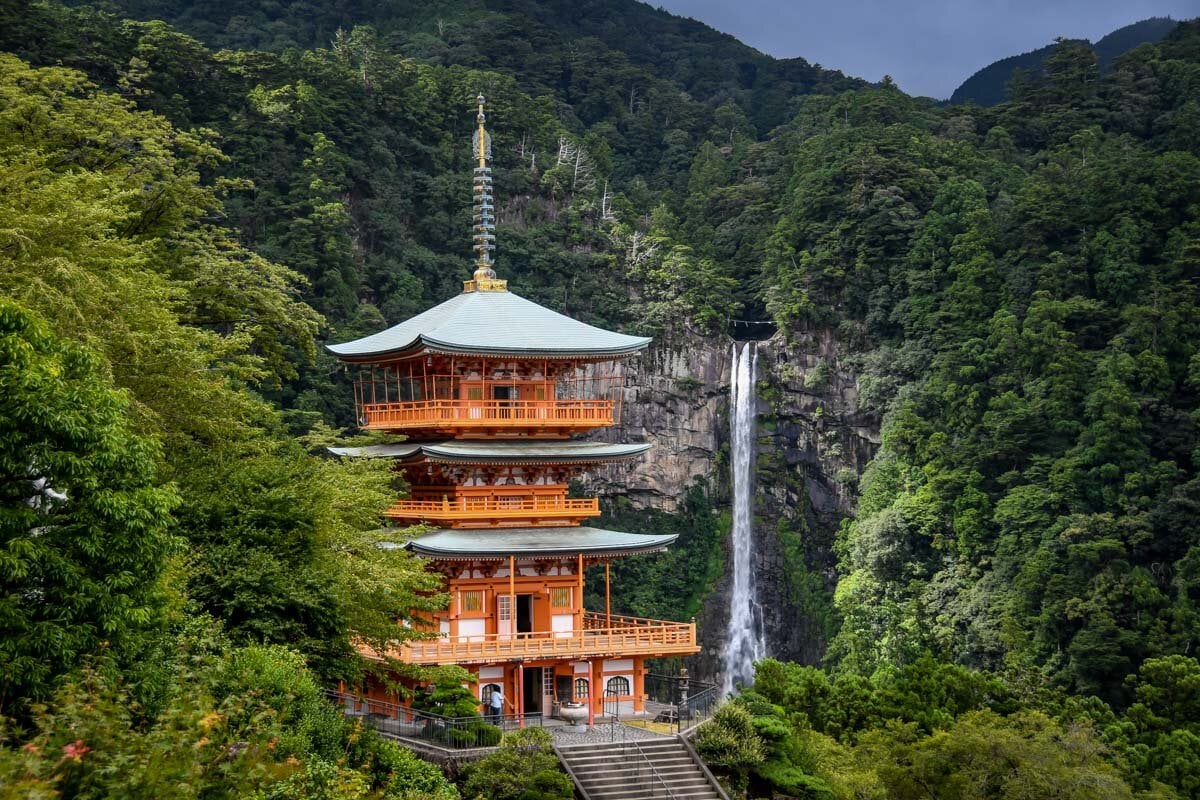
You can choose to hike anywhere from 2 to 6 days depending on your itinerary, with traditional guesthouses along the route. We have a feeling this one won’t stay under the radar for much longer, so add it to your Japan itinerary while it still feels like a secret.
We’ve got a full Kumano Kodo guide with everything you need to plan your trip.
2. Go Izakaya hopping
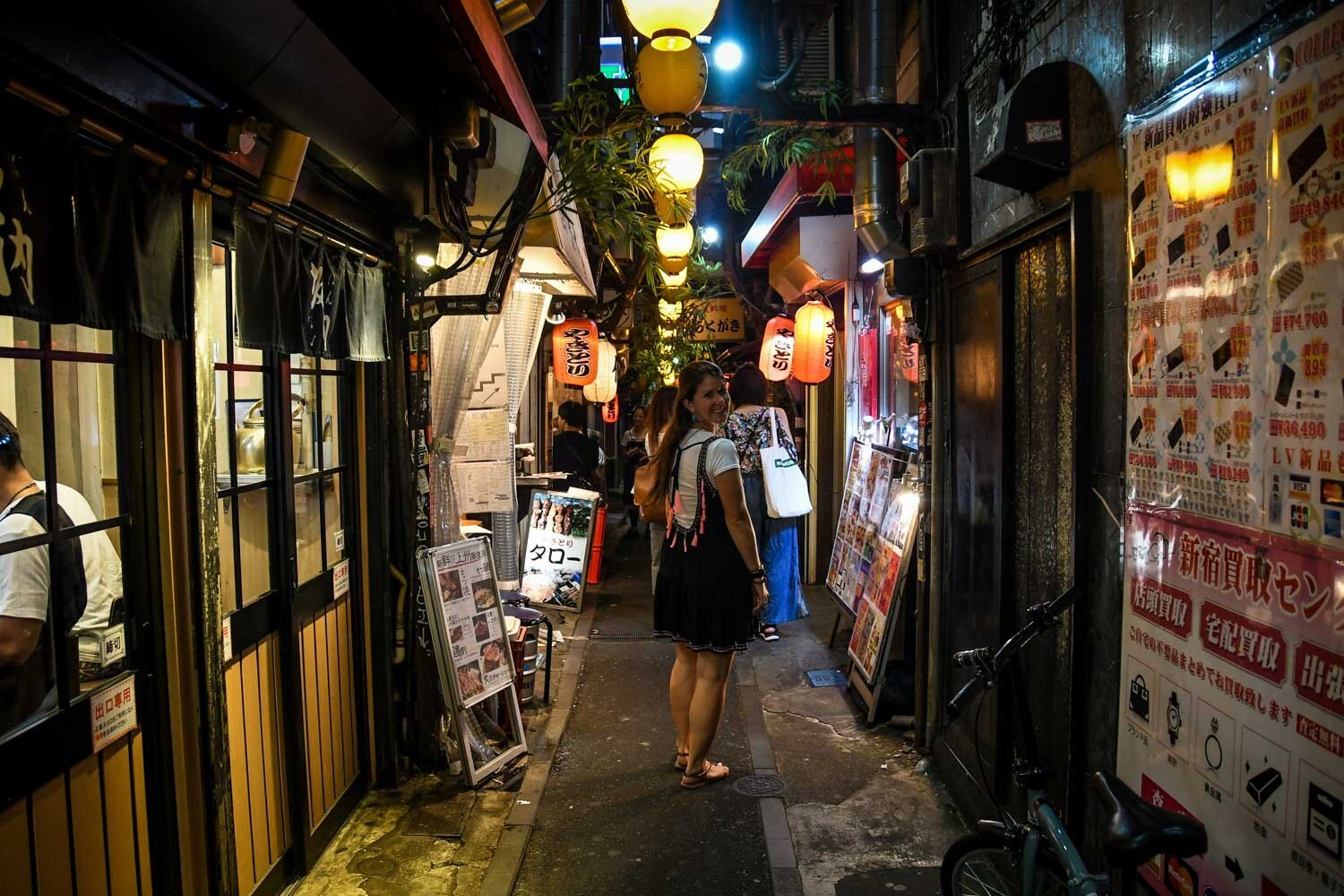
One of our favorite ways to feel like we’re experiencing local life is to pop into an izakaya (tiny, casual bar with food) and order a drink and some small plates.
Often times, izakayas only fit around 15 people, so it becomes as much about the atmosphere as it is about trying small dishes and drinks. We had some really cool izakaya experiences where we mingled with locals, tried dishes we wouldn’t have otherwise, and had an overall great evening.
You can find izakayas all around the country, but here are some famous areas to hop from one izakaya to another:
- Tokyo: Yakitori Alley, Memory Lane a.k.a. “Piss Alley”
- Osaka: streets just outside of Dotonbori, Shinsekai
Good to know: some izakayas charge a “cover fee”. Fees vary based on the place (we paid on average around 300 yen per person). They might bring a small (aka tiny!) little dish that is supposedly what you’re paying for (as well as your seat).
If you are hesitant about going to an izakaya on your own, Magical Trip offers tours where you can share the experience with a local and other travelers. Oh, and it is quite helpful to be with someone who speaks a bit of Japanese when ordering because many izakayas don’t have English menus.
Izakaya hopping tour
We personally did this tour in Tokyo and think it’s a great introduction to izakaya culture and makes it really approachable. We met other travelers on the tour and continued bar hopping after it was over!
- start time: 5pm, 6pm, or 7pm (we recommend 6 or 7pm)
- duration: 3.5 hours
- includes: 4 drinks, 3 local dishes (enough for dinner)
- price: $100 per person
3. Explore teamLab’s digital art installations
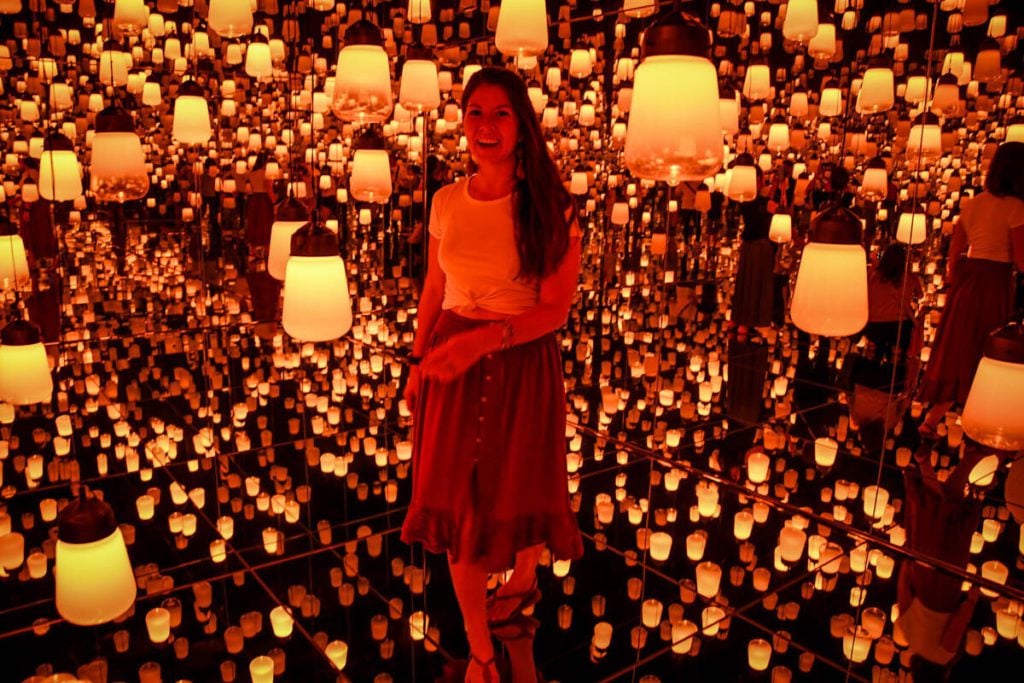
Lose yourself in an immersive art experience where you’re encouraged to kick off your shoes and connect with the installations, blurring the boundaries between art and reality.
The Tokyo-based art collective known as teamLab is famous for creating art installations that are unmatched.
In 2019, we visited teamLab Borderless. We loved it so much that when we planned to return to Tokyo in 2023, one of the first things we did was purchase tickets to teamLab PLANETS.
This uber-Instagrammable art experience features crystal “rain”, giant balls that change colors, koi fish that are projected onto water that you walk through, and live orchids that lower down from the ceiling… anyone else reminded of Willy Wonka?!
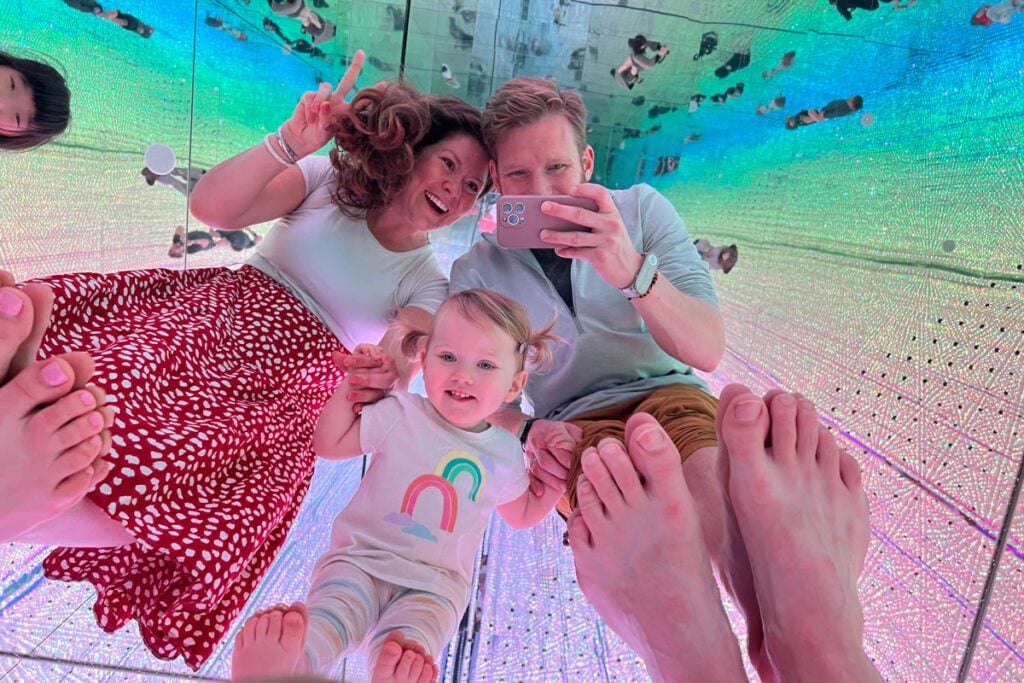
Psst! This is a fantastic experience to put on your itinerary for a family trip to Japan!
The experience is hard to sum up in words. So stop thinking about it and just book your tickets already! Speaking of which, this is definitely something you want to purchase in advance as they sell out every day.
Personal note: We’ve been to both installations in Tokyo, and while they’re both excellent, Borderless is bigger and our personal favorite of the two. If you can’t get tickets for your date and time at Borderless, you can swap it for Planets and it will still be a very cool experience!
teamLab locations in Japan
- teamLab Borderless Tokyo: The TeamLab Borderless Museum has reopened in it’s new location in Tokyo! [Get teamLab Borderless Tickets]
- teamLab PLANETS Tokyo: PLANETS will only be open until 2027, so add this to your Japan itinerary while you can. [Get teamLab Planets Tickets]
- teamLab Botanial Garden Osaka: Located at the Nagai Botanical Garden in Osaka. The project, called Digitized Nature, explores the concept of turning nature into art using non-material digital technology that won’t harm the plants. [Get teamLab Botanical Garden Tickets]
- teamLab Biovortex Kyoto: Japan’s newest and largest teamLab experience opened in Kyoto in October 2025, and it’s already on our list for the next trip. Featuring new and unreleased artworks that theme on the natural world. [Get teamLab Biovortex Tickets]
- teamLab Forest Fukuoka: A more playful, nature-themed teamLab experience split between a creature-catching digital forest you explore with your smartphone (think Pokemon Go) and an athletic maze of light-reactive installations you move through with your whole body. [Get teamLab Forest Tickets]
Important: One of our biggest pieces of advice is to purchase your tickets ahead of time. Tickets purchased at the door may cost an additional 200 yen.
4. Soak in an onsen
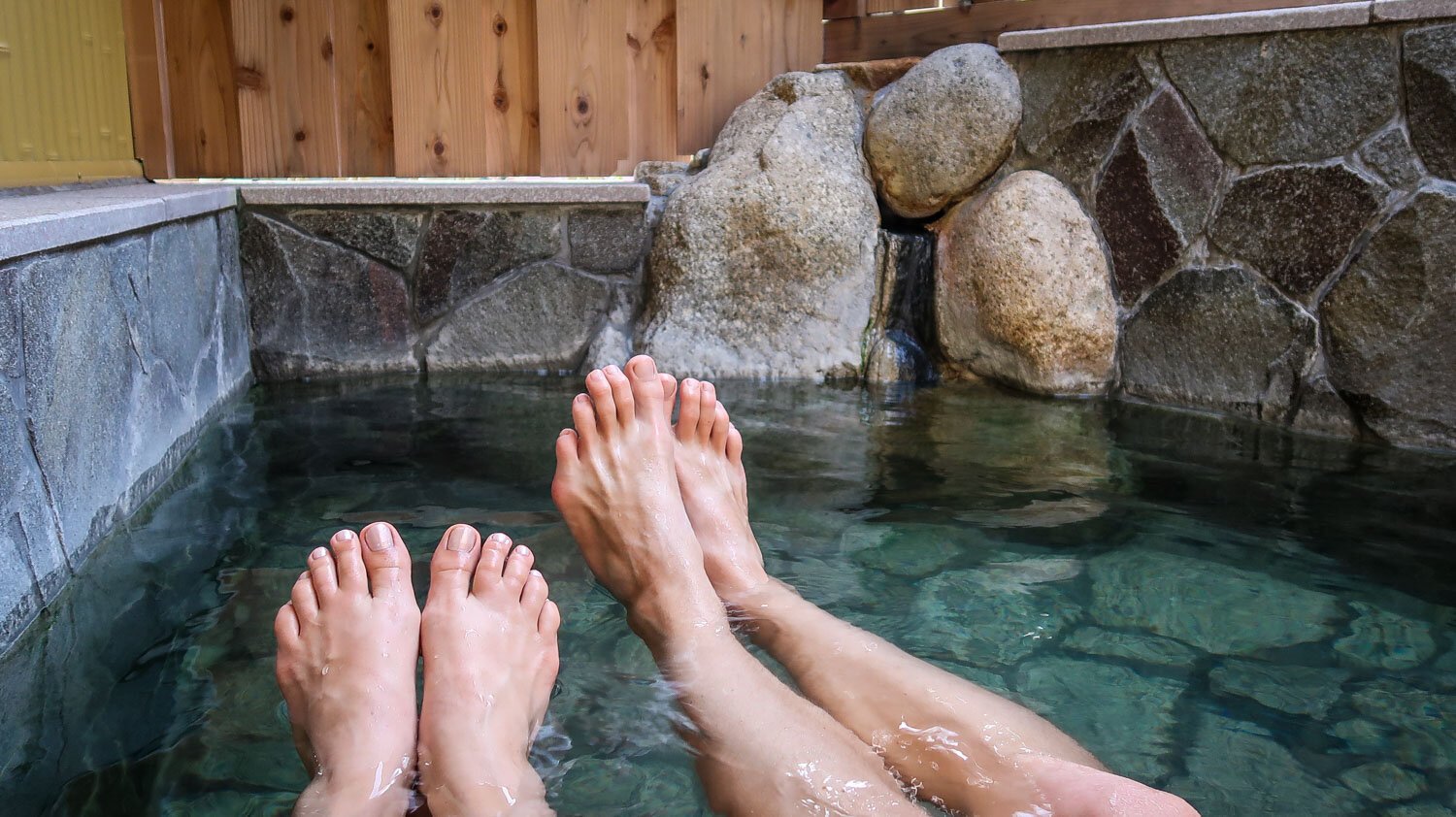
You should try one (or a few!) on your trip to Japan. Let’s start by defining what is an onsen, exactly…
Onsen: a Japanese hot spring (naturally heated from geothermal activity) used for bathing.
Japan has a lot of volcanic activity, meaning there are onsens all around the country. Traditionally, onsens are separated by gender, and they are a staple in Japanese culture.
The most magical onsens are the outdoor ones with a view. But you’ll find all varieties. Similarly, sento are indoor bathing facilities that use ordinary heated water (not from geothermal activity).
If you visit Japan during the winter, taking a dip in an onsen is a must.
While onsens are nice in other seasons as well, there’s nothing quite like immersing in steaming water while chilly winter air kisses your shoulders. Pure magic!
Both onsens and sento are meant for communal bathing. I know what you’re thinking: I have to get naked… with strangers?!
My thoughts were the same. But after experiencing a jjimjilbang (which is essentially the Korean equivalent to an onsen or sento), I realized that nobody cares what you look like.
Yes, seriously. It still may feel strange at first, but it is something you’ll get used to.

Insider Tip: Be sure to read over basic onsen etiquette; there are definitely some things you should know before you strip down.
5. Go on a food tour
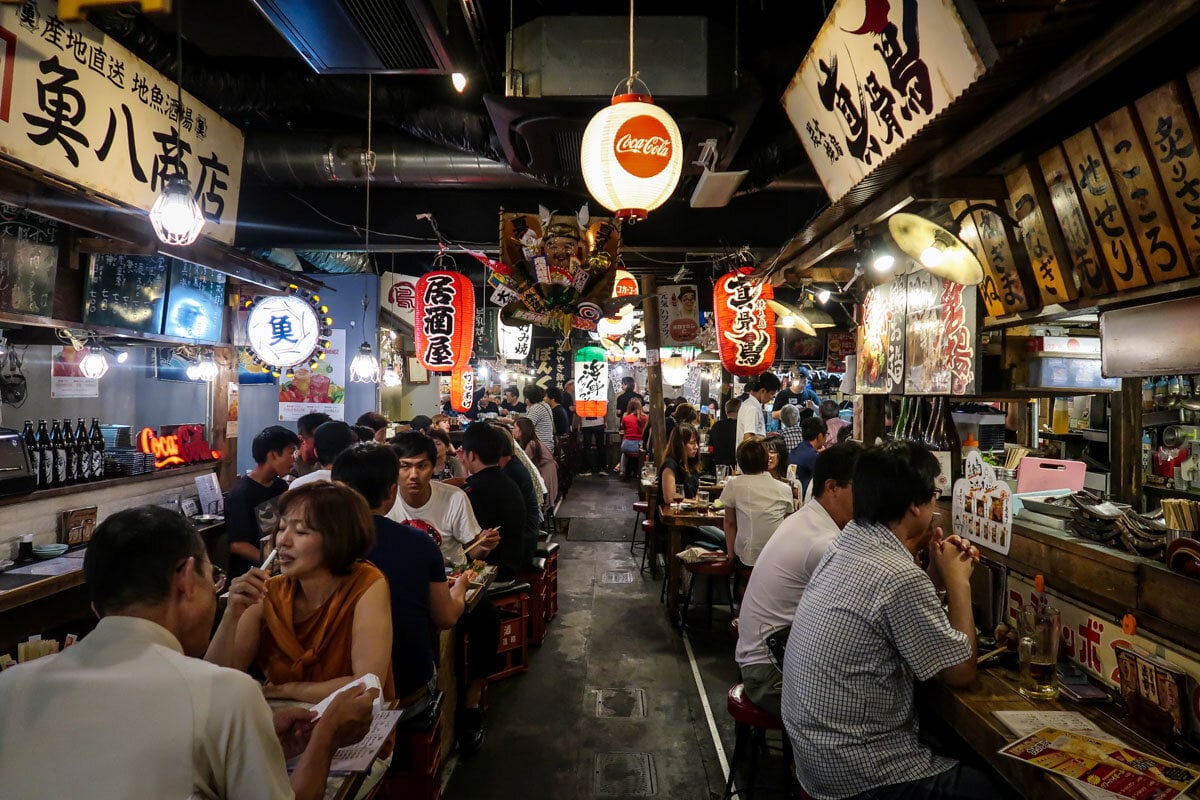
Calling all foodies! If you want to try as much Japanese food as possible and learn about the cuisine on a deeper level, a food tour is where it’s at!
We discovered food tours years ago on our travels, and are kind of obsessed now. Not only do you get to eat at hidden gems around the city, but you’ll learn things most other tourists are oblivious to. Oh, and you’ll get more than one freakin’ incredible meal. Need we say more?!
We went on two food tours with Arigato, one in Osaka and one in Tokyo. While they were both good, we really, really loved the tour in the Shinsekai district of Osaka.
Food Tours in Japan to try:
- Retro Osaka Street Food Tour: Explore the unique district of Shinsekai, which dates back to the early 1900s.
- Old Town Tokyo Food Tour: walk the streets of charming Yanaka neighborhood, which still has the small-town feel to it.
- Kyoto Sake Brewery Tour: Get to know how sake is produced using this 400-year old brewing tradition.
- Crazy Cute Kawaii Food Tour: If you’re into all things cute, the food tour in Harajuku might be just up your alley!
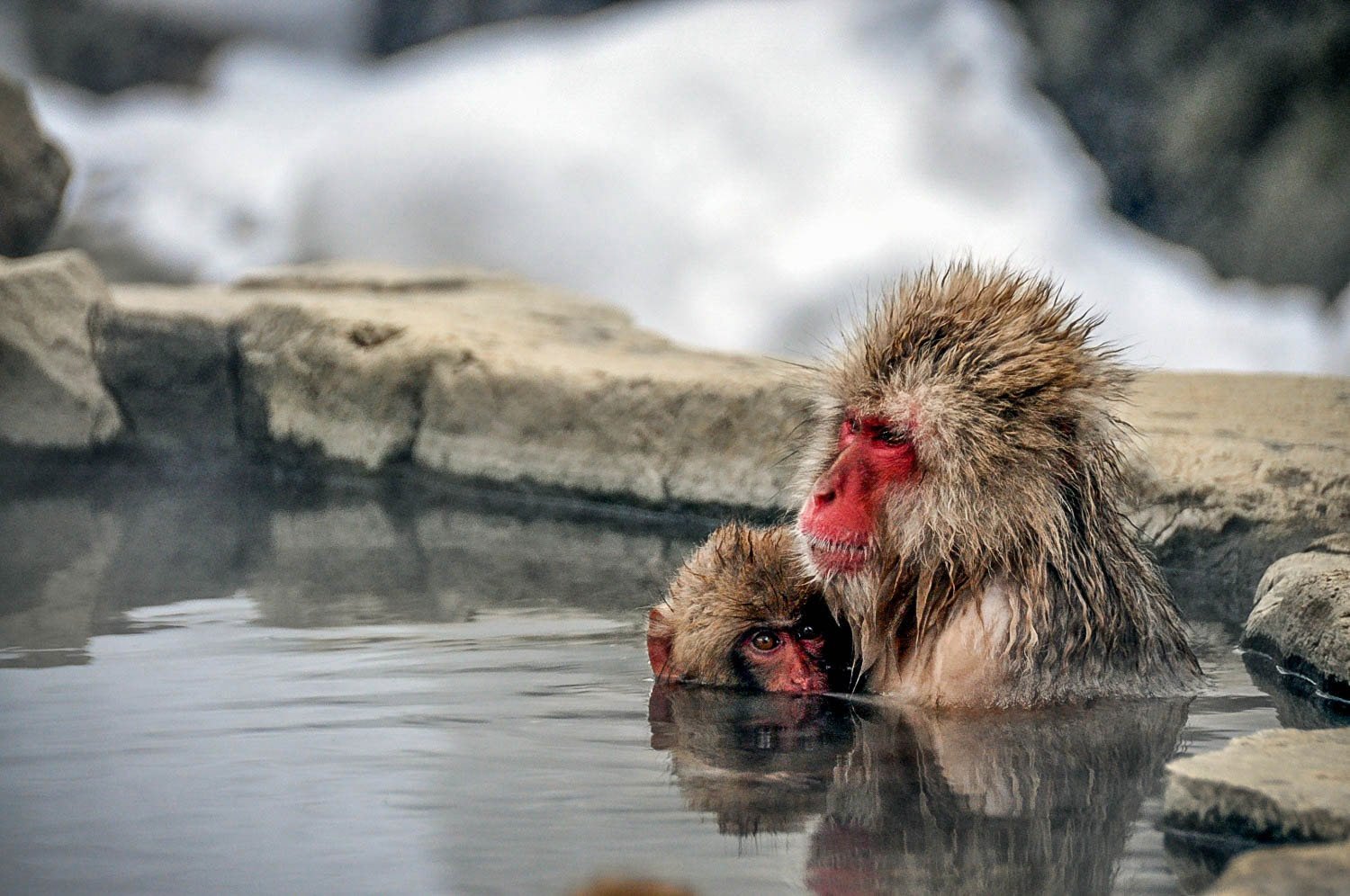
6. See snow monkeys at Jigokudani Park
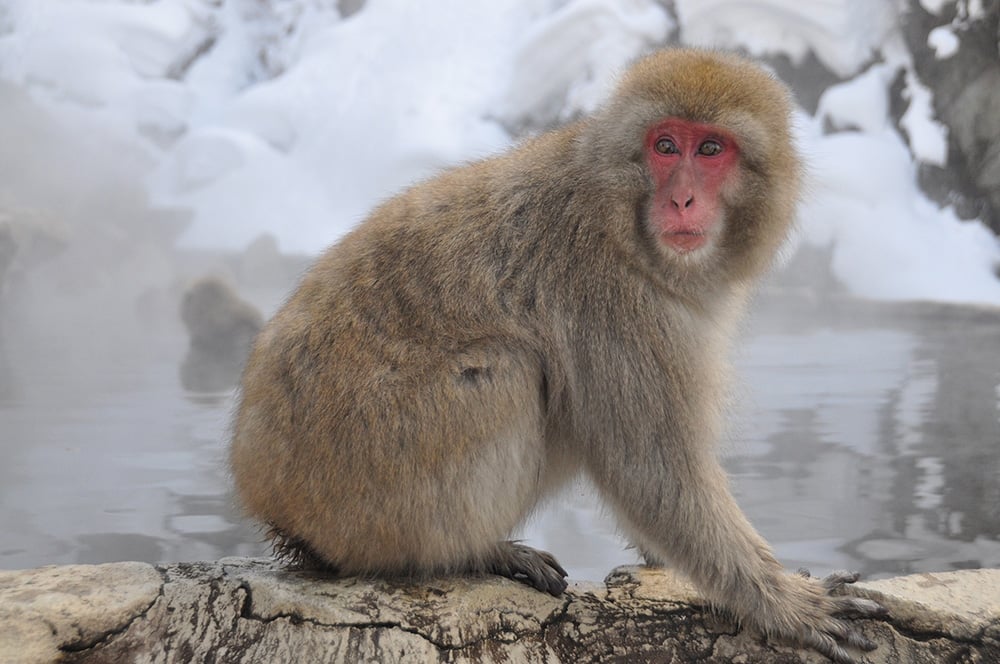
Nestled in a river valley, Jigokudani Monkey Park is known for Japanese macaques that congregate in the hot pools during the cooler months of the year.
We’ve seen these famous snow monkeys two times now. It’s a fun spot to add to your Japan itinerary, especially if you’re traveling in Japan with children. Our daughter loved it!
We have a complete guide to Jigokudani Monkey Park that’s packed with important info and insider tips to plan the perfect visit.
→ Driving yourself? Be sure to read our guide to renting a car in Japan. It’s packed with things you need to know before you get behind the wheel, as well as insider tips to help you feel confident on the road.
7. Visit shrines and temples
Before we delve into this one, let’s have a quick chat about some basic differences between shrines and temples…
Shrines: Shinto religion
- You know it’s a shrine when there is a large torii gate at the entrance; you know, those orange 3-sided structures that are an icon of Japan?
Temples: Buddhist
- Temples often have a statue of Buddha, incense burners, and some have a cemetery attached to them. Monks live and train in temples, and you may even see some walking around at the larger temples.
There are countless shrines and temples around Japan, from the ultra-famous to the small neighborhood shrines and temples for locals to visit regularly. Seeing a few of each during your trip to Japan is one of the best ways to get a feel for the country’s culture and religion.
Insider Tip: While you’re visiting shrine or temple in Japan, you may notice small wooden plaques with writing that are hanging on a fence or gate of some sort. These are called ema, and all visitors are invited to purchase one and write a prayer or wish on them. It is said that the spirits, or kami, will see your wishes. This is originally a Shinto custom, but over the years it has spread to some temples too.
Famous shrines and temples in Japan:
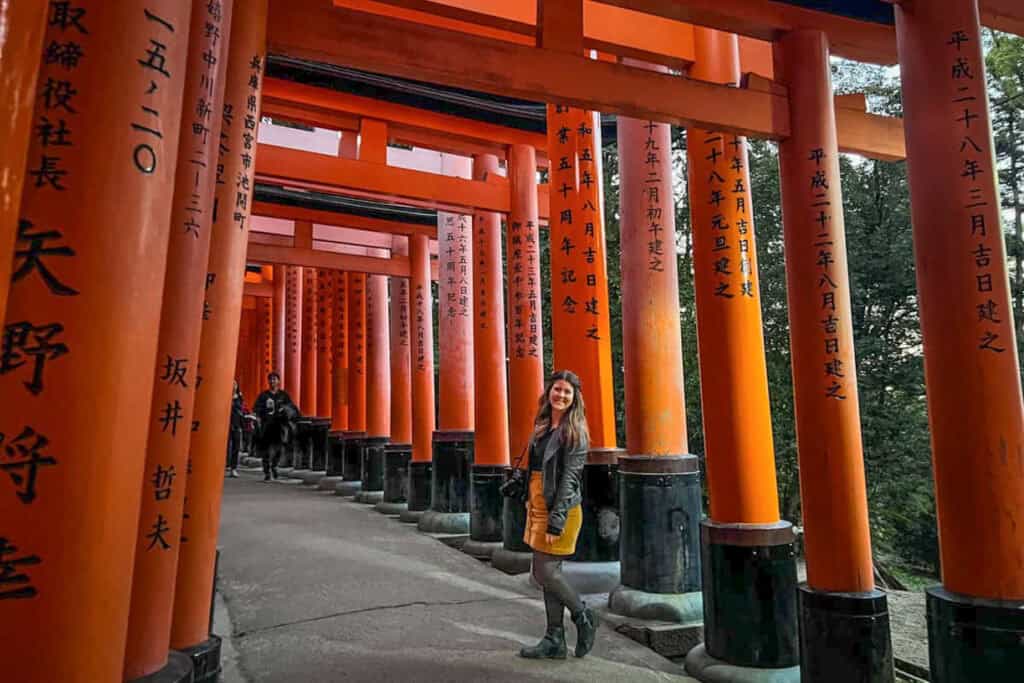
- Fushimi Inari Shrine (Kyoto): Those iconic orange gates you’ve seen in Memoirs of a Geisha? We think they are even more spectacular in person. Set aside a full day to walk the entire thing, but if your short on time an hour or two will cover the highlights. → Guide to Visiting Fushimi Inari
- Photo tip: keep walking past the crowds at the entrance until the path heads uphill, where you’ll get a crowd-free shot and a stunning view over Kyoto.
- Kinkaku-ji Temple (Kyoto): The “Golden Pavilion” lives up to the hype, its gold leaf exterior reflecting perfectly in the lake beside it. Go in the morning to beat the tour groups, or at dusk for the most beautiful light.
- Shitenoji Temple (Osaka): The most important Buddhist structure in Osaka and one of the oldest temples in all of Japan, well worth a visit while you’re in the city.
- Meiji Shrine (Tokyo): A serene, forested escape from the chaos of the city, with unpainted wooden gates that feel beautifully understated compared to Japan’s more ornate shrines. Visit on a Saturday and you might catch a traditional wedding ceremony, like we did!
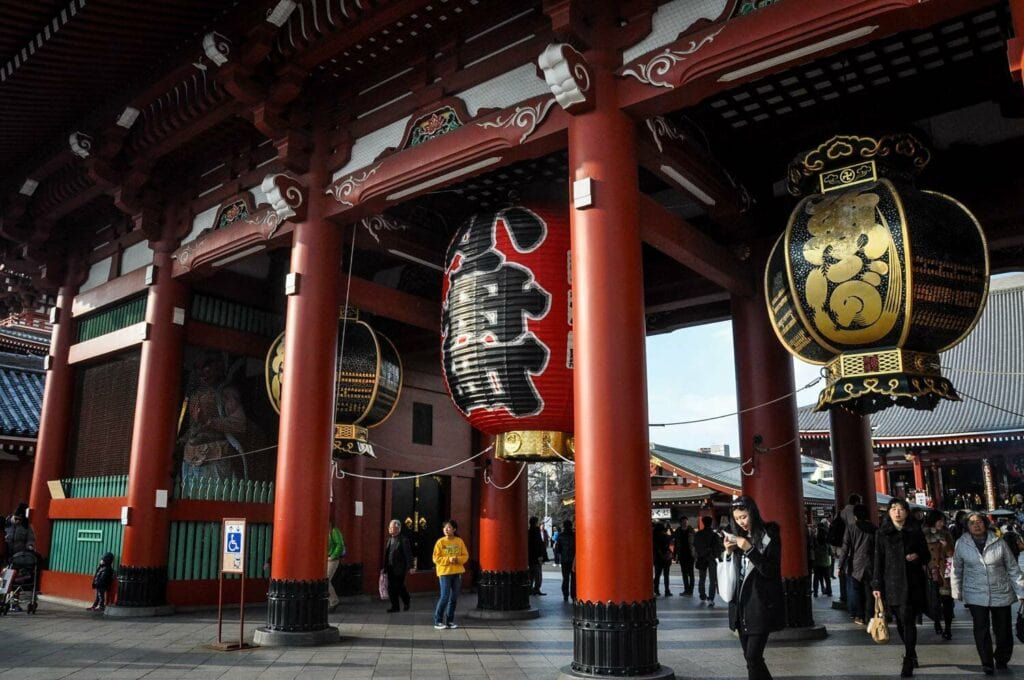
- Senso-ji (Tokyo): Tokyo’s oldest and most famous temple, tucked into the historic Asakusa neighborhood. It’s always crowded, but absolutely worth it.
8. Take a ride on a bullet train
There’s something wonderful about train journeys, don’t you think?
Pop on headphones, sit back and look out the windows at the towns and life passing by. Any route through the mountains or along the coastline is especially beautiful.
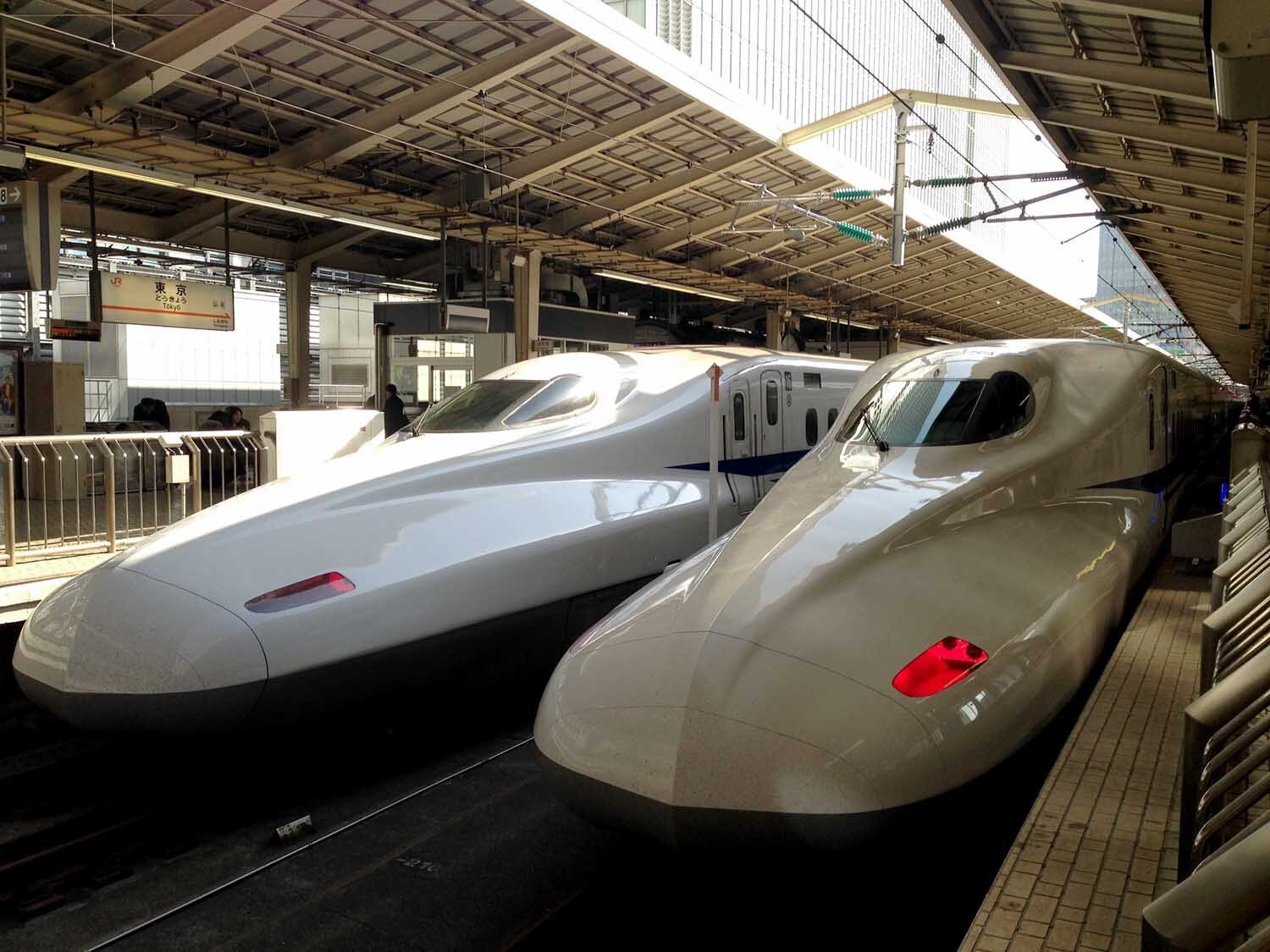
Japanese bullet trains (also known as Shinkansen) are famously efficient and clean, so your journey is sure to be a comfortable one.
Insider Tip: Have a good book and some snacks on hand (it’s fine to eat on the Shinkansen trains, but not the local, short-distance ones).
Grab your Japan Rail Pass before you go!

If riding the bullet train is already on your Japan bucket list, the Japan Rail Pass is a no-brainer. It gives you unlimited rides on JR-operated Shinkansen lines, meaning you can zip between Tokyo, Kyoto, Osaka, Hiroshima, and beyond — all without paying for individual tickets each time.
The pass more than pays for itself if you’re planning to visit more than a couple of cities, and it takes the stress out of booking transportation on the fly. Plus, it’s not just the Shinkansen — local JR lines, some buses, and even certain ferry routes are included too.
9. Glimpse Mount Fuji
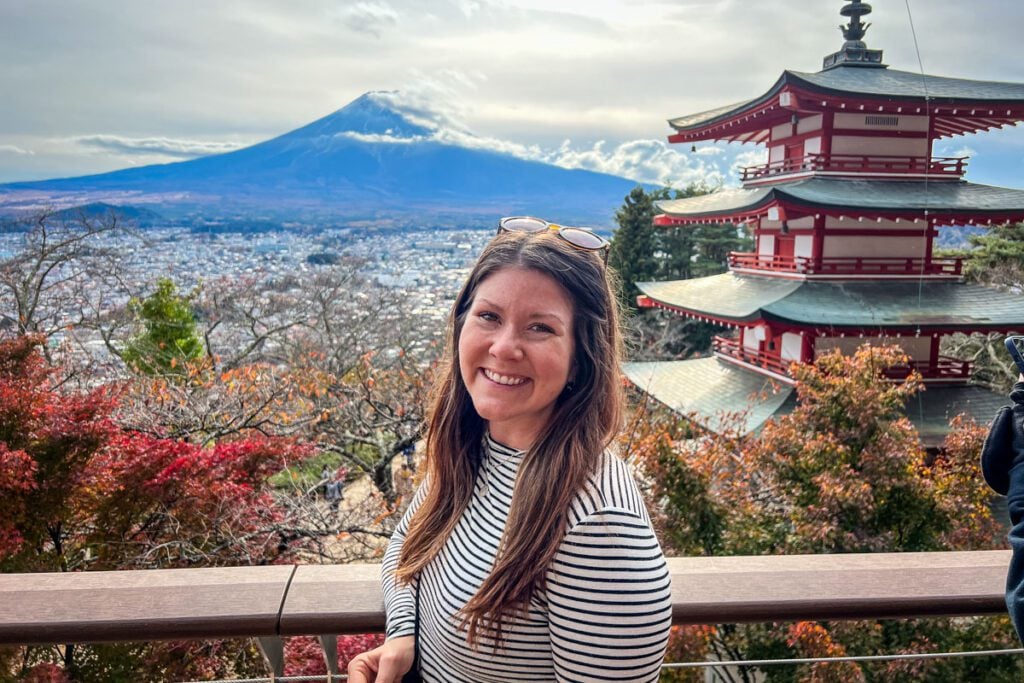
Seeing Mount Fuji in all her glory is at the top of many travelers’ Japan bucket lists, and for good reason. This iconic mountain is almost synonymous with Japan and is truly incredible to see in person.
However, it’s good to know that Mount Fuji is known for being shy. It was completely hidden in clouds during our first two visits to Japan, but on our third trip she finally showed her face and it was absolutely worth the wait.
Your best chance of clear views is between October and February (July is the worst), though even there’s never a guarantee. Have a backup plan just in case!
Our thoughts: We think it is particularly photogenic in autumn, with fall foliage all around and with a good chance of seeing the peak covered in a blanket of white after a snow storm.
Best places to see Mount Fuji
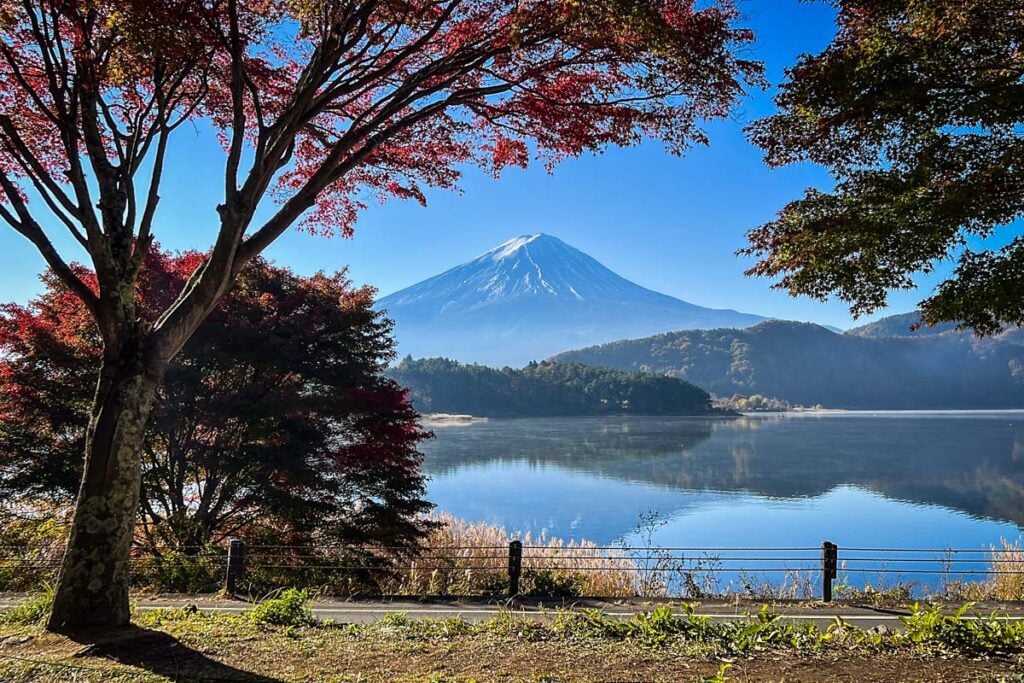
On a clear day, you can glimpse Mount Fuji in the distance throughout Tokyo. However, if you want a closer up view, here are some of the most iconic:
- Hakone: This small town situated on Lake Ashin is a great place to see Mount Fuji and relax in an onsen at one of the many guesthouses.
- Insider Tip: While in Hakone, be sure to eat the famous black eggs. They have been hard-boiled in the nearby hot springs and are said to lengthen your life by 7 years. We shall see!
- Five Lakes region: Like the name infers, this region covers 5 lakes, all of which have fabulous views of Mount Fuji.
- Fujiyoshida: If you want a view of where Fuji is set against an urban cityscape in a nature-meets-city juxtaposition, this is the nearest town to the mountain and makes a really unique sight. The iconic photo from this city is on Honcho Street.
We have a Mount Fuji day trip guide that is packed with info on how, when, and where to catch a glimpse of the famous peak. Plus, we’re sharing other fun things to do in the area and some mind-blowing facts we’re betting you didn’t know!
10. Attend a Japanese baseball game

This all-American sport takes on a life of its own in Japan, and going to a baseball game is a totally different experience than you’d have in the US.
The atmosphere is electric, think chants, cheerleaders, fan sections, and the kind of energy you’d expect at a high-stakes hockey game. Oh, and you can bring your own food and drinks into the stadium (security will pour drinks into a cup for you at the gate), then grab another round from the hard-working beer girls inside.
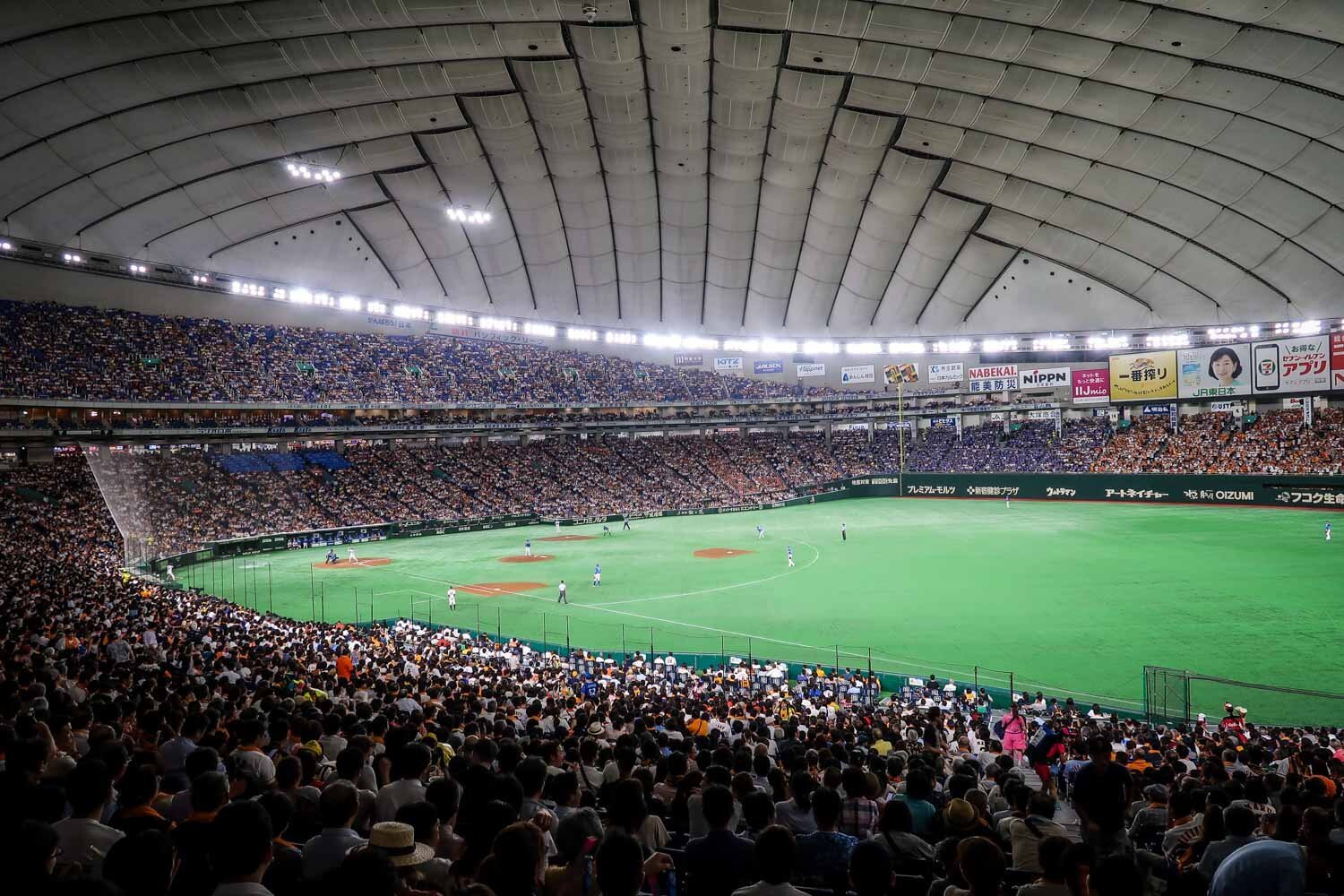
For popular teams like the Tokyo Yomiuri Giants, book tickets online in advance through the Tokyo Dome website. For less popular games, you can often buy at the stadium on the day.
Our experience: We showed up to a Giants vs. BayStars game after it had already started and snagged standing room tickets for just 1,000 yen ($9 USD) each. Not the best view, but the atmosphere alone was worth it!
11. Take a Japanese cooking class
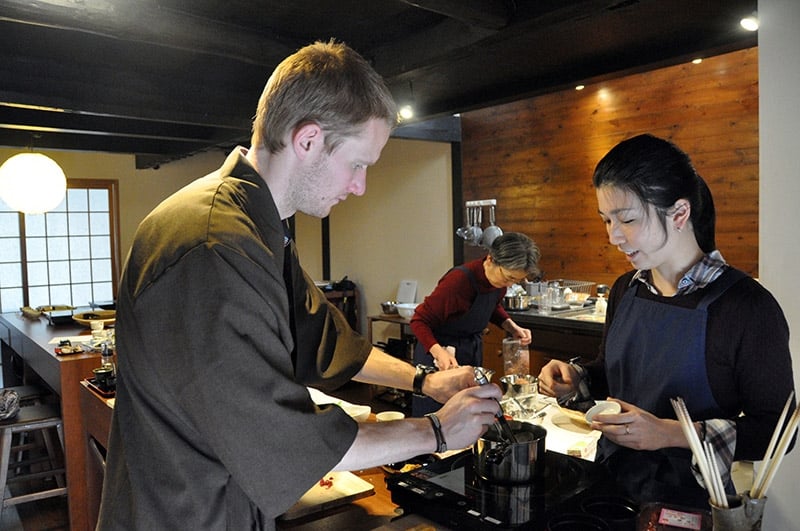
Take your knowledge of Japanese cuisine a bit deeper and learn what goes into some of your favorite dishes…
We think taking cooking classes on our travels is one of the best ways to learn about a country’s cuisine and culture. On our first trip to Japan, we took a sushi-making class, and on our second visit we learned how to make ramen from scratch.
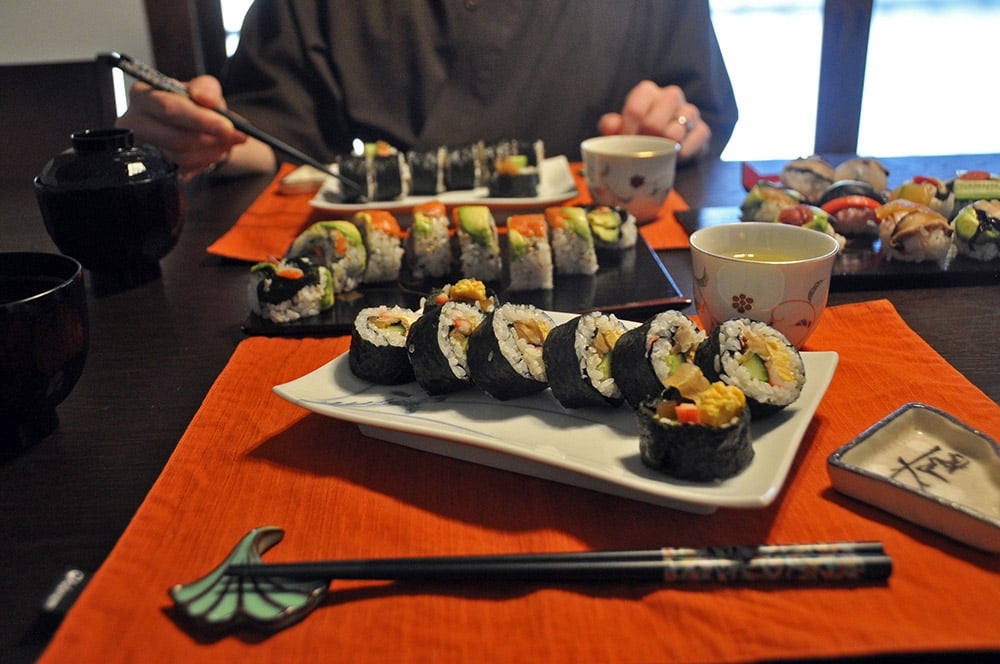
Japanese cooking classes:
- Master sushi making in Tokyo (Check Availability)
- Make 3 Types of Ramen from Scratch – Osaka (Check Availability) – this is the exact class we did!
- Learn How to Make Decorative Sushi Rolls – Kyoto (Check Availability)
- Cook Okonomiyaki (Japanese Pizza) and 2 Side Dishes – Tokyo (Check Availability)
12. Wander through a bamboo forest
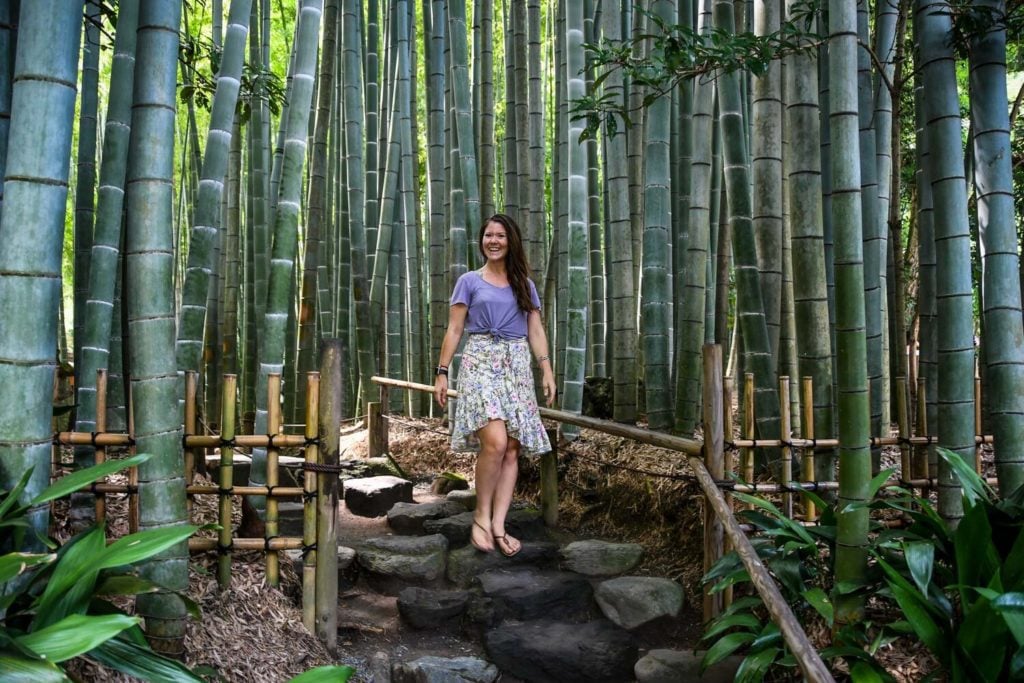
The most famous bamboo forest in Japan is undoubtedly in Arashiyama. Located just outside the center of Kyoto, you’ll feel a world away. The grove of giant, swaying bamboo stalks is beautiful year-round and emanates tranquility. Well, that is if you can experience tranquility amongst a crowd…
This bamboo forest is stunning, no arguing that; but it can get pretty packed, especially during Japan’s high tourist season.
We visited during low season (February) and went early, so we didn’t have too much of an issue with crowds. However, we know this isn’t always the case. We still think it’s worth visiting, as long as your expectations are managed.
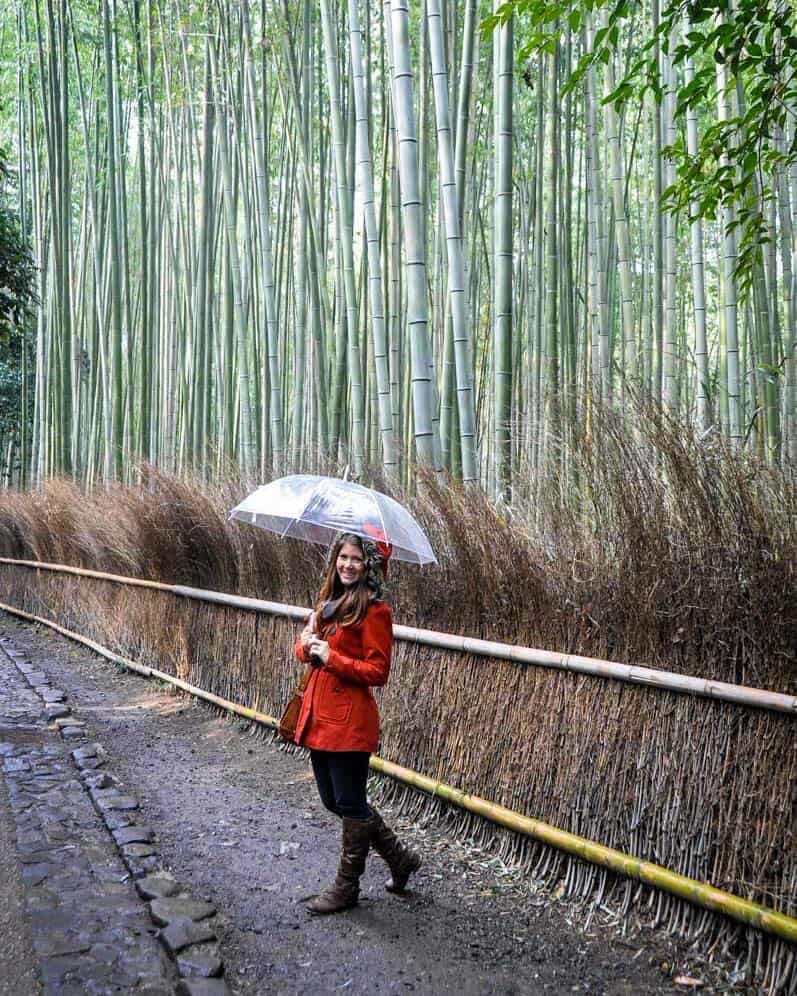
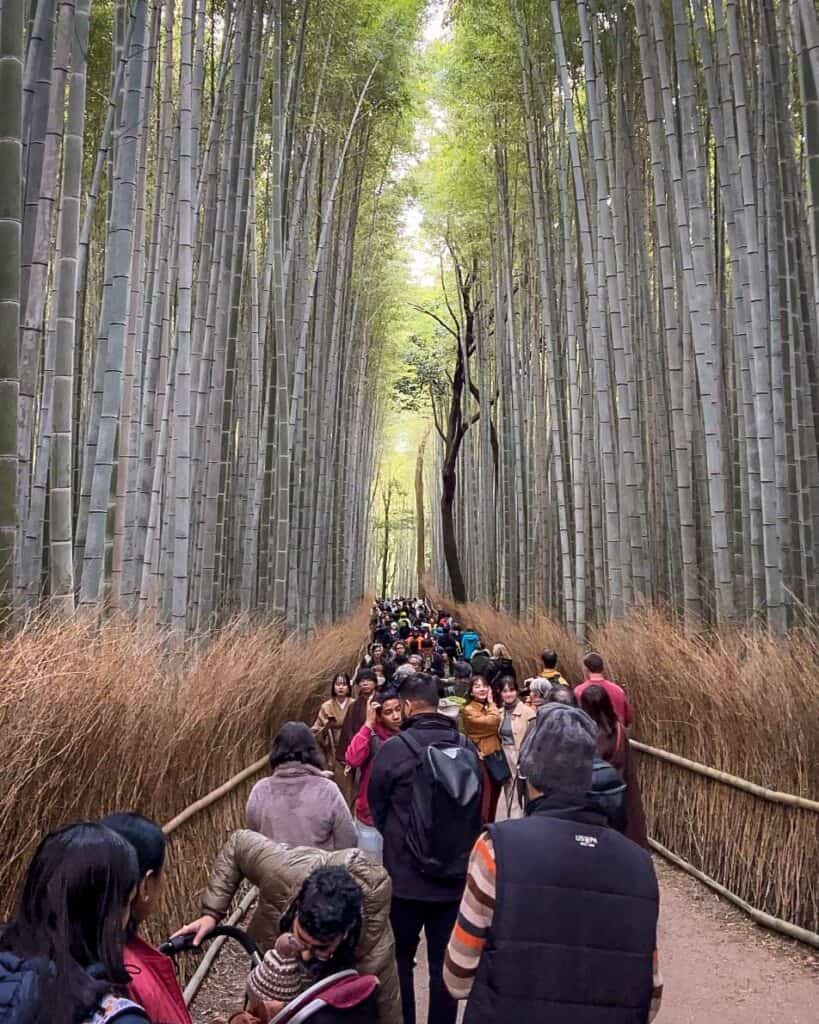
Even so, we think it is well worth a visit and will certainly be one of your favorite photo ops in Japan!
There are also other, less crowded bamboo forests around the country. Here are just a couple:
- Hidden bamboo grove in Arashiyama: just minutes away from the famous bamboo forest is a lesser-known temple with a smaller bamboo grove that is still off most tourists’ radar. We spill all the details on Day 2 of our Kyoto itinerary.
- Kamakura: just a 10-minute bus ride from the train station is the Hokokuji Bamboo Forest. It’s small but beautiful.
- Nakasendo Trail: there is a portion of this trail where there is a wild bamboo grove. No paths, no crowds, just bamboo!
13. Eat sushi at a fish market
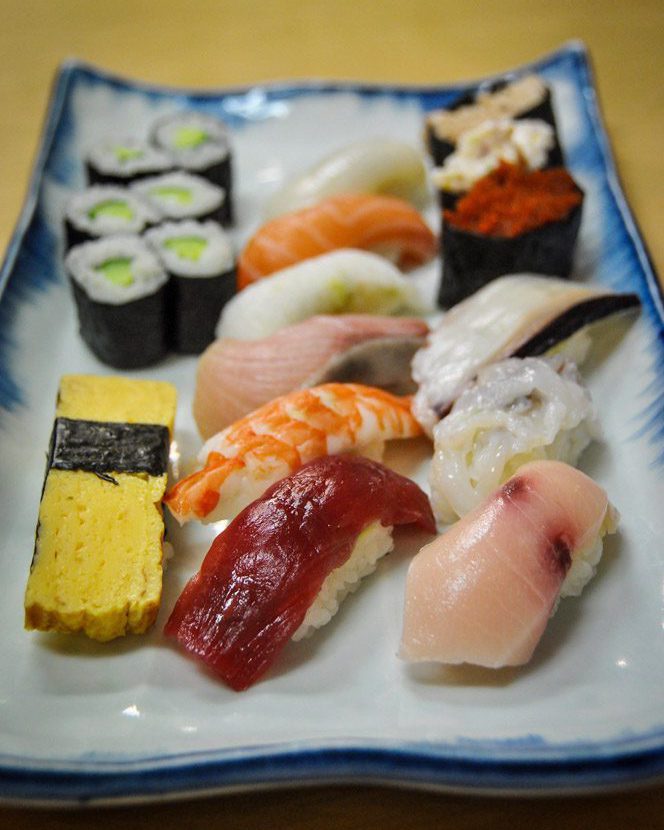
Sushi enthusiasts and newbies alike should try as much sushi as possible in Japan. And there’s no place to get it more fresh than from the source… aka the fish markets themselves.
Early each morning at fish markets around the country, fishermen arrive with the catch of the day to be auctioned off. Chefs and suppliers come to bid on the fish before it’s taken away to become yummy, yummy sushi for some lucky people.
Now if you want to get the freshest sushi – literally made just moments after the fish is sold – you’re going to need to get up early. That’s right; sushi for breakfast! (Not as bad of an idea as it sounds!)
Where to find fish markets in Japan
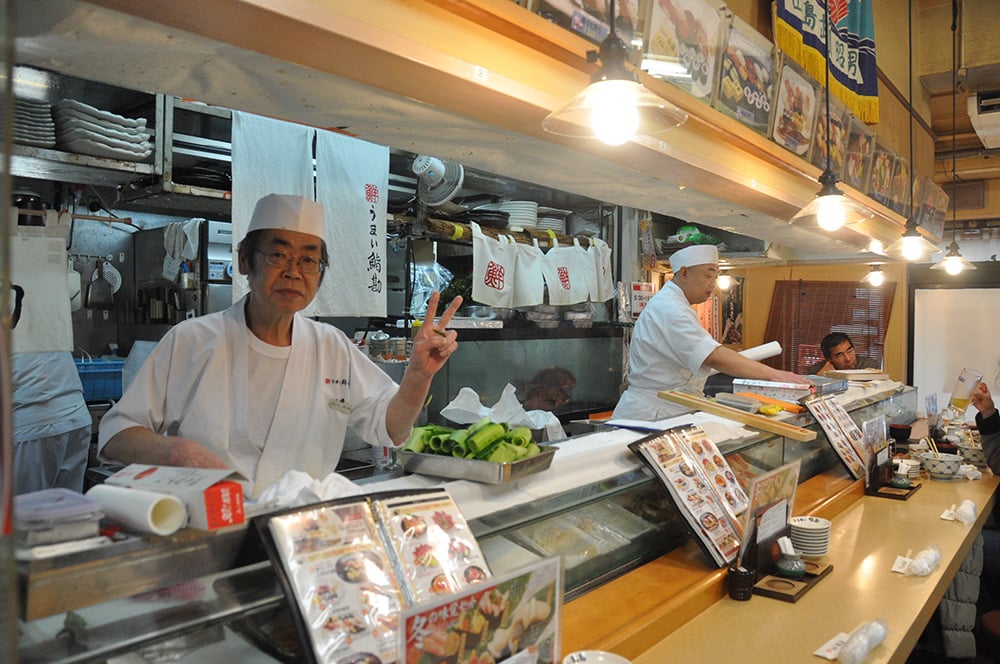
In many coastal towns you’ll find fish markets, but here are some of the most famous and accessible fish markets in the country:
- Toyosu Fish Market (Tokyo): The modern replacement for Tsukiji, where you can watch early morning tuna auctions or grab breakfast at one of the sushi restaurants inside.
- Tsukiji Fish Market (Tokyo): Tokyo’s oldest and most famous fish market. No longer home to the tuna auctions, but still the more atmospheric of the two with plenty of vendors and fresh fish. Worth visiting while you still can, as development plans loom.
- Kanazawa Fish Market: One of the country’s most famous markets, with plenty of restaurants inside serving up the fresh catch.
- Katsuura Fish Market: A great add-on if you’ve just finished the Kumano Kodo Trail. It brings in more tuna than anywhere else in Japan, and you can watch the auctions weekdays at 7 a.m. before grabbing a fresh sushi breakfast next door.
Not sure what to order when it comes to sushi? Well… there’s an app for that. Here is a list of the most helpful Japanese travel apps that will improve your trip to Japan.
14. Eat ALL the ramen
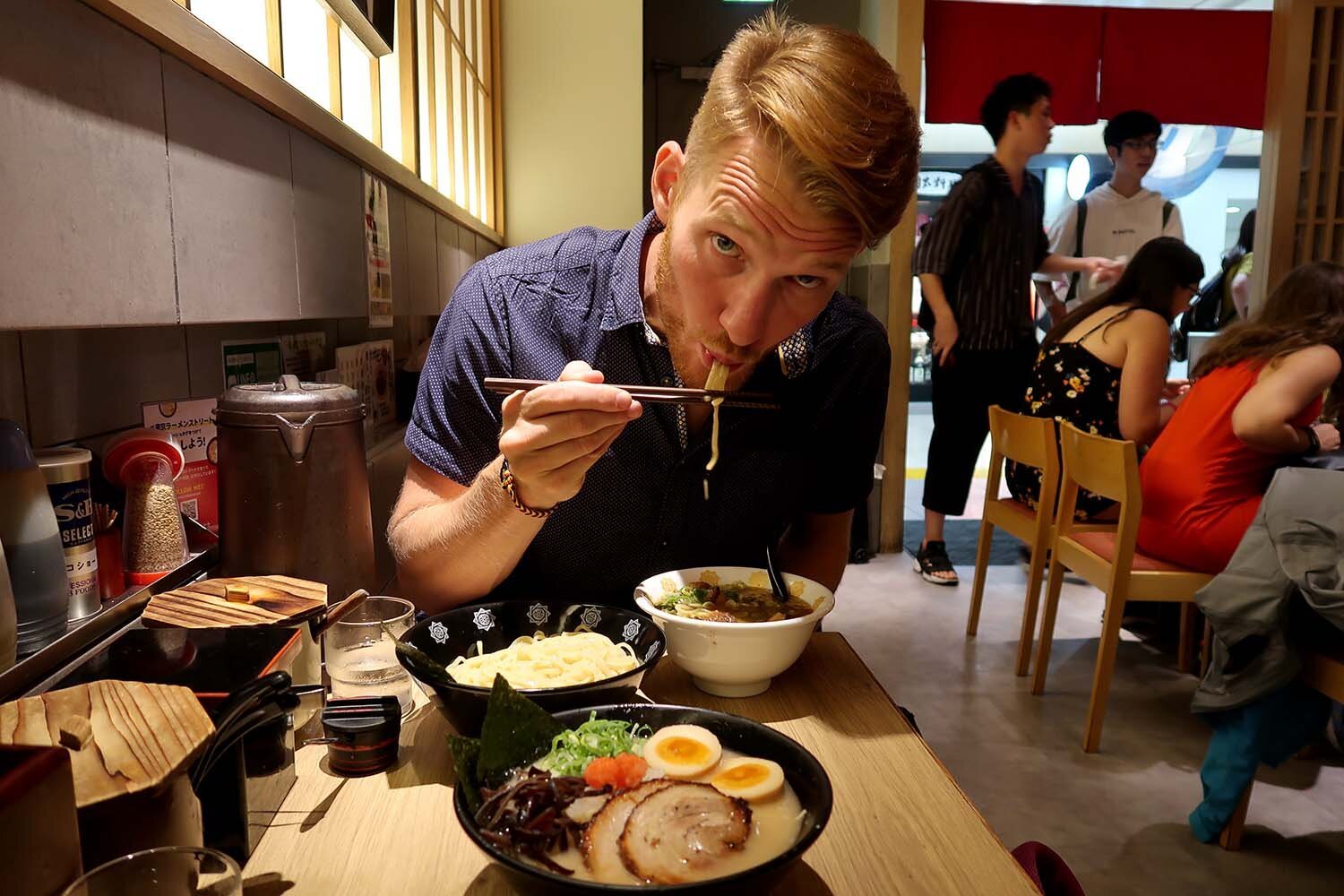
Oh, ramen. Piping hot broth, slightly chewy noodles, a perfectly gooey soft boiled egg, fresh scallions and a depth of flavors that makes you keep going back for more, bite after bite.
Forget the instant noodles you feasted on after drunken nights in college. The gourmet version is leaps and bounds more delicious.
Each ramen shop has its own flavors and specialties, so you’ll want to sample as much as you can while in Japan. We’ve even rounded up our favorite ramen shops in Tokyo to make it easier to plan your visit.
Good to know: At most ramen shops, you’ll buy a ticket from a vending machine and present the ticket to an employee. Ramen shops are considered somewhat “fast food”, and your bowl of hot noodly goodness shouldn’t take long to appear right in front of you.
15. Drive a real life Mario Kart
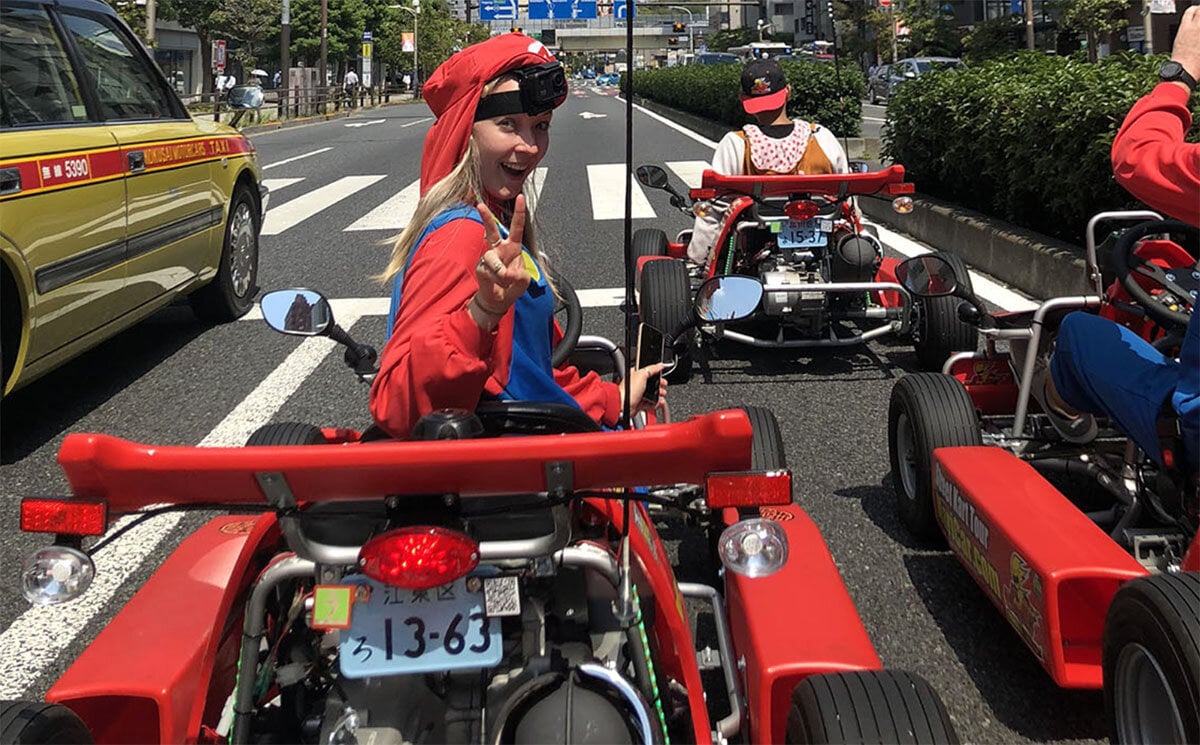
If you ever wished you could hop into your Nintendo 64 and actually race alongside Mario dressed as Princess Peach (is this anyone else’s fantasy?!), you can do just that in Japan!
Don a costume and get behind the wheel of a very real go-kart which you will drive on the streets of Osaka or Tokyo (this experience is offered in both cities).
Important Tip: If this experience is a “must” on your Japan trip, be sure to bring an international driver’s license with you. Ben had one but I didn’t and we were unable to do this tour. Booo! I guess we’ll just have to come back to Japan for a fourth time…
16. Dine at a Theme Restaurant (or 2!)

Theme restaurants and cafes are huge in Japan, and there is such a variety that every type of traveler should be able to find one that appeals to them.
And while we’d definitely recommend trying out a theme restaurant, just don’t expect the best meal of your time in Japan. Keep in mind that you come not for the food, but for the atmosphere.
Presentation may be on point, but the food itself at most of these establishments is, well, mediocre. We’re just trying to help manage expectations!
Top theme restaurants and cafes in Tokyo
Check out these Tokyo theme restaurants that range from cute and quirky to “what did I just witness?!”. And while you’re at it, we have a whole list of other cool things to do in Tokyo at night!
- Pokemon Cafe: Exactly what it sounds like — Pokemon-themed food and drinks for fans of all ages.
- 2D Cafe: A black-and-white cartoon-style interior that makes you feel like you’ve stepped inside a drawing.
- Ninja restaurant: One of the few theme restaurants where the food actually holds up, with an Edo-era village setting, live ninja performances at your table, and set menus.
- Vampire Cafe: All red velvet, blood-inspired drinks, and French maid servers — great if you’re into dramatic and creepy atmospheres.
- Maid Cafes: A Tokyo staple, especially in Akihabara, where servers dressed as maids create an over-the-top cute, cosplay-style atmosphere.
- Monster Kitchen at Kawaii Monster Land: You’ve heard of the ultra-popular Kawaii Monster Cafe in Harajuku that has since closed in 2023, but now they’ve opened a new theme park complete with “Monster Kitchen” serving up the same over-the-top foods in Kawaii fashion.
- Flower Cafe (Aoyama Flower Market Tea House): If you’re looking for an experience that is not so showy or cutesy, the Aoyama Flower Market Tea House may be just what you’re looking for. Set inside a flower market, this cafe is undoubtedly beautiful.
A note on animal cafes: Do a bit of research before visiting one. Cat, dog, and rabbit cafes are generally fine since these animals are more domestic and social by nature. However, we’d steer clear of owl, hedgehog, fox, or other wildlife cafes, as many of these animals aren’t suited to constant human interaction.
Related: Read up on our responsible travel tips before your trip to Japan!
17. Witness sumo wrestlers in action
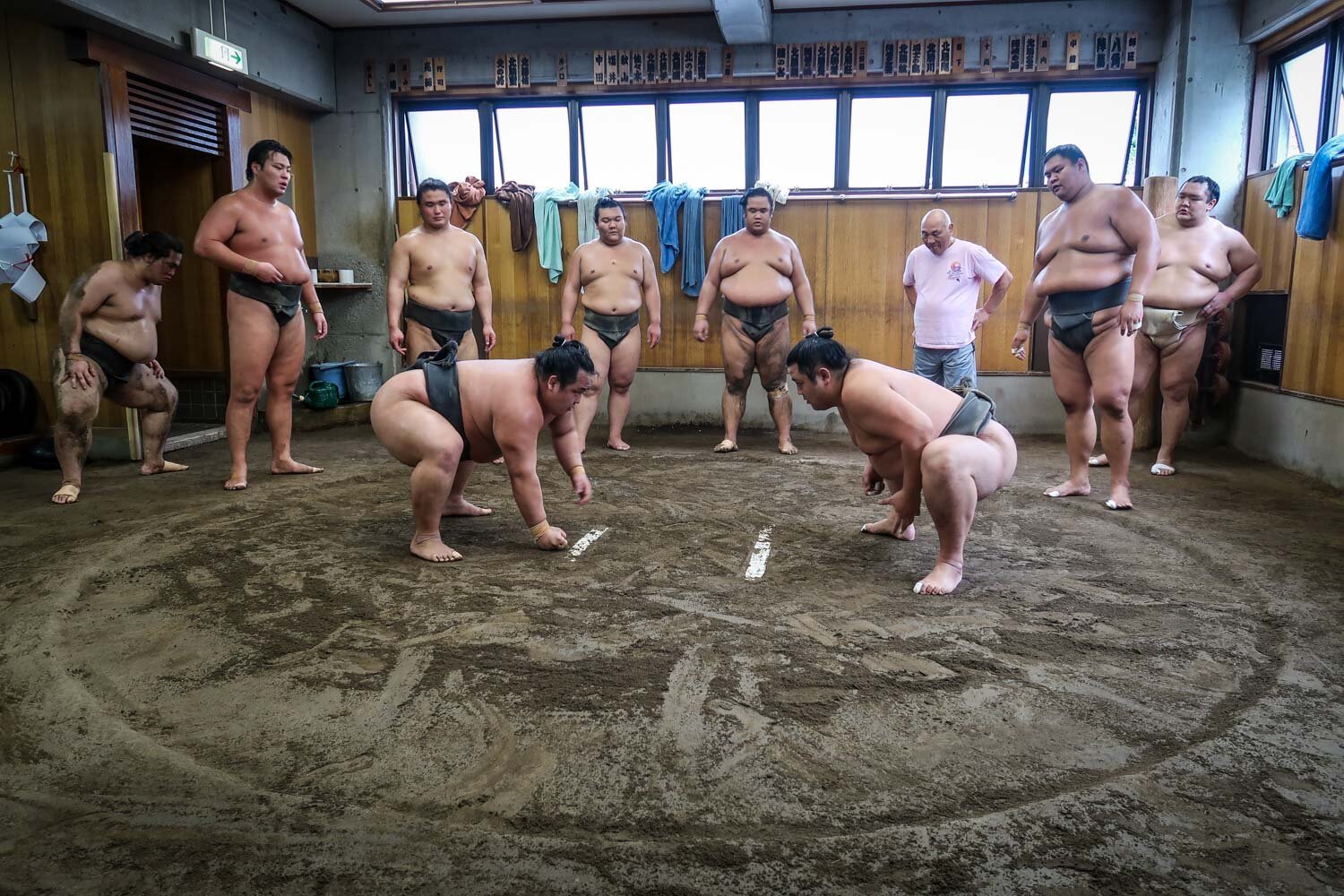
There aren’t any sports more closely linked to Japan as sumo wrestling. While traveling in Japan, it is a pretty cool experience to see a match in action.
Catch a professional match
Professional sumo tournaments take place 6 times a year, each in a specific city:
- January, May, September: Tokyo
- March: Osaka
- July: Nagoya
- November: Fukuoka
If that lines up with your Japan itinerary, try your best to squeeze it in – we’ve heard it’s a pretty cool experience.
Interesting Fact: Sumo wrestling is not an Olympic Sport, but is recognized by the Olympic Committee, meaning that there is a chance it could be part of the games someday.
Visit a sumo stable (what we did!)
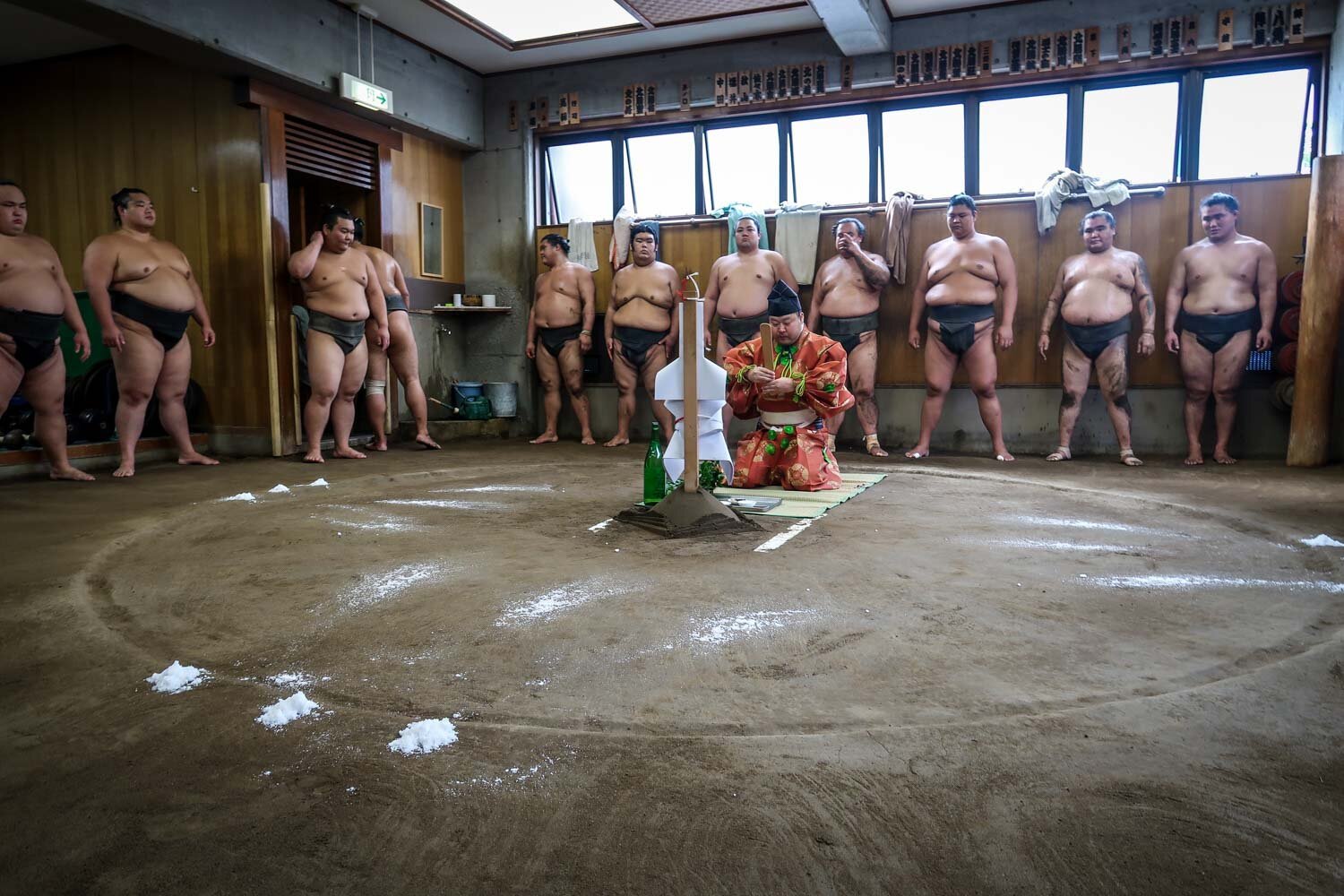
If you can’t make the tournament, don’t worry! Tokyo’s sumo stables, where wrestlers train and live, sometimes allow visitors to observe morning practice. It’s a surreal experience, though very different from a live match.
A few things to know before you go: silence is required, you cannot leave and re-enter the room, no videos, and no eating or drinking. You’ll sit on thin cushions until practice wraps up, which can vary in length. Honestly, it got a little long in the middle, but we were glad we did it.
The easiest way to book a visit is through Magical Trip, who handle all the logistics and provide context about what you’re watching. Going on your own is possible but requires calling the stable in advance (in Japanese!) and isn’t guaranteed.
So is it worthwhile? For us, it was an experience that was fascinating at first, but got a bit long in the middle. I was relieved when we could get up and walk around at the end, but I was really happy we did it.
18. Spot a Geisha
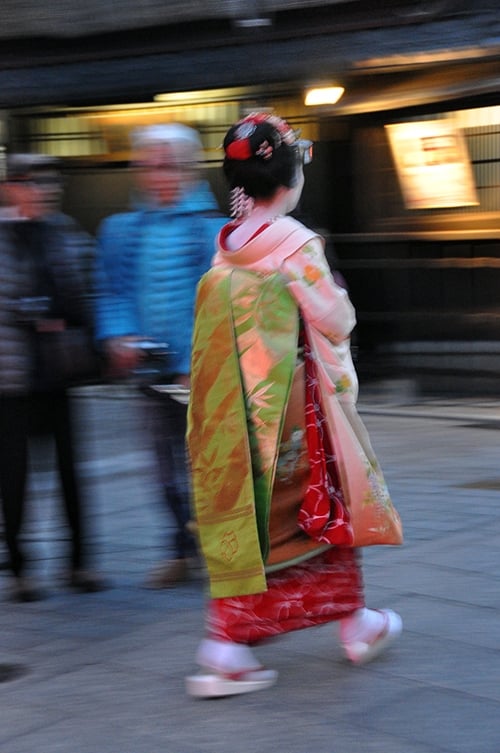
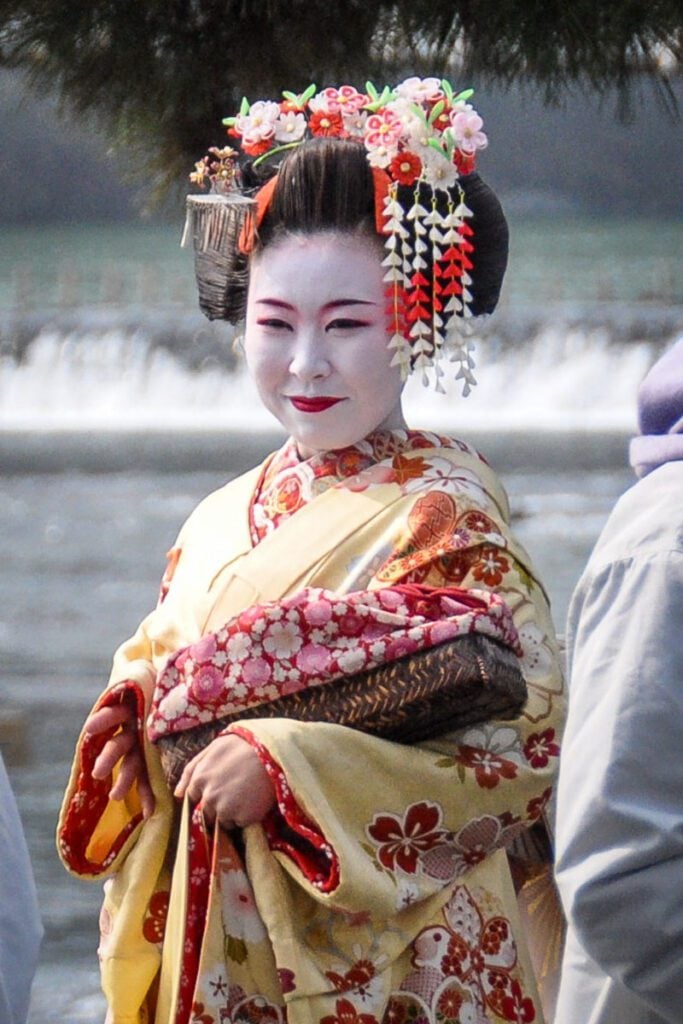
Geisha (known as geiko in Kyoto) are highly skilled performers trained in dance, music, and traditional arts. With only around 2,000 remaining in Japan today, spotting one is genuinely special.
You don’t need to pay for a formal performance to see one. Your best bet is a stroll along lantern-lit Pontocho Alley in Kyoto’s Gion district around dusk (5:30 to 6 p.m.), when geisha and their apprentices (maiko) make their way to evening engagements.
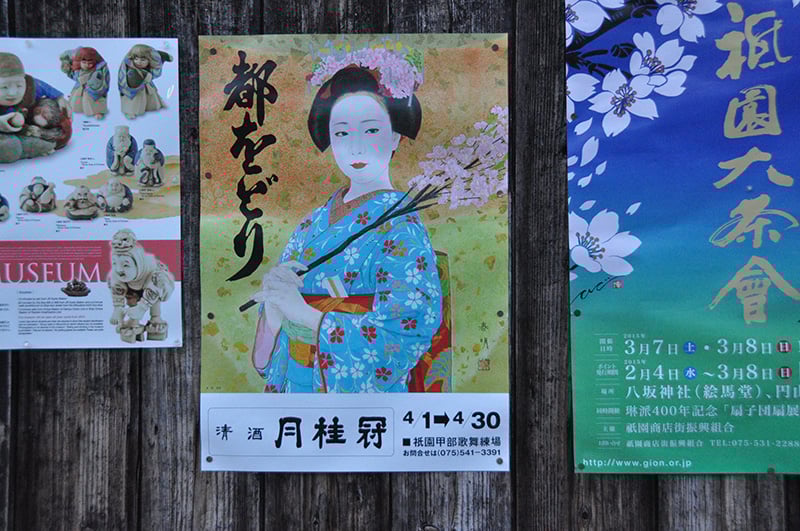
Other good spots in Kyoto include Miyagawacho, Gion Higashi, Gion Kobu, and Kamishichiken near Kitano Tenmangu Shrine.
Have your camera ready, because when you do see a geisha, it will be a fleeting moment as she scurries in wooden sandals to her next appointment. While taking photos of geisha is generally acceptable, be sure you do so in a respectful manner. Don’t get in their way, and keep a reasonable distance.
Good to know: While we’re referring to them as geisha for the purpose of this article, the correct term for these women in the Kyoto region is geiko. (Geisha is the correct term in Tokyo, and is generally more well-known among foreigners.)
19. Participate in a Japanese tea ceremony
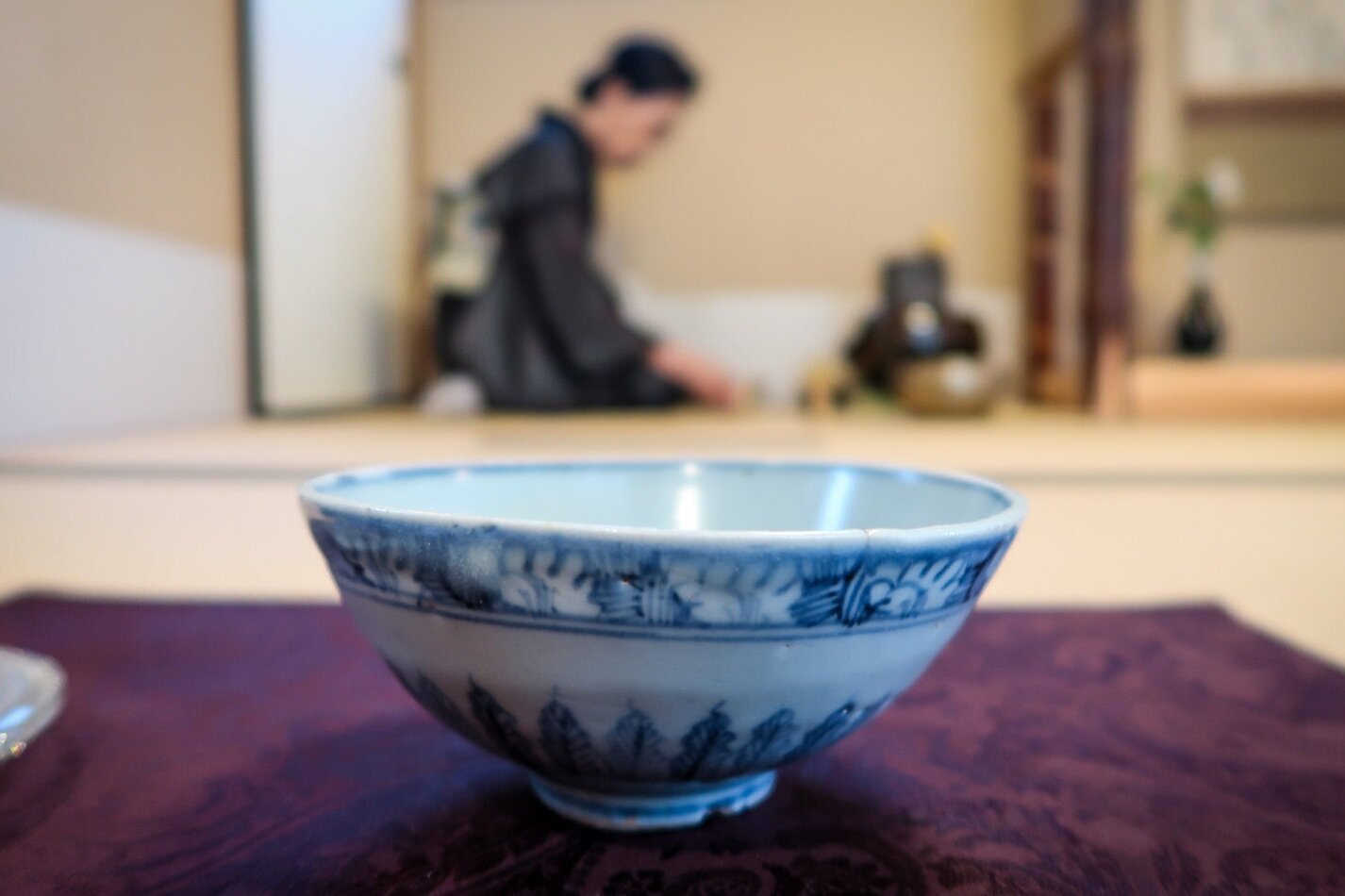
Matcha is everywhere in Japan – a popular ice cream flavor, in pastries, and even appearing in KitKat Bars. Yep, it’s true.
While you can just eat ALL the matcha, one way to get a deeper appreciation and understanding for this ubiquitous green powder is to take part in a tea ceremony.
We didn’t plan on partaking in a tea ceremony at all, but “accidentally” went to two different ceremonies:
Our first tea ceremony experience
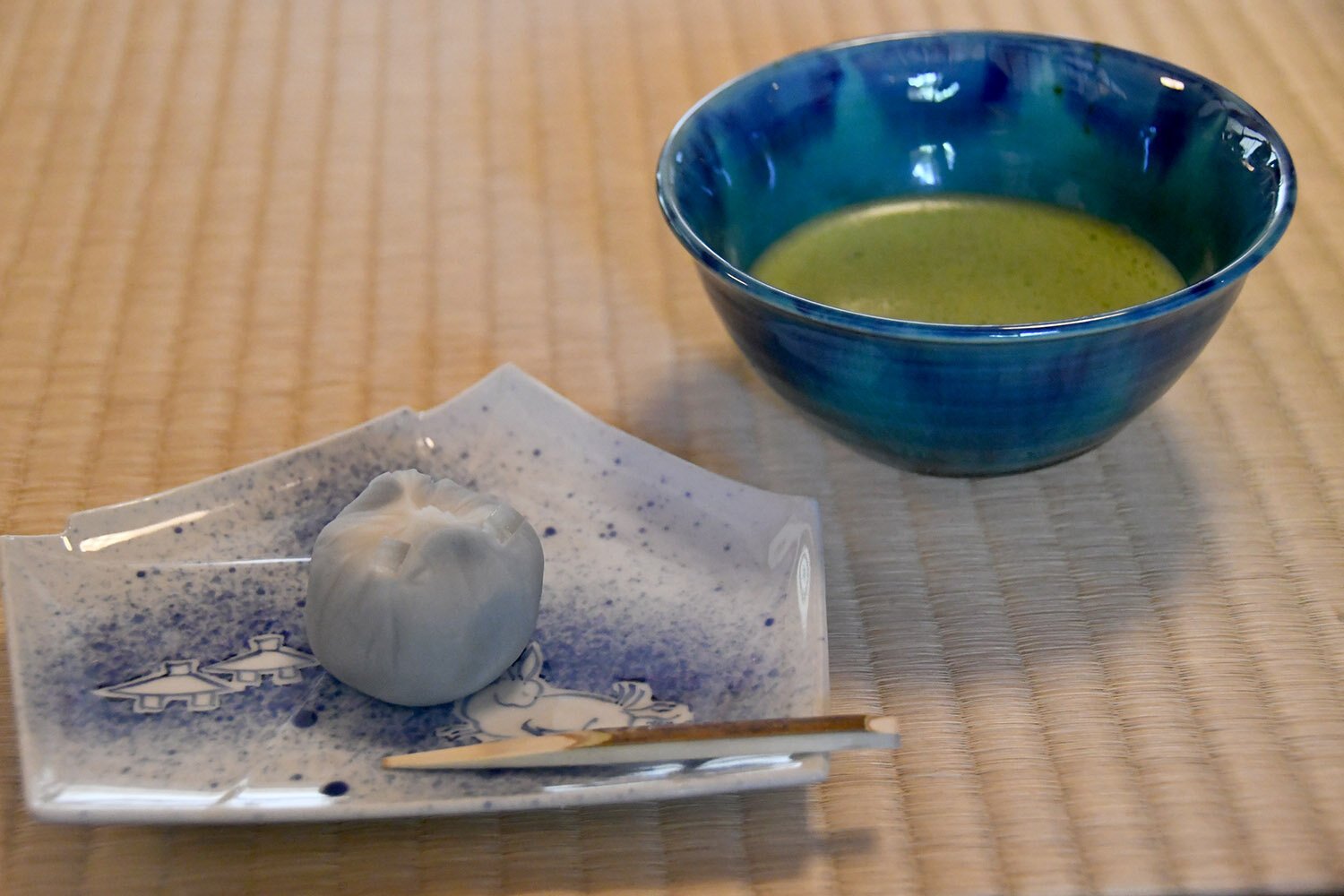
As we were wandering around the famous Japanese Gardens in Kanazawa, we stumbled upon a traditional teahouse.
When we saw there was a tea ceremony about to take place, we paid 700 yen to partake. (The less expensive 500 yen set was already sold out).
This ceremony didn’t really have much explanation, but each guest was brought their tea and sweet with a bit of a ceremonial gesture. After it was finished, we were free to explore the teahouse and grounds for a bit.
Our second Japanese tea ceremony
Our second encounter was during our Tokyo Food Tour with Arigato. This was a private ceremony, and we were able to choose our cups from their collection of ceramics that are hundreds of years old.
The gestures were explained and we had a chance to ask questions.
If you’d like to book your own tea ceremony, take a look at Get Your Guide because they have tea ceremonies in multiple cities around Japan.
Budget Tip: If you’re visiting a Japanese Garden, see if there is a ceremony taking place in their teahouse. This is an affordable option if you’re on a budget but want a brief tea ceremony experience.
20. Dine with locals in their home
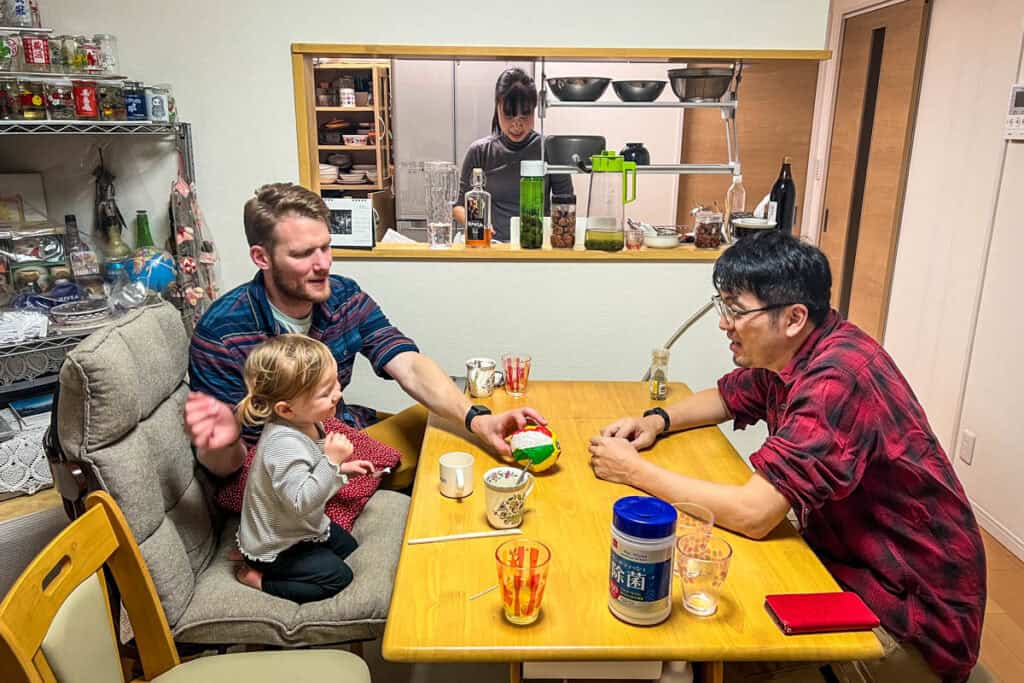
Ever wondered what it would be like to share a home-cooked meal with locals in Japan?
Borderless Visit is a really cool program that essentially pairs you with a local family with whom you can enjoy a homemade meal. In addition to great food, it’s also a unique opportunity to get a glimpse into authentic Japanese culture and daily life.
On our most recent trip to Japan, we went to a local couple’s home in Tokyo for dinner through the Borderless Visit program. It was absolutely one of the highlights of our trip, and we will definitely do it again!
We have a detailed guide that breaks down exactly how to plan your Borderless Visit so that you can try this unique experience yourself:
Psst! Want all of this worked into a real route? Our Classic Japan Itinerary hits the highlights on this list — and a bunch of hidden gems — across 14 fully-planned days. See the daily breakdown →
21. Explore a Japanese castle

When picturing castles, Europe is usually the first region of the world to come to mind.
But Japan holds its own, and has some very interesting fortresses for visitors to explore and gain a better understanding of this country’s history.
There are a dozen castles still standing in Japan, but here are some of the most famous (and easily accessible):
- Osaka – in the city and accessible by the metro, this historic castle played a major role in unifying Japan in the 16th century.
- Himeji – if visiting Hiroshima from Osaka, you could stop off in Himeji and explore the beautiful grounds of the UNESCO World Heritage Site Himeji Castle.
- Kanazawa – located in the center of the city, this castle is adjacent to the famous Kenroku-en, one of three “perfect gardens” of Japan.
- Matsumoto – Also known as the “Crow Castle” for its black color, this castle is especially beautiful during the cherry blossom season.
Psst! We have a list of must-see landmarks in Japan that’s sure to give you some inspiration for your itinerary!
22. Walk the Nakasendō Trail
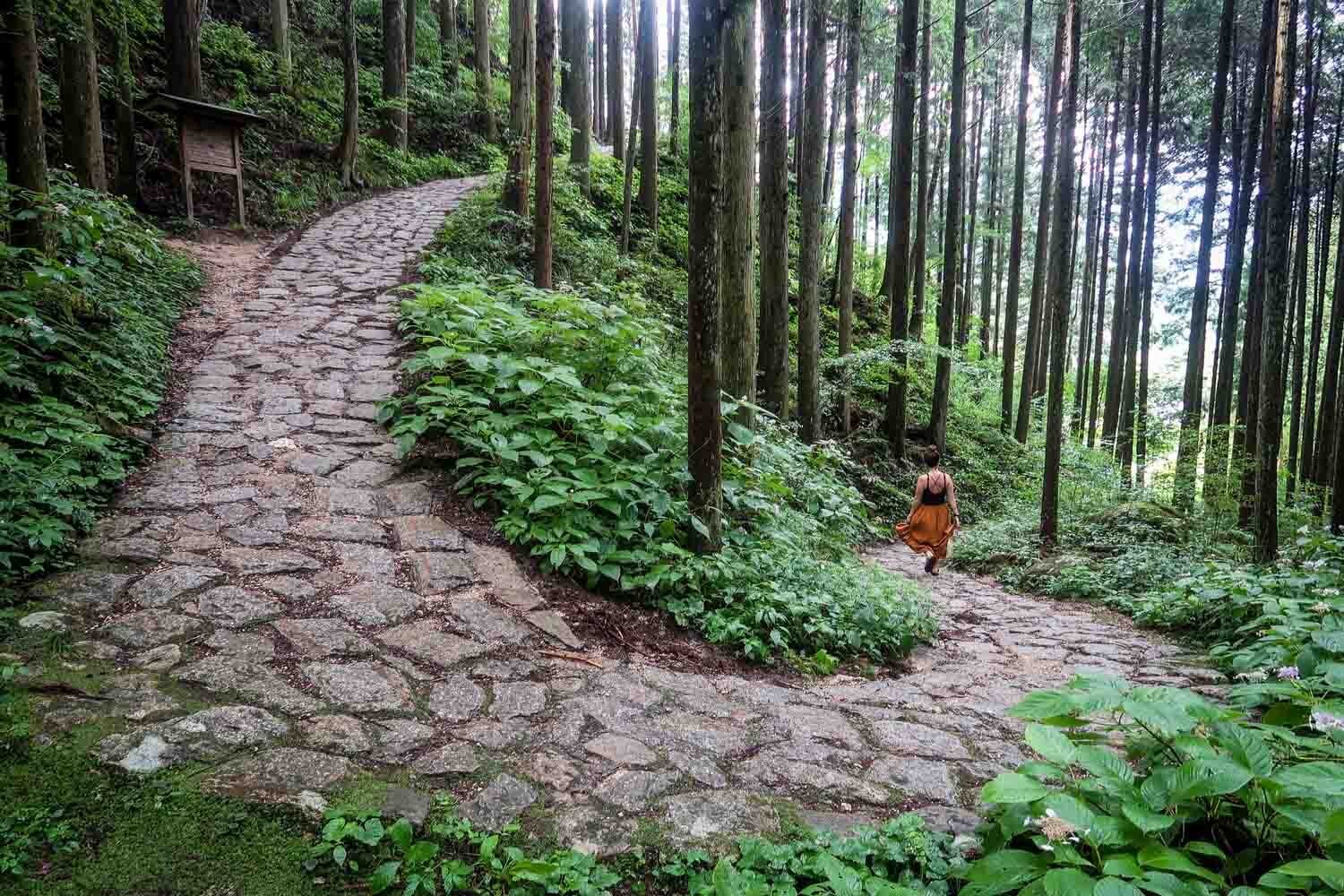
The Nakasendō Trail is an ancient route that spanned more than 330 miles to connect Kyoto and Tokyo and was used in the Edo Period. While modern development has taken over many portions of the trail, there are still a few sections that remain more or less in their original form and can still be walked.
One of the most popular sections is in the Kiso Valley and runs between the small towns of Tsumago and Magome.
We have an in-depth guide to hiking the Nakasendo Trail, including where to stay, what to pack, and can’t-miss stops along the route.

23. Take in the history of Hiroshima
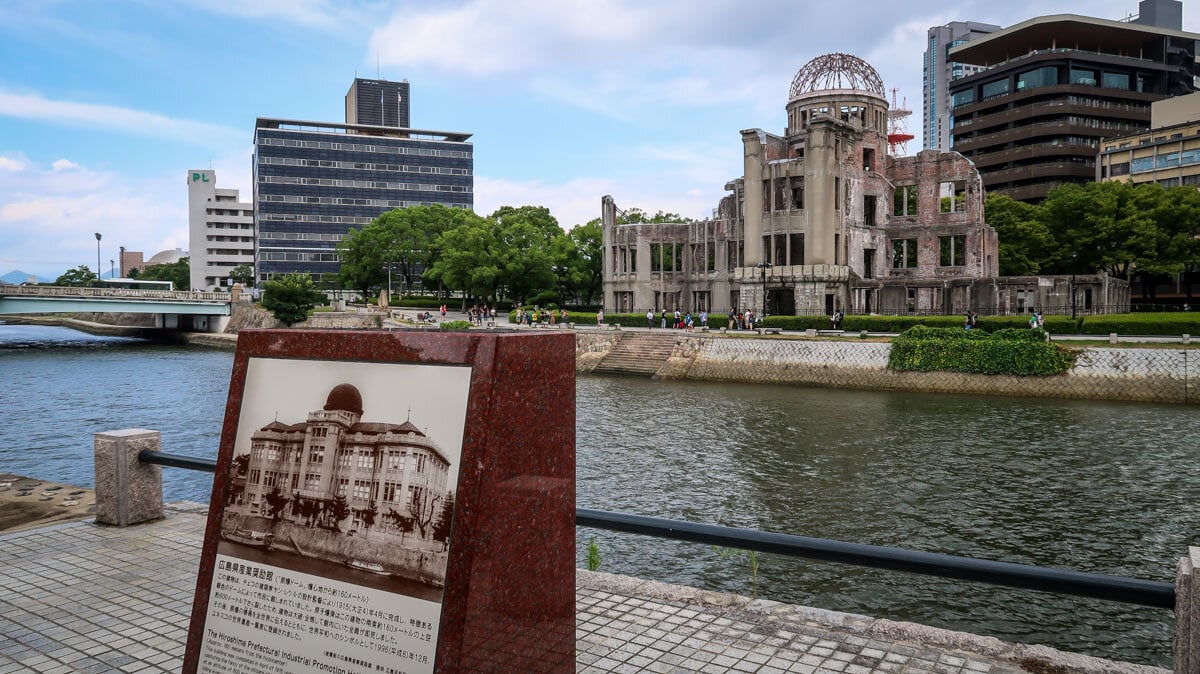
Hiroshima is well worth a place on your Japan itinerary, especially if you’re a history buff.
Tip: If you’re planning on staying in Osaka, you can easily make a day trip from Osaka to Hiroshima to explore the highlights of the city. And it’s even included in your JRail Pass!
The city was the first in history to be targeted by a nuclear weapon, with estimates suggesting more than 160,000 people died as a result of the 1945 bombing and its aftereffects.
Hiroshima Peace Memorial Museum is a must, even if you’re not typically a museum person.
On display are artifacts from the bombing, including clothing that was worn by victims and survivors at the moment of impact. Seeing the shredded fabric with my own eyes, knowing someone was wearing it, really moved me.
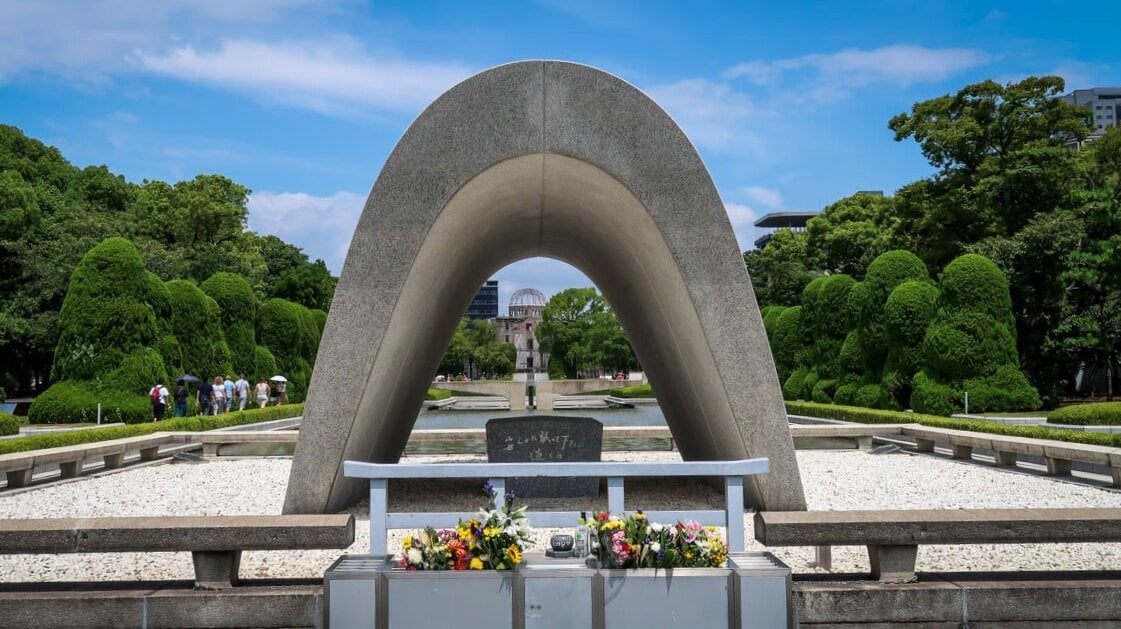
After visiting the museum, explore the Hiroshima Peace Memorial Park, which has informational plaques, dedications and remnants from the bombing.
As you can imagine, it is heavy stuff. While painful, it is so important for people to see places like this in order to have a better understanding of our world history, and to move forward without repeating the mistakes of our past.
On a lighter note, Hiroshima is also a vibrant, modern city with a castle, Japanese gardens, incredible regional food, and nearby Miyajima Island. We cover it all in our Hiroshima day trip guide.
24. Bow at the famous Nara Deer
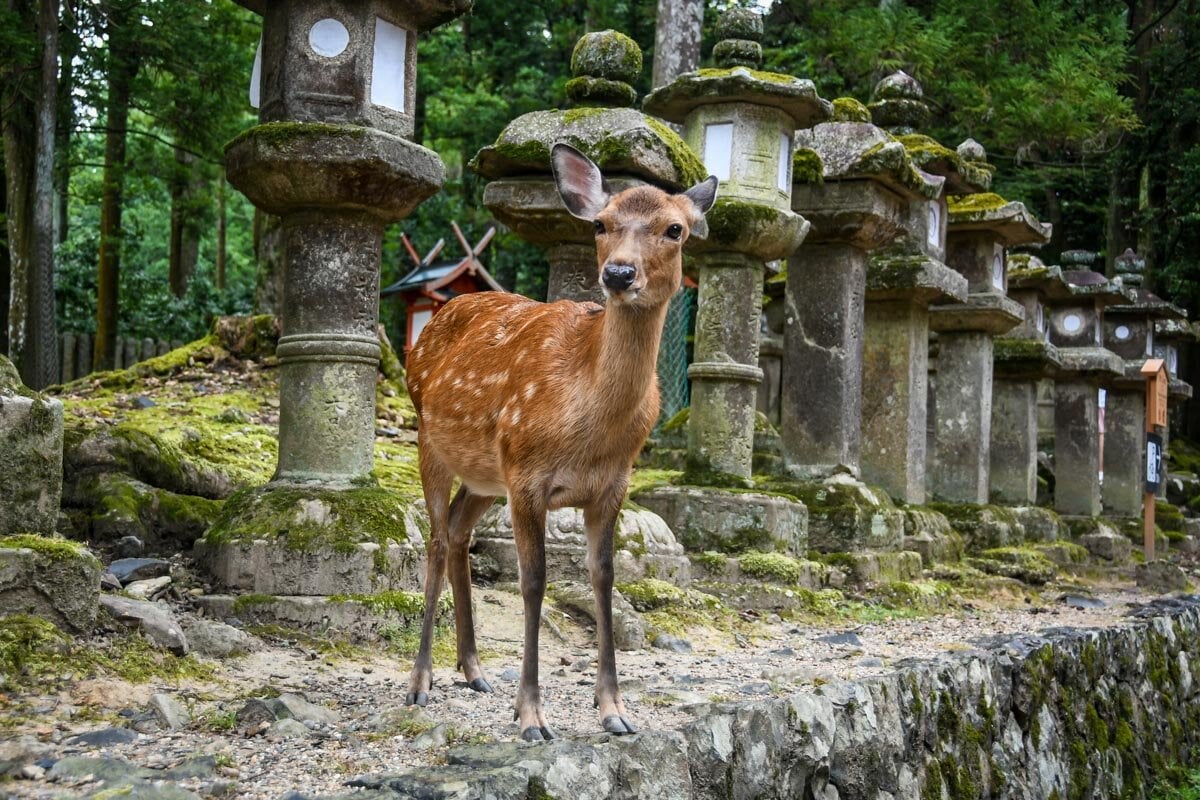
If you want to channel your inner Snow White and get friendly with a deer (or 20!), a stop in the ancient capital of Nara should be on your Japan itinerary.
Well-known for its ancient temples, and even more famous for the deer who saunter about them, Nara is just a short 45-minute train ride from both Osaka and Kyoto, making it a popular day trip from either city.
Don’t miss this! We’ve created the perfect Nara day trip itinerary, including must-see attractions and hidden gems (plus a free map!).
The 1,000-plus deer that roam freely through Nara Park are considered sacred messengers of the gods in Shinto tradition, and they have absolutely no fear of humans. In fact, they’ve learned to bow in exchange for food. Yes, really.
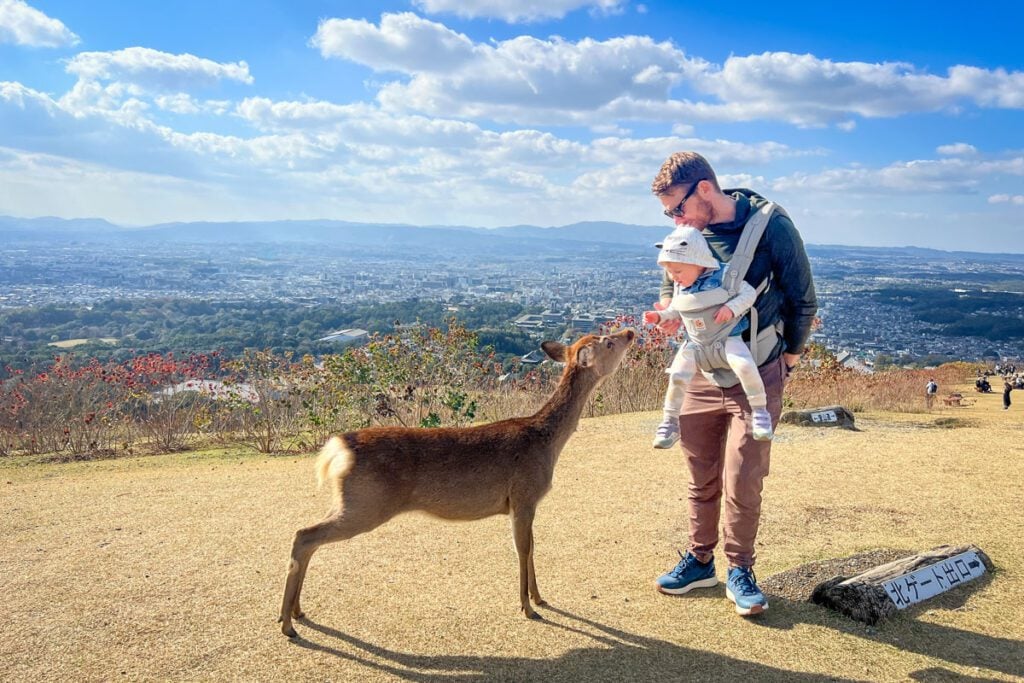
We’ve been twice now, and while it was noticeably busier on our most recent visit, it’s still 100% worth it. There’s nowhere else in the world quite like it. Beyond the deer, there are also beautiful historic temples, shrines, and some excellent food stops to discover.
Psst! Before you hop on a train, make sure you read these tips for feeding the Nara deer (including what NOT to do).
25. Wander through Japanese Gardens
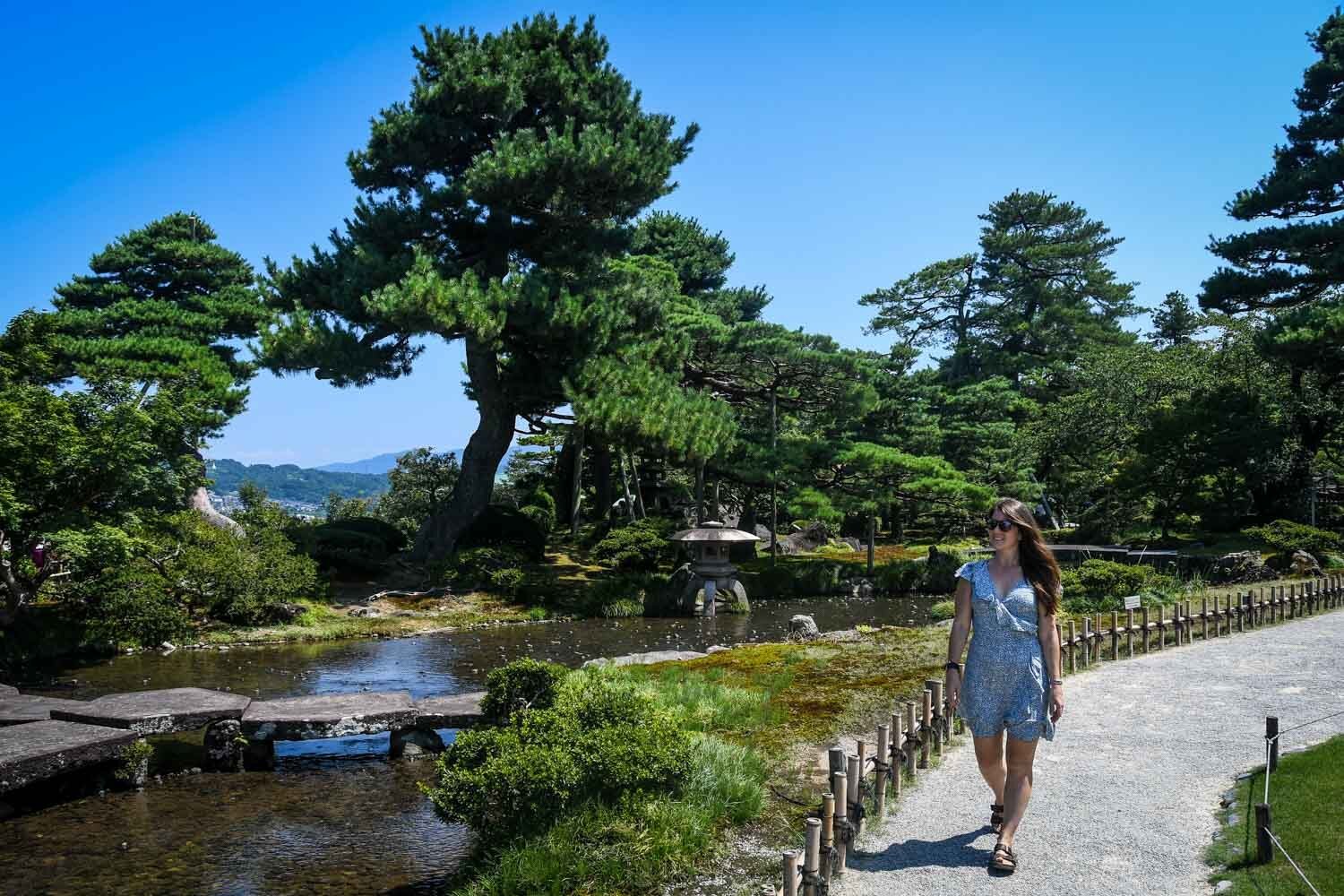
While you can find Japanese gardens all around the world, the best place to glimpse these immaculate creations is, of course, in Japan!
Japanese Gardens change with the seasons and are beautiful year-round, with springtime blossoms, fall foliage or even a dusting of snow.
Here are some of the most famous Japanese gardens:
- Kenrokuen, Kanazawa
- Korakuen, Okayama
- Kairaku-en, Mito
- Tenryū-ji, Kyoto
- Shinjuku Gyoen, Tokyo
- Imperial Palace, Tokyo
Psst! Want all our top recommendations pinned directly in your Google Maps? Our Interactive Japan Map has 200+ custom pins of everything on this list and more! Check out the Interactive Japan Map →
26. Cross the Shibuya Scramble
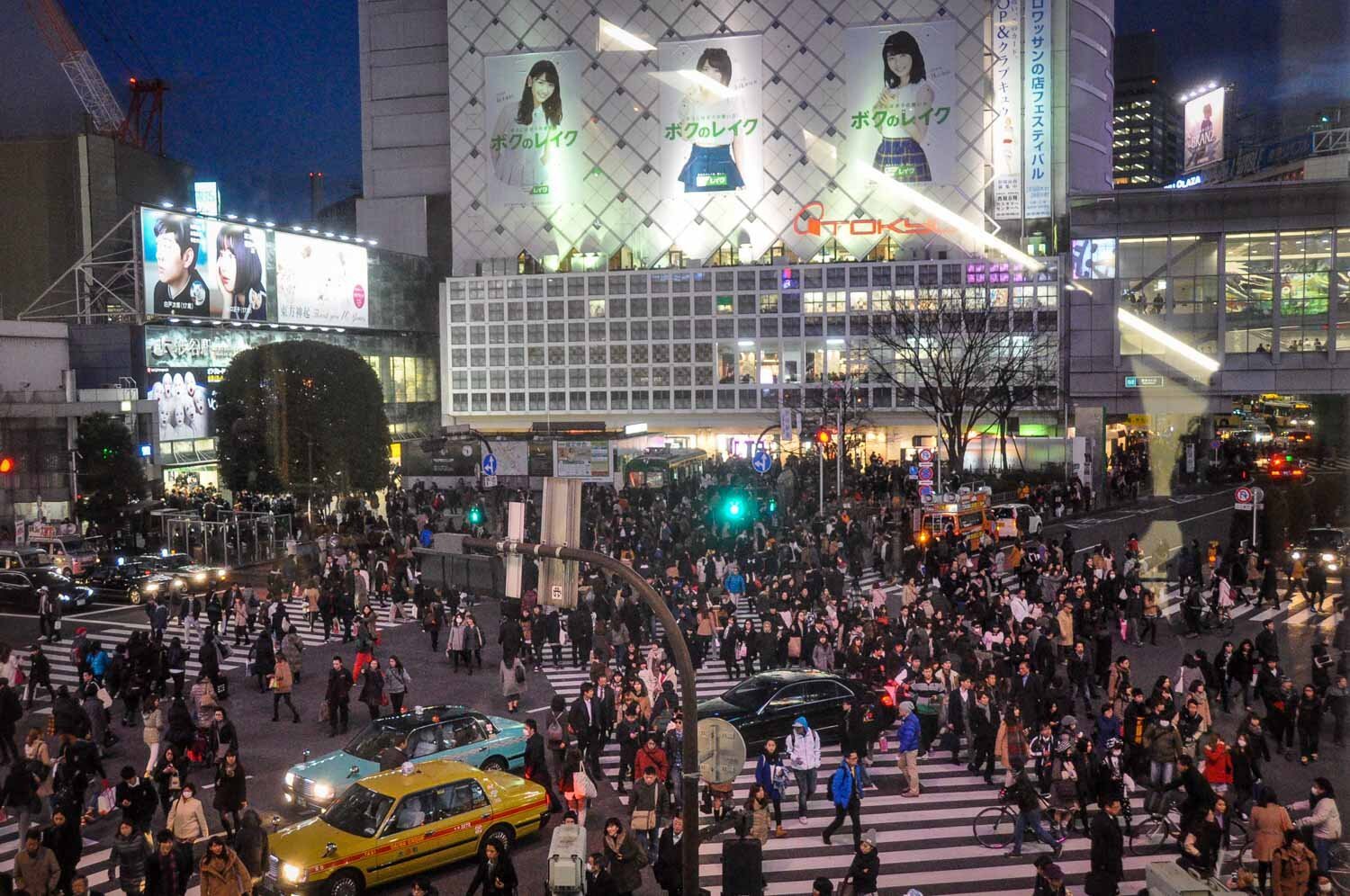
Known as the busiest intersection in the world, the Shibuya Crossing is everything I imagined Tokyo to be: Neon lights aglow and people walking in all directions in organized chaos.
This spot, where five intersections converge is known famously as “the scramble” and should be a must on your Tokyo to-do list. And it doesn’t take long to get here and experience the madness.
Just watch our quick time-lapse video below so you know what to expect!
View the crossing from above at Shibuya Sky
An alternative to having eyes on the ground is viewing the chaos from above. The Shibuya Sky rooftop observatory is the newest addition to central Tokyo’s lineup of rooftop views.
At approximately 230 meters (~755 ft) above the intersection, it’s the tallest skyscraper in Shibuya. The open-air observatory offers 360º views of the city and on a clear day, you can even catch a glimpse of Mount Fuji in the distance.

- Entrance fee: ¥2,700 for adults (~$17 USD); book online in advance (we’d highly recommend booking in advance because it is sold out almost every day)
- Hours: 10 a.m. to 10:30 p.m.
Other viewpoints:
There’s also a Starbucks that overlooks the madness. Though we will warn you, the Starbucks is something of an attraction itself, and is always crowded. It is even said to be the busiest location of this coffee chain in the world!
Another option is to head to the 8th floor rooftop observatory of MAGNET. You must buy a drink (starting at around 500 yen) to enter.
27. Experience Kawaii Culture
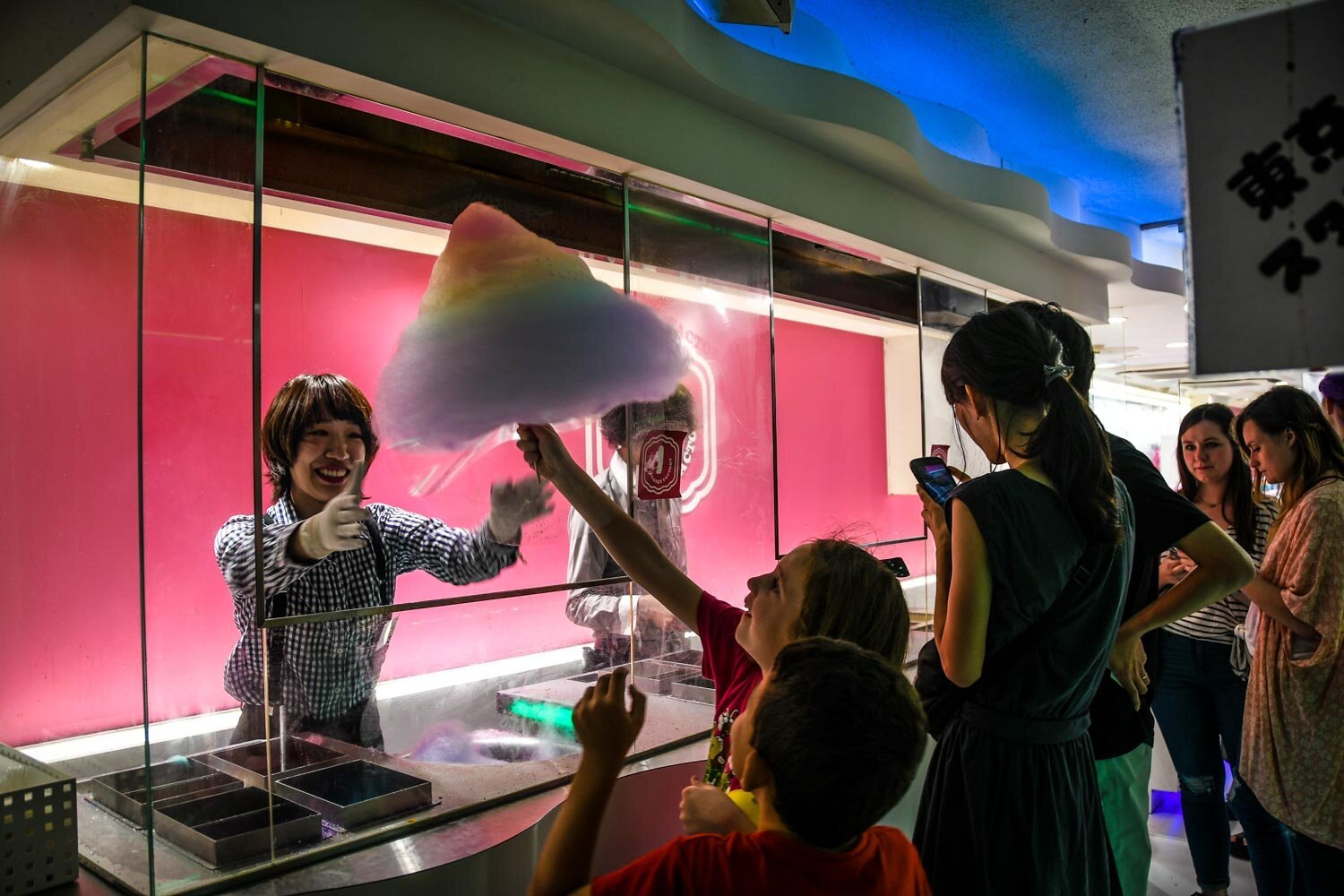
Kawaii is the Japanese word for “cute”, and it won’t take long to realize just how big the kawaii culture is. It should come as no surprise that Japan is the birthplace of Hello Kitty and many equally cute characters that have attracted cult followings.
And you don’t have to look far to see examples of how this obsession with cuteness has impacted food, clothing trends, and well, pretty much all aspects of life that can be described as “cute”.
The best place in the country to experience this ubiquitous kawaii culture is in the Harajuku neighborhood of Tokyo. Particularly on the Takeshita Shopping Street.
You’ll see young women who are dressed almost as lifelike dolls, and you’ll pass by people holding rainbow cotton candy (aka “Fairy Floss,” which is a much cuter sounding name). Ice cream cones have cute cartoon faces and pigtails are more abundant than in a kindergarten class.
We should warn you, this street gets busy. Like, really busy. But that’s kind of part of the whole experience. So be prepared for a wild and very, very cute time!
Hot tip: Be sure to check out Kawaii Monster Land, the fever-dream successor to the legendary Kawaii Monster Cafe. This underground amusement park on Harajuku’s Takeshita Street is a kaleidoscopic explosion of candy-colored rides, monster-themed snacks, and live performances by the resident “Monster Girls.”
→ Psst! If you plan on spending some time in Japan’s capital city (you should!), be sure to read our guide on where to stay in Tokyo for the best neighborhoods and hotel recommendations!
28. Traverse the Japanese Alps
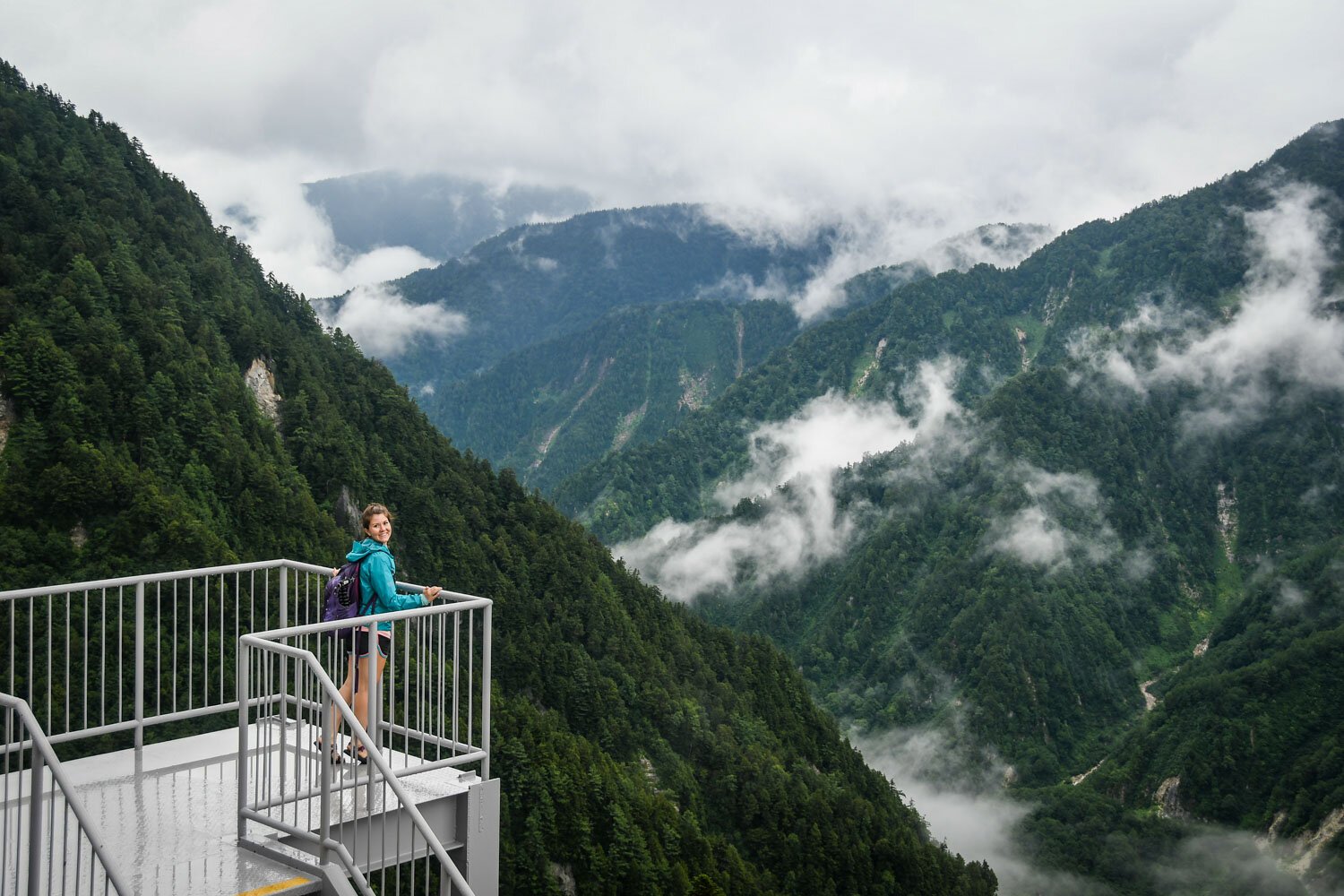
If you’ve had enough of city culture in Japan, listen up…
Europe isn’t the only region with alps. In fact, Japan has its very own alps that are absolutely breathtaking, and somewhat off the beaten path for foreign tourists.
The best way to experience the alps? The Tateyama Kurobe Alpine Route, hands down.
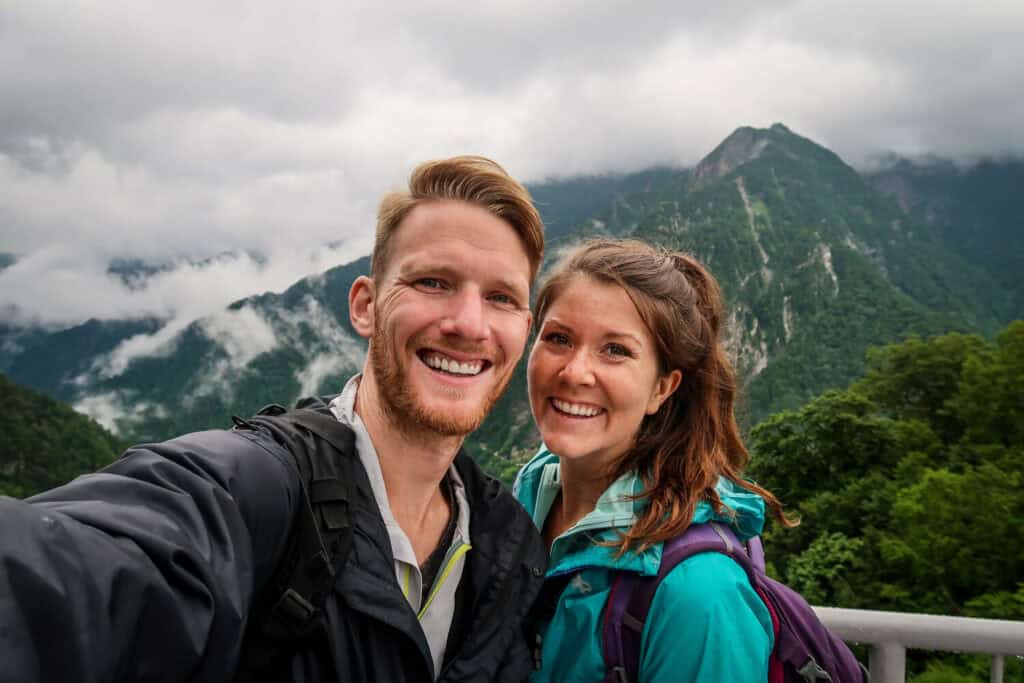
Known as the Roof of Japan, the Tateyama Kurobe is a sightseeing mountain traverse where passengers take 8 different modes of transportation, including a cable car and a ropeway, to travel from one side of the Kita Japanese Alps to the other.
Depending on what time of year you’re visiting Japan, you can expect a very different view: a towering snow wall in early spring and stunning fall foliage in autumn, for example.
We have an entire guide that will help you plan your trip to the Japanese Alps via the Tateyama Kurobe Alpine Route.
→ Planning your Japan itinerary? Don’t miss these iconic Japan landmarks and bucket list sights across the country.
29. Stay in a Ryokan
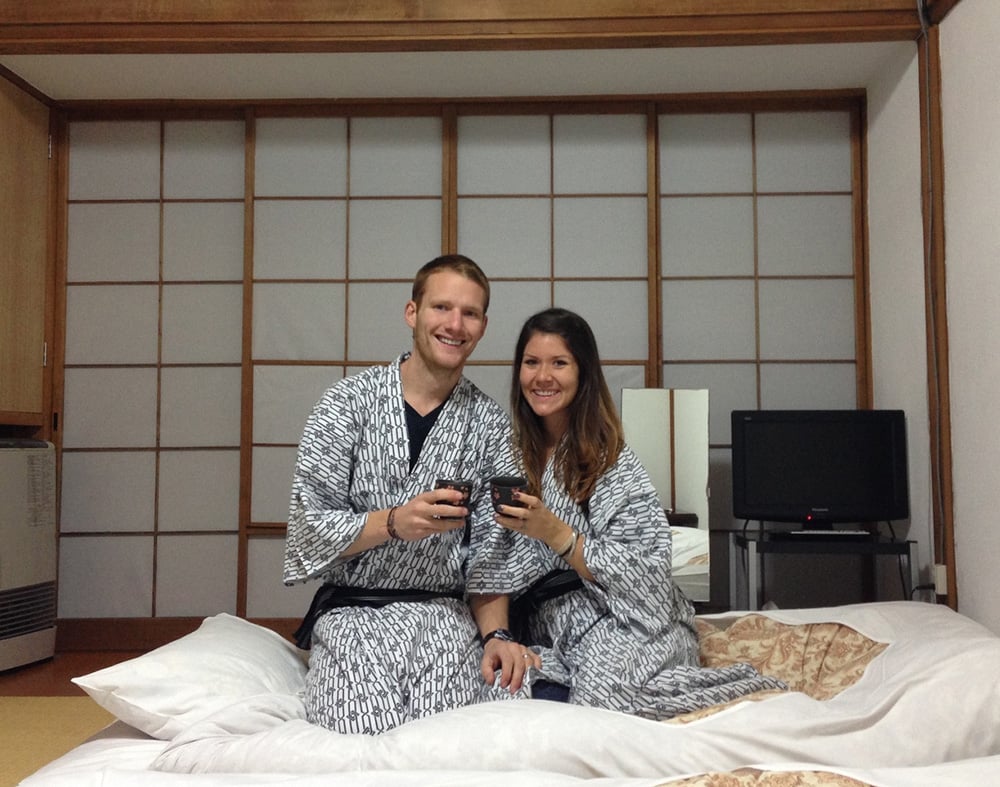
Staying at a ryokan is an experience you can only have in Japan. This type of traditional Japanese inn is characterized by tatami-matted rooms and exceptional hospitality.
Often times ryokan guests are provided with yukata robes and access to private on-site onsen. Many ryokan also serves elaborate meals, which are usually included in the nightly rate.
Hot tip: You can find ryokan on booking platforms like Airbnb and Booking, or you can grab our perfect Japan itinerary which has suggested ryokan stays we’ve personally vetted.

30. Stay in a capsule hotel
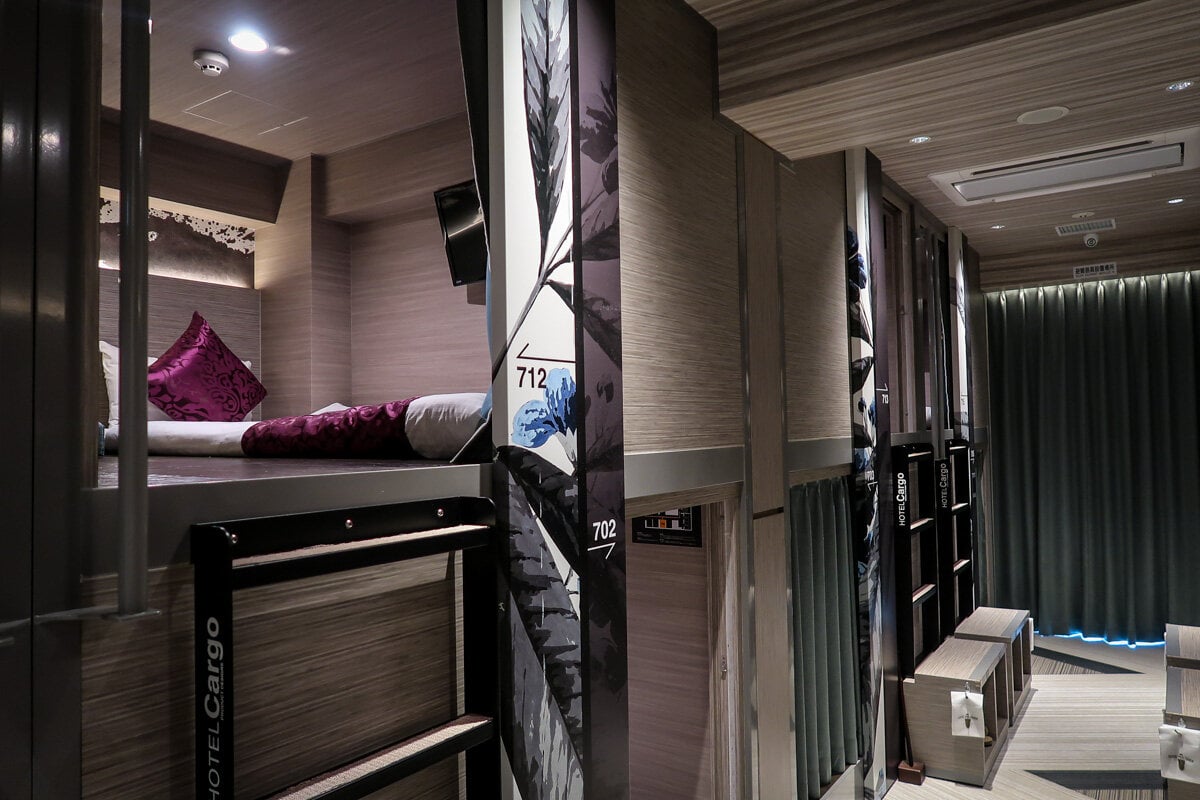
Yes, sleeping in an enclosed pod sounds a little coffin-y. But trust us, it’s far less claustrophobic than it sounds and way more fun than you’d expect.
We stayed at Hotel Cargo in Osaka and were pleasantly surprised. Our capsule felt less cramped and more cozy, like a scaled-down hotel room complete with a mini desk and TV.
The one downside is that Capsule hotels are traditionally separated by gender, so we had to sleep apart. (We’ve since learned that “couple capsules” exist, so search those out if you’d rather not spend the night away from your travel partner!)
Options range from bare-bones budget to surprisingly plush, and you’ll find the most variety in Tokyo and Osaka.
31. Do a temple stay in Koyasan
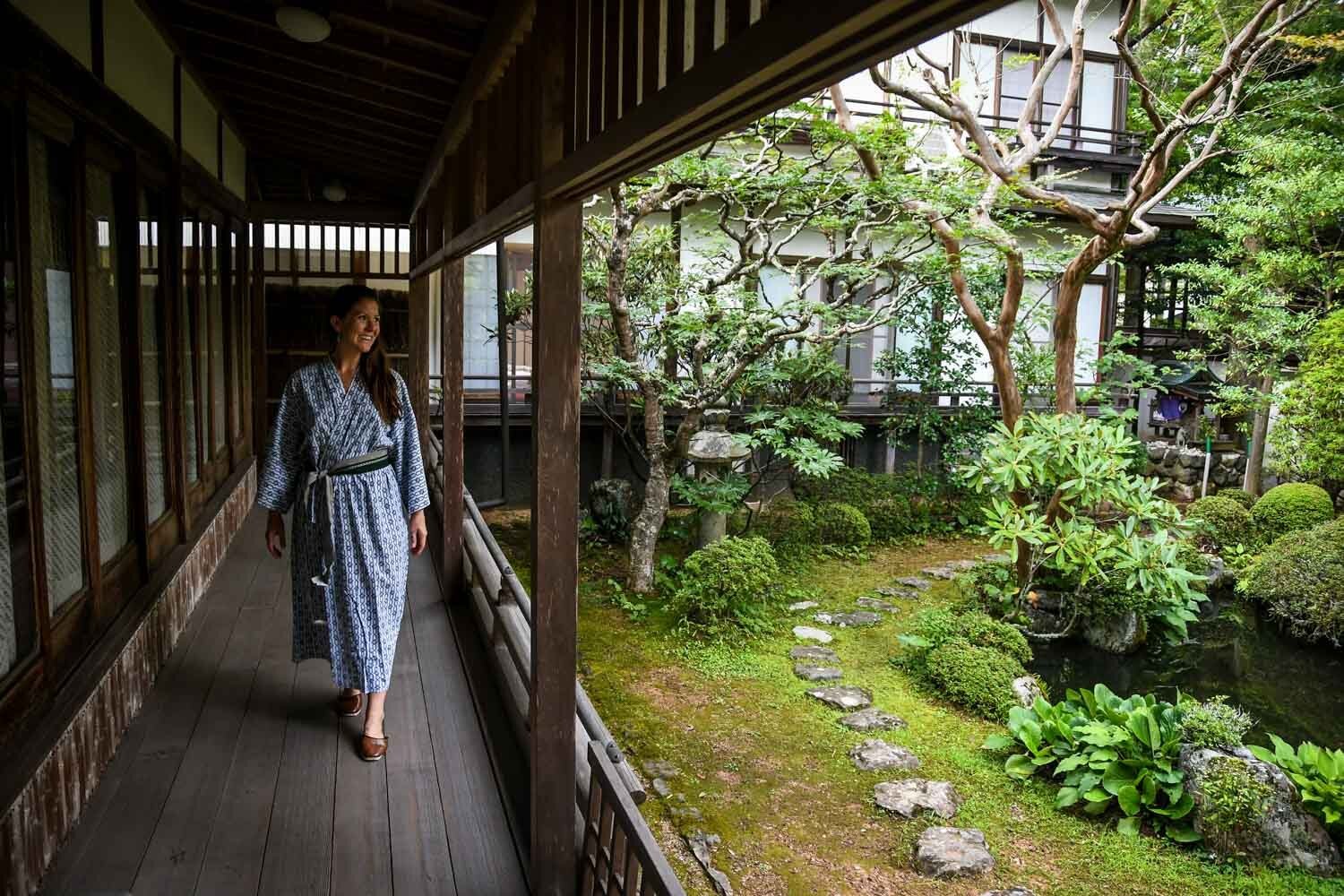
Not far from bustling Osaka lies the tranquil Mount Koya (or Koyasan). Dotted with ancient Buddhist relics, vegetarian eateries, and temples that allow guests to spend the night, Koyasan is a peaceful escape from Japan’s major cities.
We stayed at Koyasan Zofukuin and would recommend it as a solid mid-range option. Temple stays can get pricey, but this one had delicious food, beautiful facilities, a tranquil garden, and a great location.
Good to know: a temple stay is more or less a ryokan experience rather than a stay with the monks themselves. You’ll eat a Buddhist vegetarian dinner and breakfast and have the chance to observe the monks’ morning ritual alongside other guests.
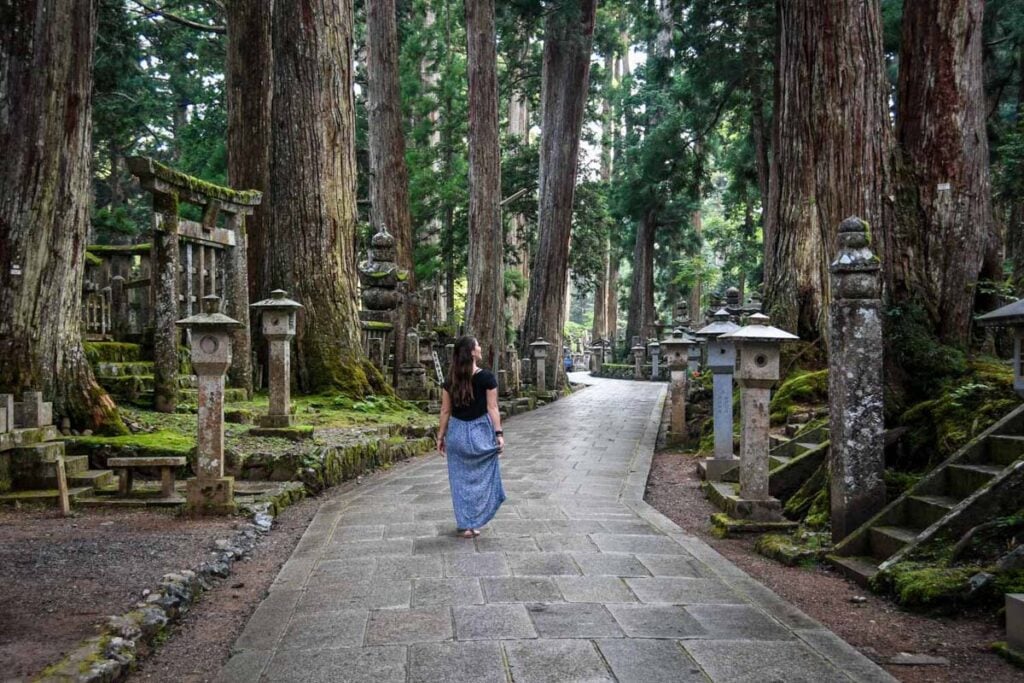
Insider tip: While you’re there, set aside plenty of time for Okunoin Cemetery, it’s large, atmospheric, and genuinely incredible to wander through. And for lunch, we loved Bon-on-sha, a cute and artsy spot serving a vegetarian “plate of the day” with a vegan option available.
32. Explore one of Japan’s preserved historic villages
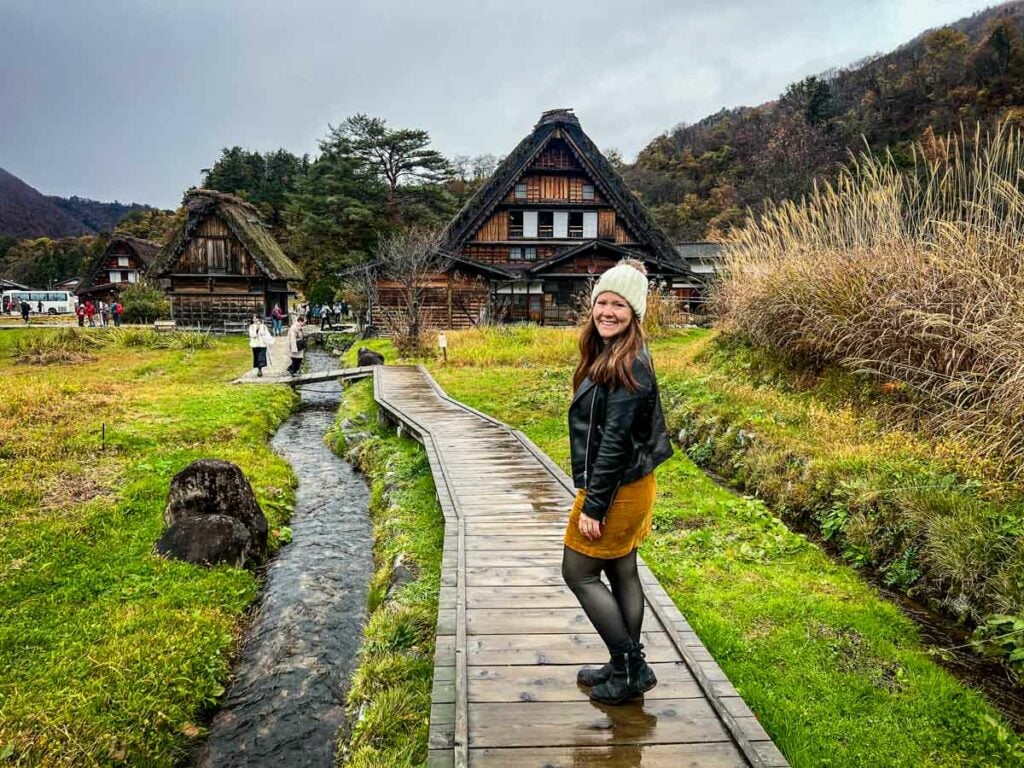
Japan is often applauded for its modern infrastructure, but the architecture of the past is just as endearing. Okay, let’s be real… way more endearing.
Immerse yourself in one of Japan’s preserved historic villages, and imagine what it would have been like to live there.
Here are a handful of the most famous preserved historic villages in Japan:
- Hida Folk Village: Just outside the city center of Takayama, this historic village is pretty easy to get to.
- Shirakawago: Located between Kanazawa and Takayama, this stunning village is especially picturesque in the wintertime.
- Psst! Read up on how to get to Shirakawago because getting there is not included in your JR Pass.
- Gokayama: Situated in Toyama prefecture, this historic village isn’t as famous as Shirakawago or Hida Folk Village, but it still offers historic charm.
- Oshino-mura: Near Mount Fuji, this makes a nice stop if you are spending time near Japan’s most iconic mountain.
33. Go shopping for Japanese souvenirs
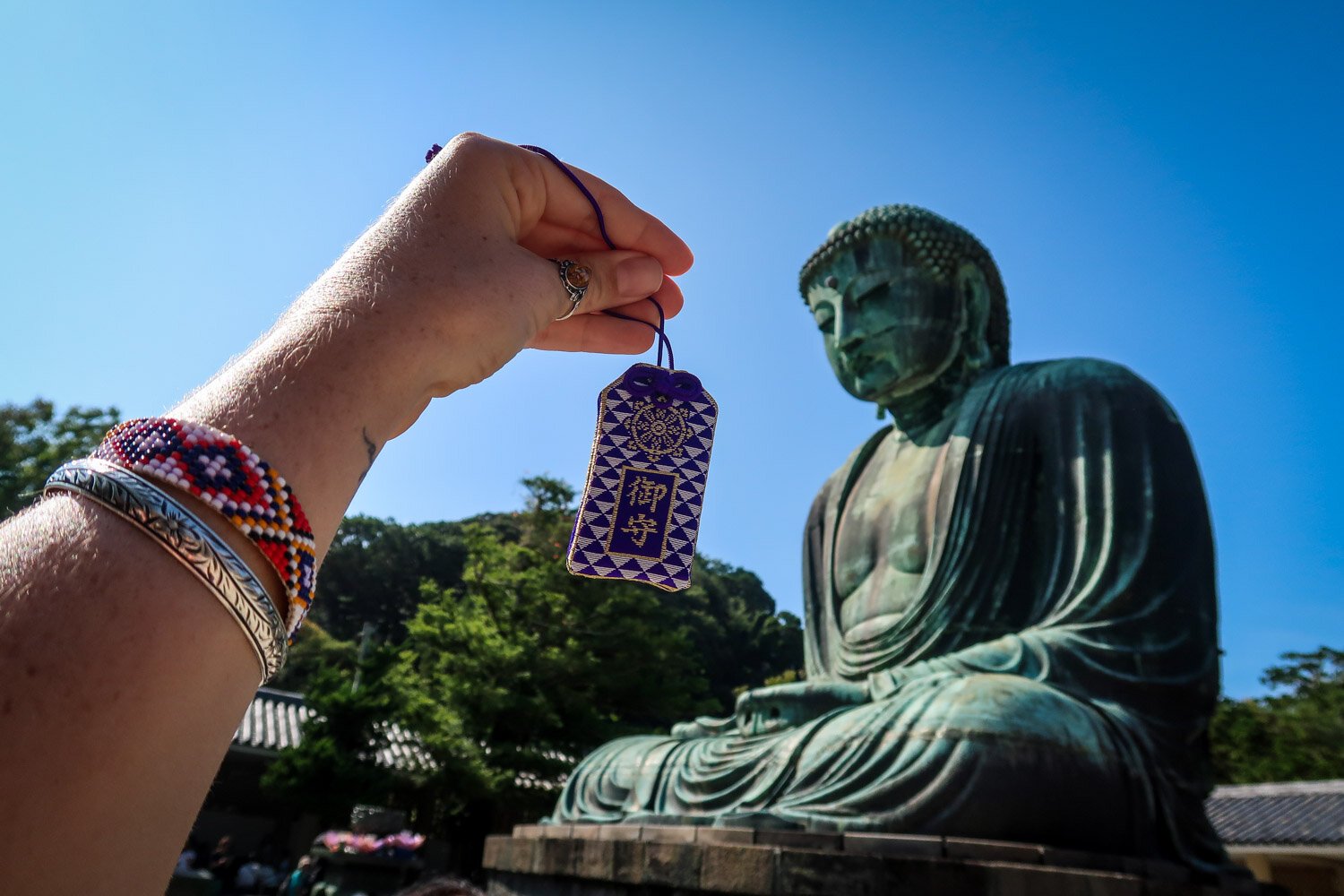
Shopping districts are plentiful in every Japanese city, packed with clothing stores, cosmetic shops, discount vendors, and souvenir stores. Even if you’re not really into shopping (I’m with you!), chances are you’ll want a memento – or a few – to remind you of Japan.
There are so many beautiful things to Japanese souvenirs that it would be a shame to come home empty-handed. We’ve actually rounded up some of the best things to buy in Japan to help you plan out which souvenirs are worth the space in your suitcase.
34. Try a Japanese photo booth
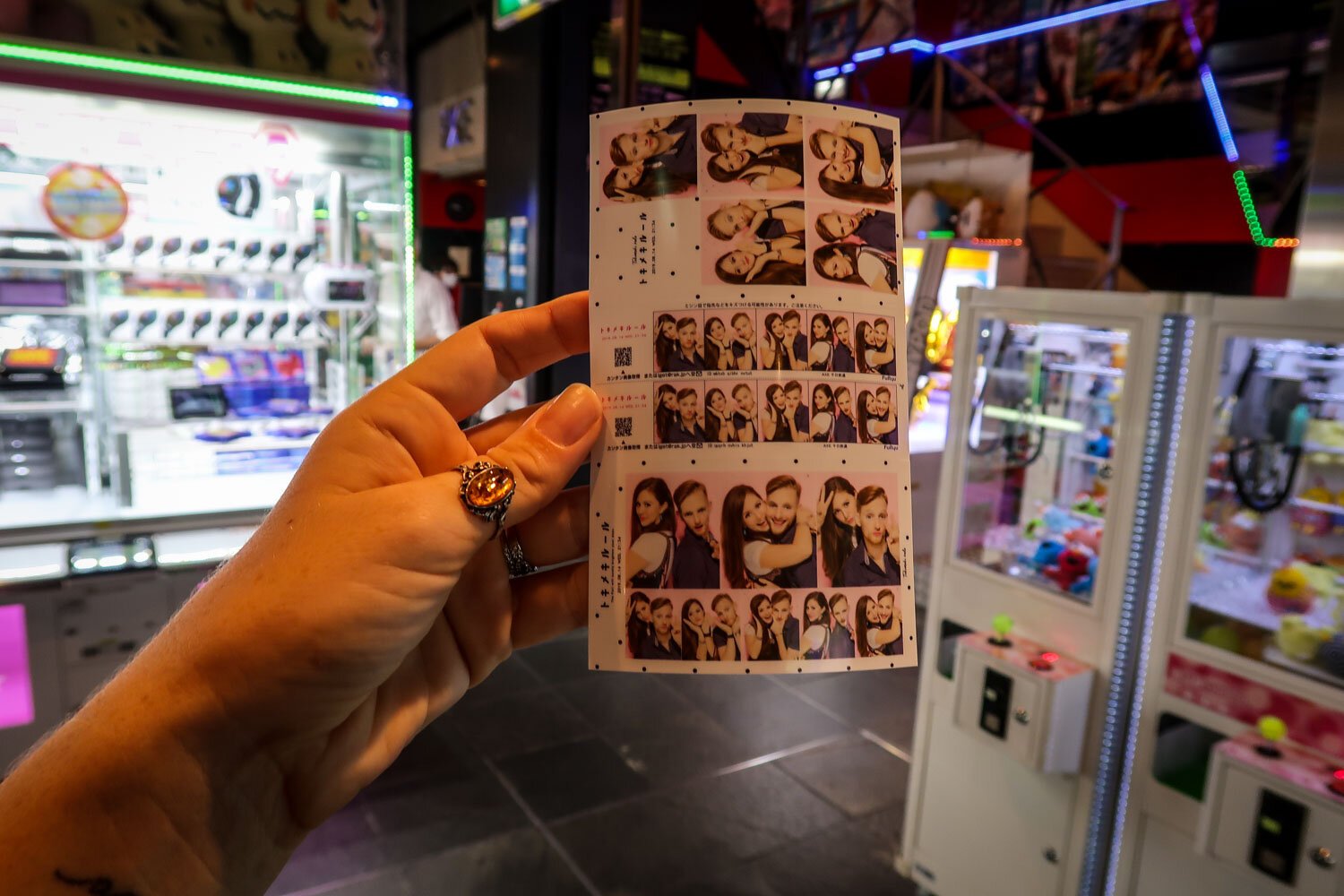
Hopping inside a Japanese photo booth, or purikura, is a quick, yet memorable experience.
You can find photo booths in many arcades. Sometimes simply typing “purikura” into Google Maps will show you any nearby.
The best part is this experience takes less than 10 minutes and costs around 400 yen. So any traveler can squeeze it into their Japan itinerary, no matter how tight!
And at the end, you’re left with an inexpensive and ridiculously “Japanese” souvenir that’ll make you smile (or cry laughing!) each time you see it.
35. Sing karaoke
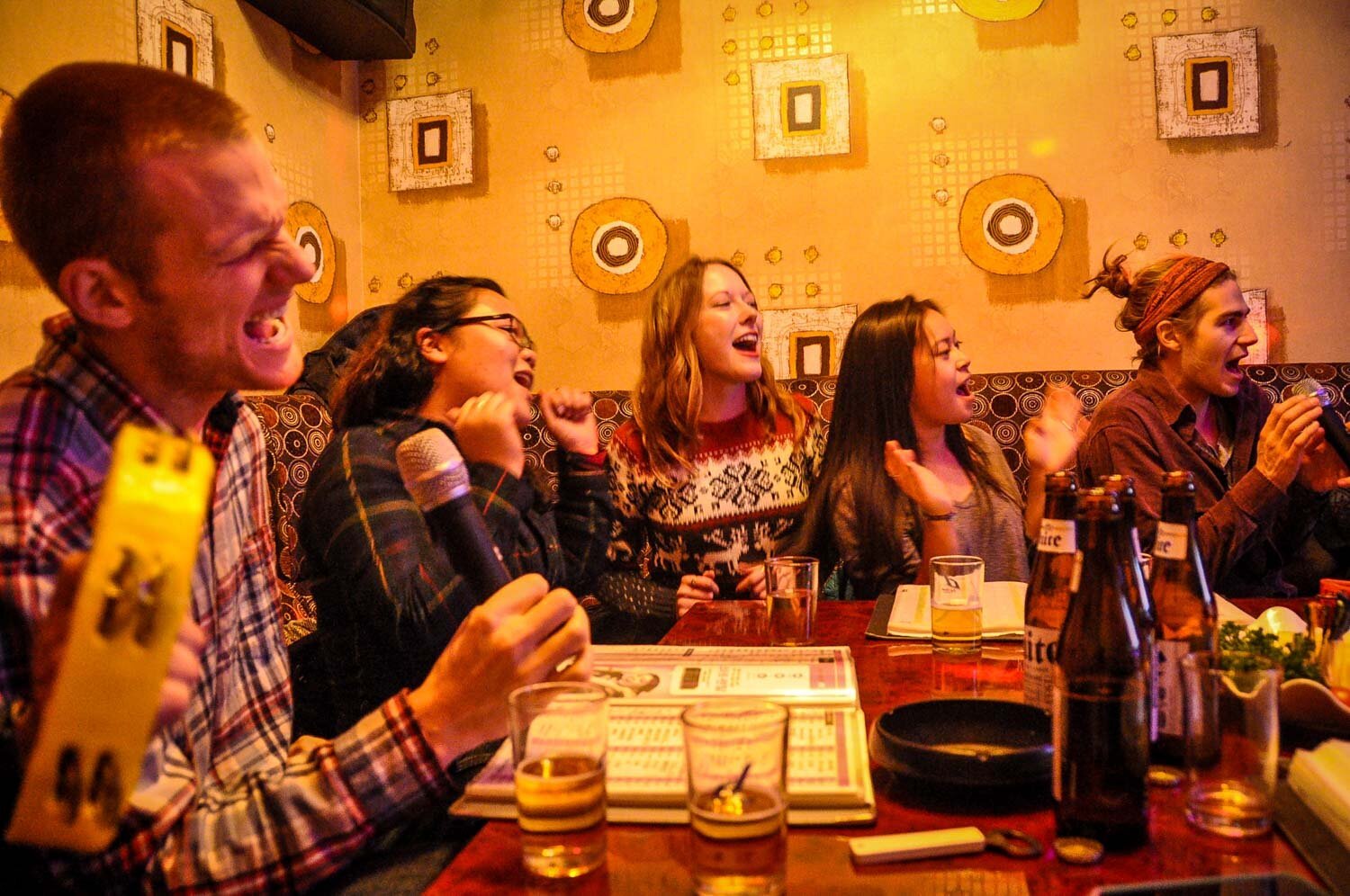
Calling all singers (and those who like to pretend they’re singers… aka ME!). Karaoke is a big deal in many parts of Asia, and if you’re into music, you’ll definitely want to experience Japan’s karaoke culture.
Karaoke rooms are rented spaces where you can belt out your favorite tunes in privacy or in the company of friends. Most can be rented by the hour and serve beverages and snacks.
Psst! If you’d rather not rent a private room, we’ve heard good things about Diamond Bar in Golden Gai.
36. Taste sake
Chances are you’ve had sake at your favorite Japanese restaurant at home while enthusiastically shouting “kanpai!” Oh, just me?!
Sake is often referred to as “rice wine”, and while that makes some sense – it is made by fermenting rice – technically, it’s more similar to beer than wine. But technicalities aside, sake is a big part of Japanese culture and should definitely be tried during your trip to Japan.
Our first time trying sake we just, well, drank it.
But when we finally did a proper sake tasting, we learned that sake can essentially be thought about by using a quadrant with the following scales: Aromatic to Low Aromatic, and Light Flavor to Strong Flavor (see photo below).
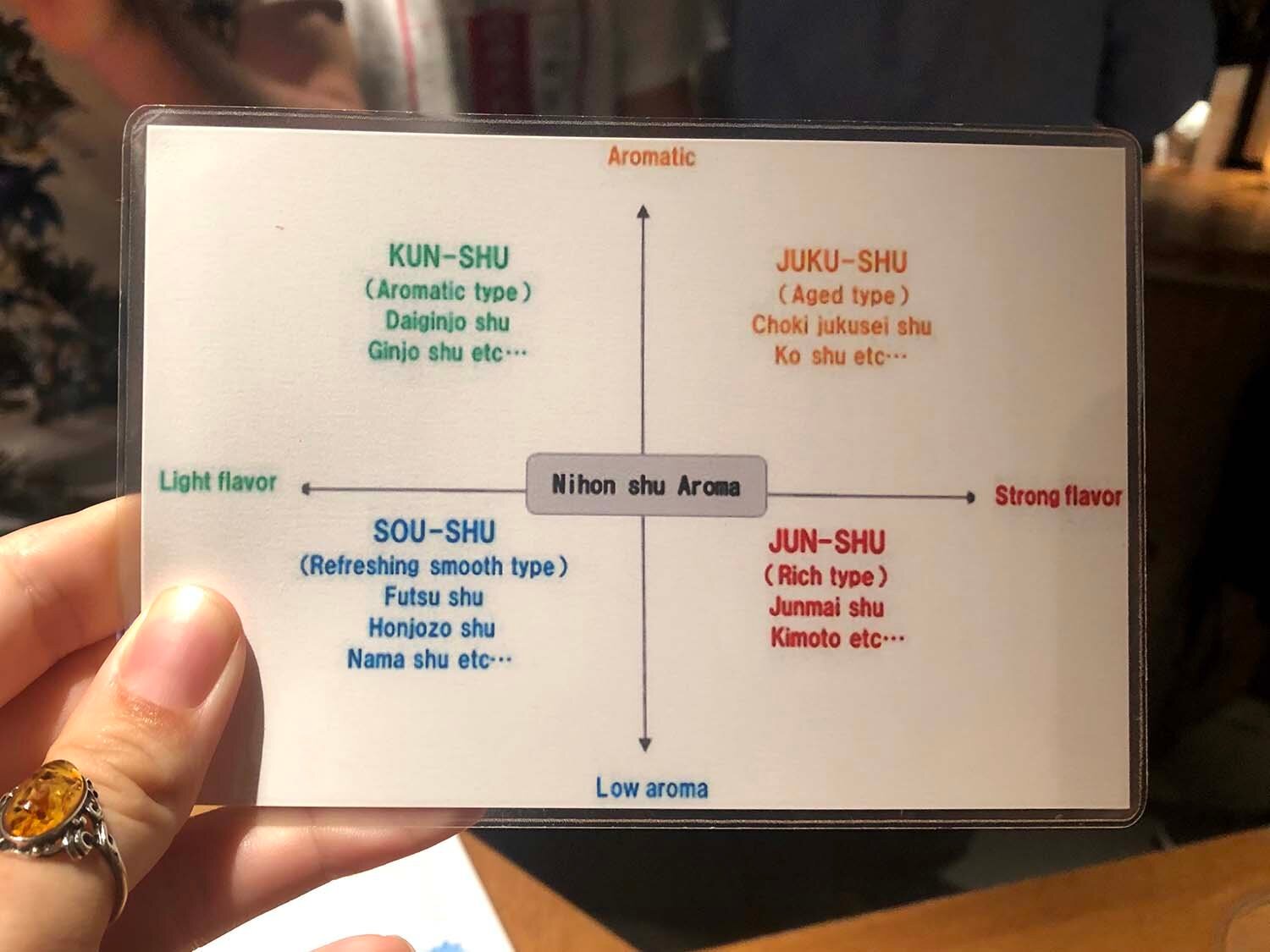
Just like regular ol’ wine from grapes, sake can have complex flavor profiles, and this is perhaps a simplified way of describing those flavors. But I think it’s a good reference for anyone new to sake!
Oh, and it can be served warm/hot or cold. I just thought sake was sake. I had no clue there were so many varieties.
37. Eat a Kaiseki meal
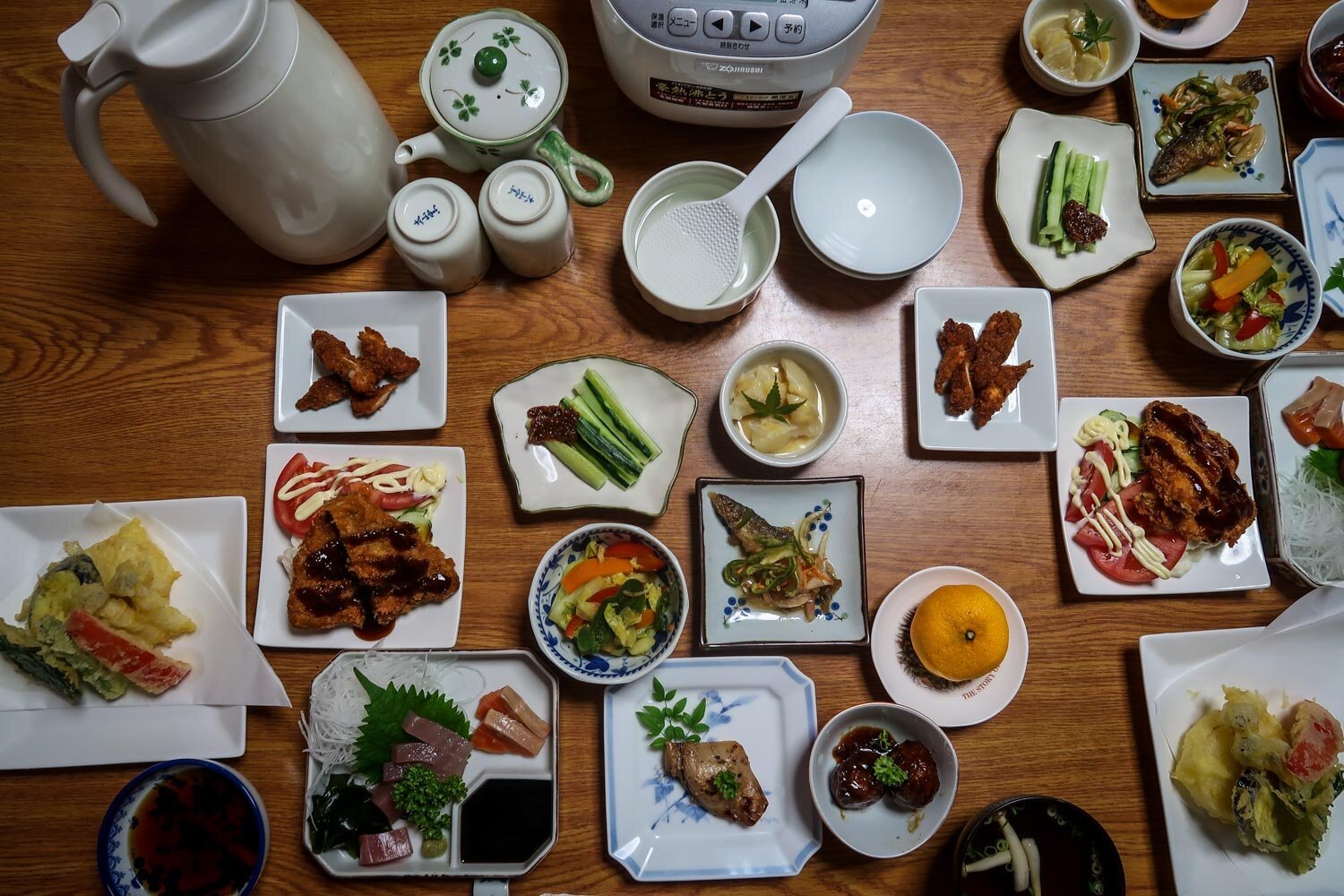
If you like food as much as we do, you won’t want to miss a kaiseki meal during your trip to Japan. This is essentially a large meal with all sorts of small dishes, so you’ll get to try all sorts of things. Traditional kaiseki meals often include a lot of meat and fish.
Kaiseki meals are commonly included in higher-end ryokans (traditional Japanese inns), and it is usually a highlight of the stay.
Special care is put into the presentation of each small dish, making kaiseki meals especially beautiful to photograph. (Ben always says our cameras get to eat before he does!)
Tip: If you are vegetarian, a great way to try a kaiseki meal is at a Buddhist temple stay (for example, at Koyasan Zofukuin). This article has more info about traveling in Japan as a vegetarian.
38. Play Pachinko

This glammed-up version of pinball is noisy, bright, and crazy popular in Japan! Oh, and confusing. Did I mention it’s confusing?!
Most gambling is illegal in Japan, so instead of winning money from pachinko, you get silver balls that you can use to play more rounds to exchange for prizes, like snack foods, toys, or electronics (if you’re a really big winner!).
You can find pachinko all over Japan, from smoky, small village pachinko shops to large arcades in downtown Osaka.
We didn’t really understand the hype, but we also didn’t really know what we were doing… Regardless, it’s one of those “only-in-Japan experiences” that you can’t really have anywhere else!
Pachinko instructions:
- Insert money and press play (玉貸).
- Turn the round lever, which shoots out small metal balls. The further you turn the handle, the stronger the balls will shoot. Start by just barely turning the lever until you get a feel for it. Keep it turned so balls continue to shoot.
- Aim the balls at the gaps in the pegs. Your goal is to make them go into the small hole in the center of the game board. Tip: Many players claim that the top left corner is the best spot to aim for.
- When you get the ball into the proper hole, you will be rewarded with a celebratory “ding-ding-ding” and more balls to play with (or cash in for prizes).
39. Wear a Yukata or Kimono
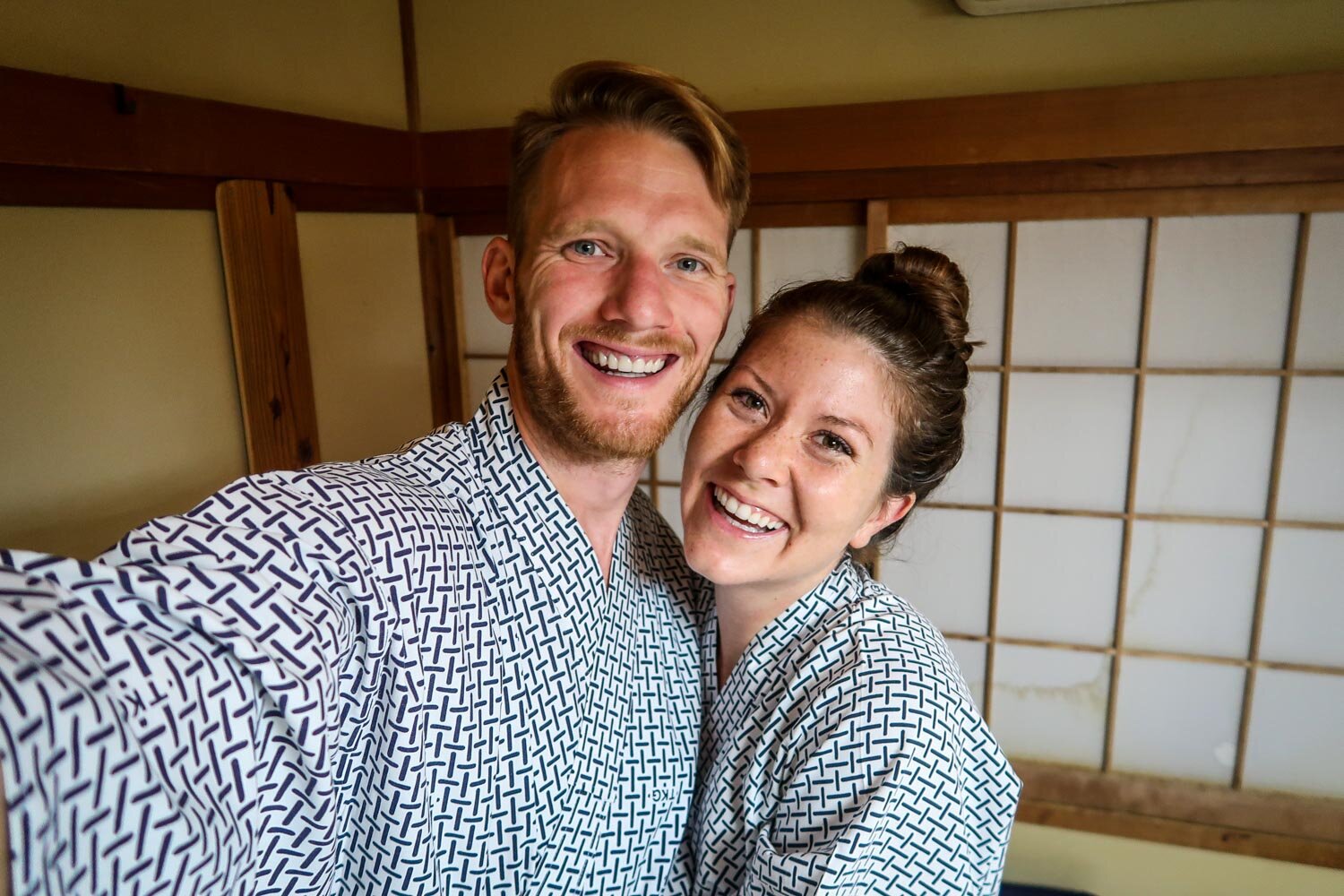
If you have an affinity for Japanese culture, you might like the idea of dressing up in a yukata or kimono for a day.
First off, what exactly is the difference between a yukata and kimono, you ask?
- Kimono – made from silk, more formal, has two collars, generally heavier
- Yukata – typically made from cotton, more casual, lighter weight, worn in the summertime, one collar, more inexpensive to buy as a souvenir
If you’re staying at a ryokan, you’ll likely get to wear a yukata for free, as most provide them for guests to wear in the evenings or after soaking in the onsen. (That’s actually how we got our first taste of yukata life!)
You can also rent a kimono or yukata in most major cities and spend the day exploring in traditional dress.
Rental options range from quick indoor photo sessions to full-day rentals where you can wander around town and even keep the yukata as a souvenir. Check out rental options in Tokyo and Kyoto.
Is it cultural appropriation? We’re not experts, but from what we’ve seen and read, many Japanese people genuinely enjoy seeing visitors embrace their traditional clothing respectfully. This video explores the topic thoughtfully if you want to dig deeper.
40. Visit a national park
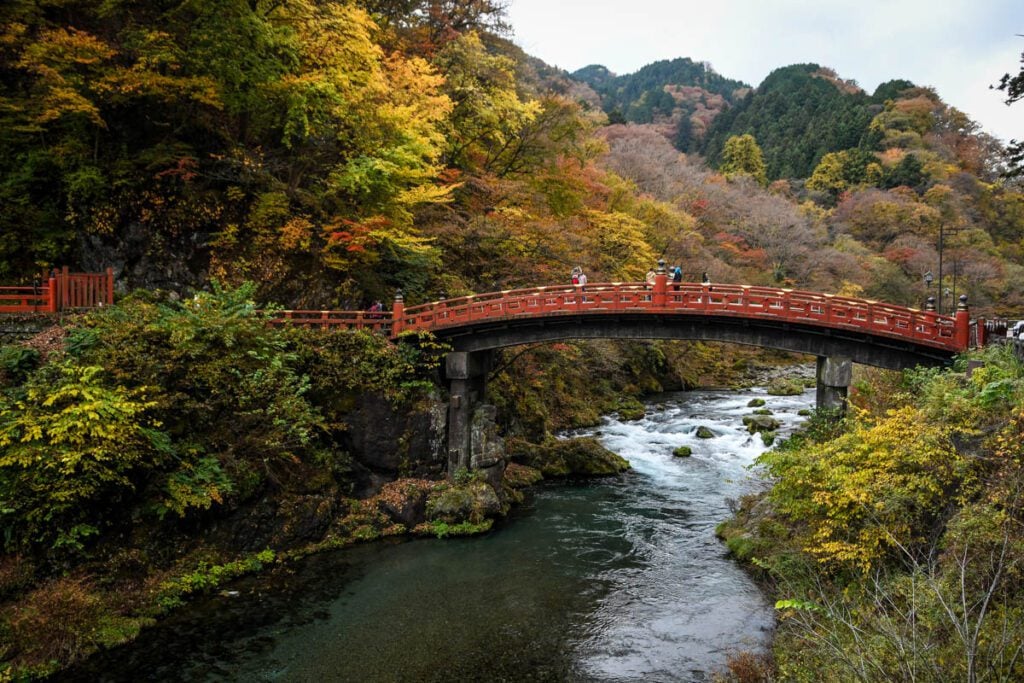
While many people picture densely populated cities when they think of Japan, we think the country is really underrated when it comes to nature.
Japan is home to 34 national parks, and they are all free to enter.
We’ve visited 4 national parks in Japan:
- Kamikochi (part of Chubu Sangaku National Park)
- Nikko National Park
- Fuji-Hakone-Izu National Park
- Yoshino-Kumano National Park
… and there are so many more on our list!
If you like nature, make it a point to include at least one national park in your Japan itinerary. But be sure to do some research into the logistics because some of them can be a bit difficult to access, especially if you’re not driving a rental car.
→ Read Next: Ultimate Guide to Renting a Car in Japan
Psst! You’ve got a serious bucket list now. Our Classic Japan Itinerary takes the best of it and turns it into 14 done-for-you days — with the specific spots, timing, and insider tips that make each one worth the trip. Grab the Classic Japan Itinerary →
Have more time?
If you have more time to explore, there’s lots more to get into. Here are some things still on our personal Japan bucket list for our next visit:
- See the cherry blossoms: Some of our top picks for viewing: Yoshino (Nara), the Fuji Five Lakes region, Maruyama Park (Kyoto), Himeji Castle, and Ueno Park (Tokyo).
- We have a full cherry blossoms in Japan guide to help you plan.
- Go scuba diving: We never thought of Japan as a dive destination, but our friend Corinne, who has been living and diving there for over 2 years, swears it belongs on every diver’s radar.
- She wrote this ultimate Japan diving guide for us, which includes the best diving spots and everything else you should know.
- Go skiing: Japan is renowned for some of the best powder skiing in the world, and getting there in winter specifically for a ski trip is very much a dream of ours. If you’re lucky enough to make it happen, let us know how it goes!
- Read our guide to Japan in winter to know what to expect
- Visit a theme park: Japan’s theme parks are a cut above. We’re big Harry Potter fans, so Universal Studios Japan in Osaka is at the top of our list. Tokyo Disneyland and DisneySea are iconic for Disney fans, and thrill-seekers won’t want to miss Fuji-Q Highland at the base of Mount Fuji, home to some of the world’s most intense roller coasters.
- Attend a festival: If your dates line up, Japan’s festivals are not to be missed. We missed the Sapporo Snow Festival by just 2 days on our first trip and were gutted about it!
- Also worth planning around: Gion Matsuri in Kyoto every July, one of Japan’s oldest and most spectacular festivals featuring elaborate float parades through the historic streets.
How many days do you need in Japan?
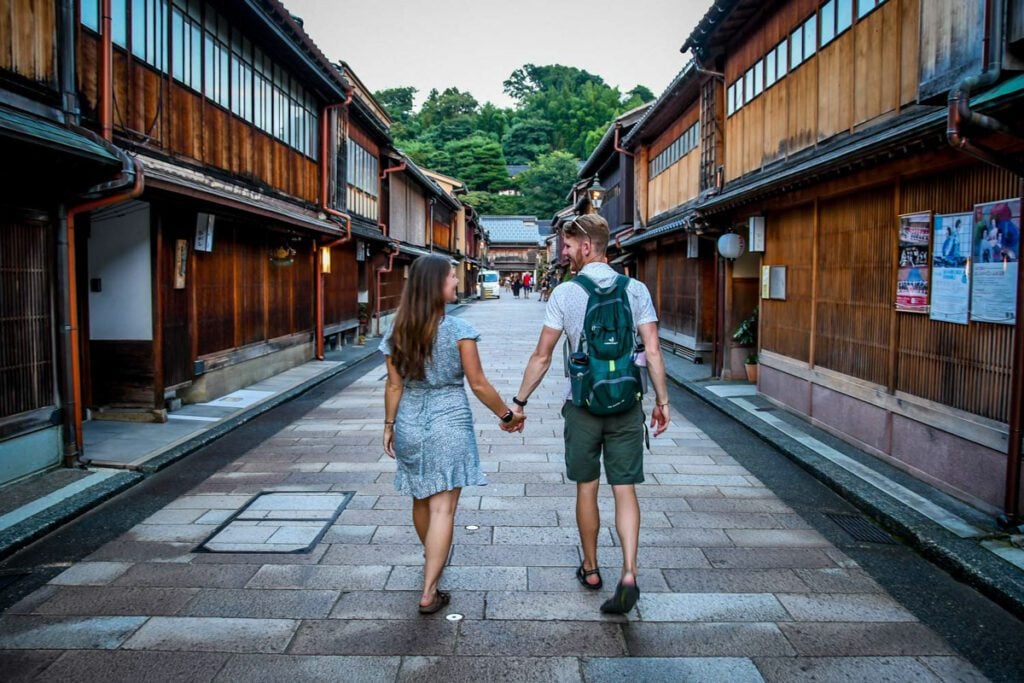
There’s so much to see and do in Japan that it can be overwhelming trying to decide how long your trip should be. For our first trip, we only had one week in Japan. We squeezed in as much as we could and felt like we got a good taste, but it definitely left us wanting more.
Ideally, 2-3 weeks will give you enough time to see iconic and lesser-known sights, as well as recover from a long travel day and potentially a big time difference.
But the ideal duration for your trip depends on several factors, including destinations you want to visit and your travel style. Our guide to how many days to spend in Japan will help you figure out how much time you need based on what you want to do.
Ready to plan your trip to Japan?
After 3 very different trips to Japan and literally hundreds of hours of research, we’ve put together two detailed itineraries to help you make the most of your visit. Whether this is your first time or you’re ready to go deeper, we’ve got you covered.
Classic 2-Week Japan Itinerary — $27
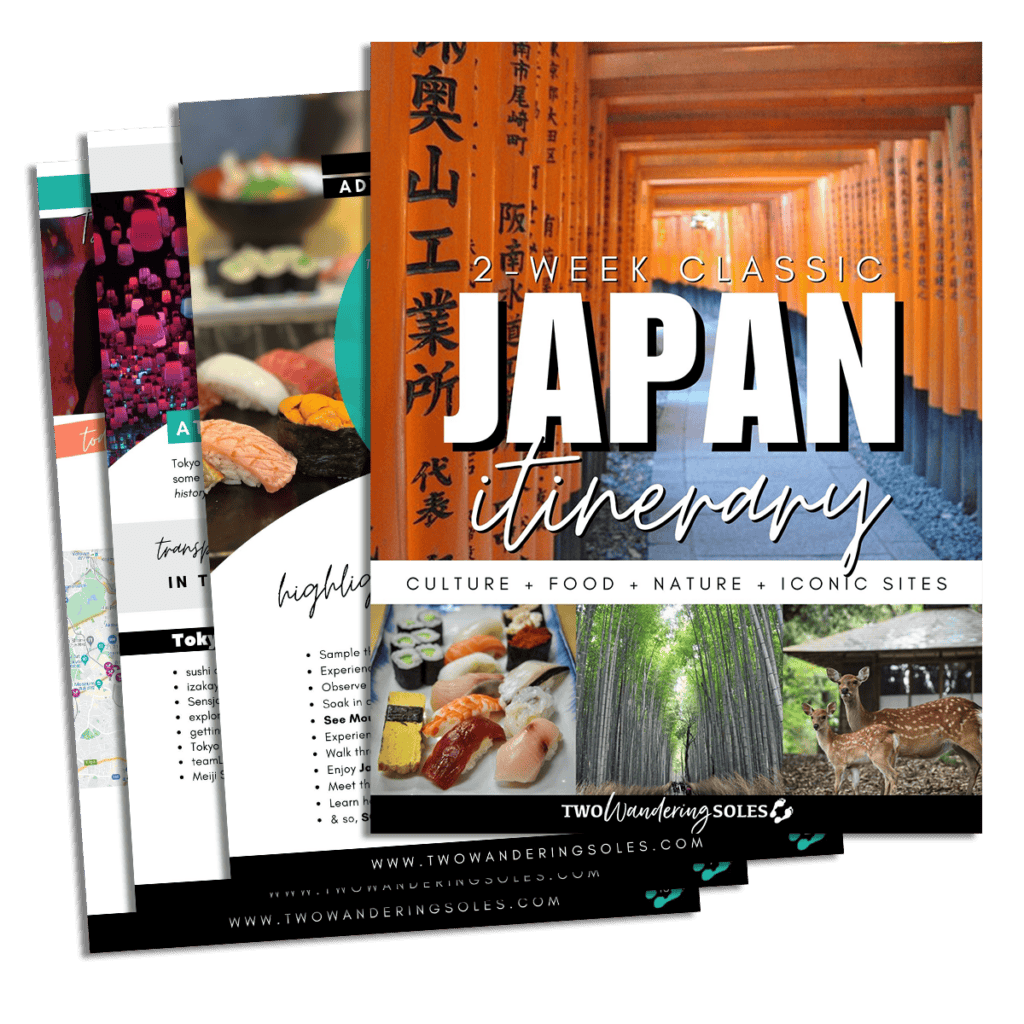
Perfect for first-time visitors, this done-for-you itinerary takes you through Tokyo, Mount Fuji, Osaka, Hiroshima, and Kyoto on the very best route. No guesswork, no hours lost down research rabbit holes — just pack your bags and go!
This 2-week itinerary is packed with insider tips, crowd-beating strategies and hidden gems. Plus our top restaurant picks and hotel recommendations for every destination.
3-Week Hidden Gems Japan Itinerary — $37
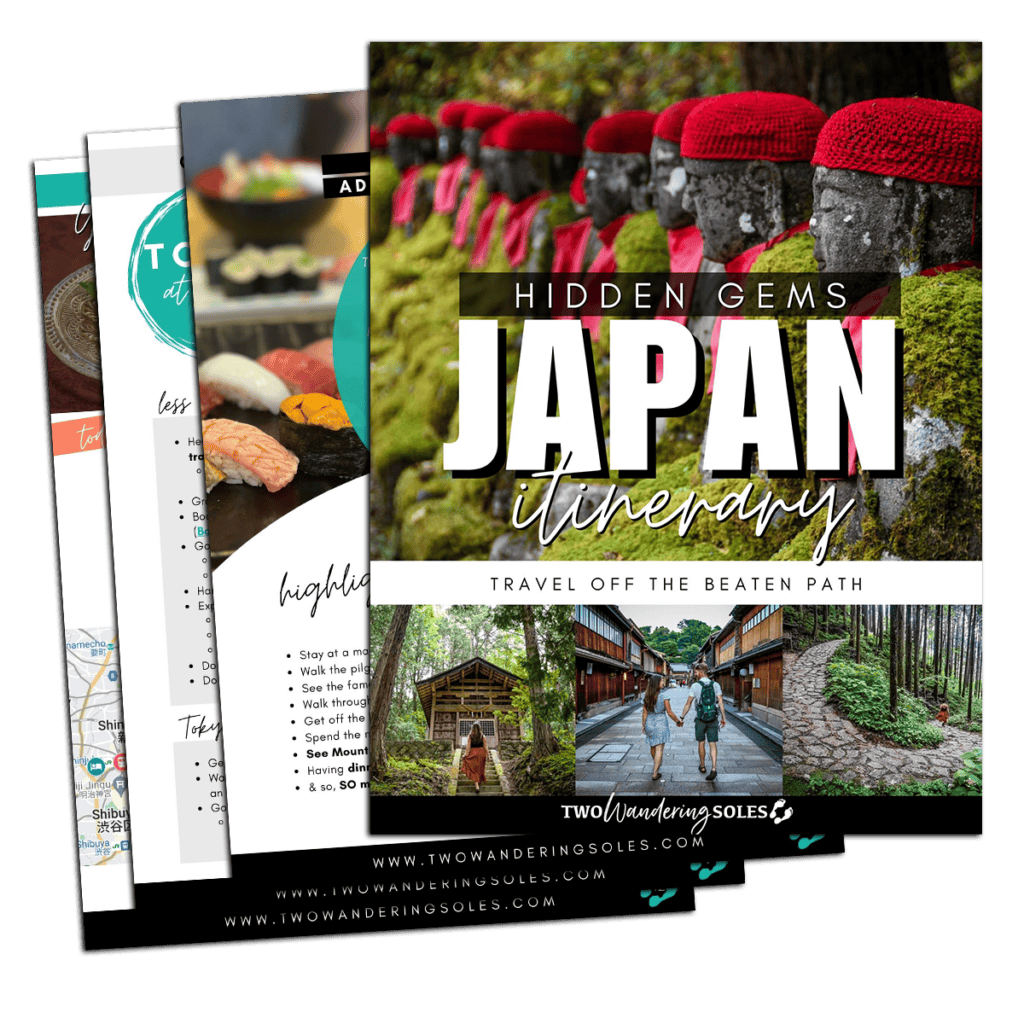
Been to Japan before? Ready to ditch the crowds and see the “real” Japan?
This off-the-beaten-path itinerary takes you through Tokyo, Nikko, Nagano, Kanazawa, Shirakawago, Takayama, Kamikochi, and Magome — places most tourists never make it to, but absolutely should.
Our personal experience in Japan — why trust us?
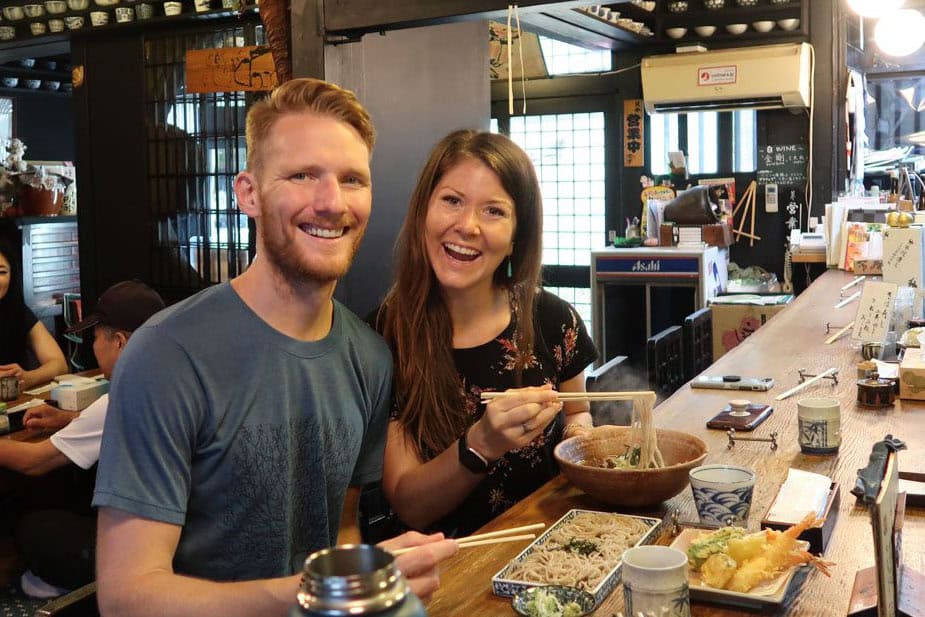
Japan is one of my favorite countries in the world, and we’ve been three times with a never-ending list of reasons to go back. Everything on this list comes from real, firsthand experience, and still we feel like we’ve barely scratched the surface.
What strikes me every time is just how incredibly diverse Japan is. A lot of people are surprised to hear that some of our favorite experiences in Japan had nothing to do with cities. Some of our most memorable moments have been out in nature or in small rural towns, both of which I think are vastly overlooked by most tourists.
We’ve taken cooking classes, gone on food tours, hiked ancient pilgrimage trails, and had immersive cultural experiences that gave us a much deeper appreciation for this country.
Whatever kind of traveler you are and whatever budget you’re working with, Japan has something for you. That’s exactly why we created our Japan itineraries — to help you find the version of Japan that’s made for you.
More Japan planning resources
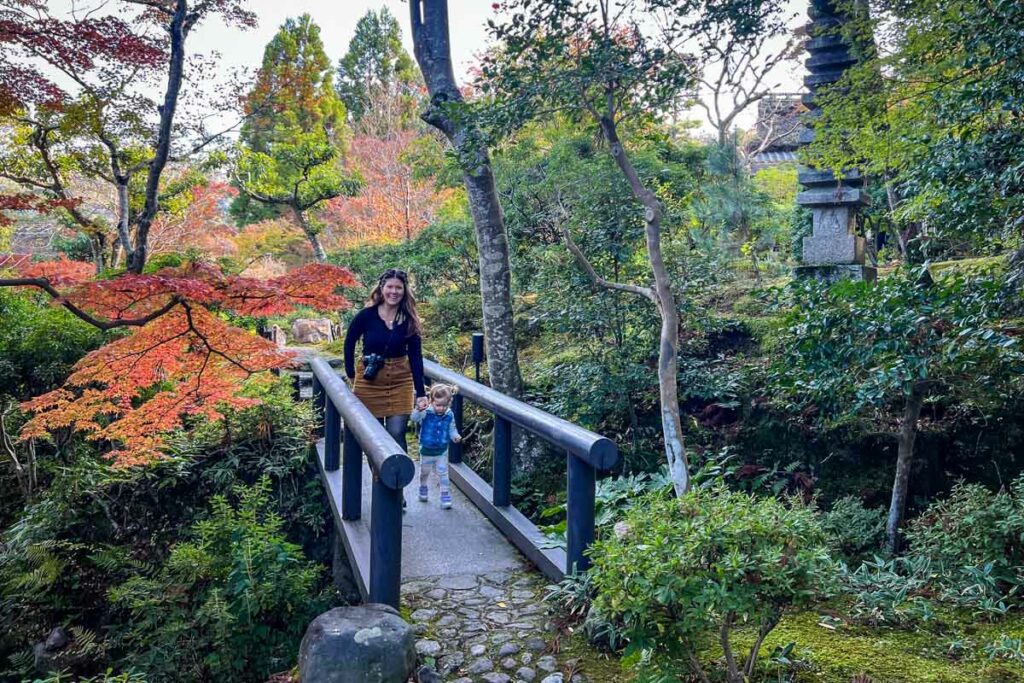
If you’re the type of person that likes to plan your own itineraries, all the power to you! (We honestly love itinerary planning—it’s our job after all.)
We’ve got tons of FREE resources to help you plan your trip to Japan.
Best time to visit Japan
In short, you’ll have the best chance of comfortable weather and fewer crowds in early spring (March – early April) and in autumn (late October – November).
Truthfully there is no best time to visit Japan as each season has its own unique draws and drawbacks.
The ideal time to visit largely depends on your interests, preferences, and itinerary. We have a full breakdown of each season, plus pros and cons in our guide to the best time to visit Japan.
How to get around Japan
Japan’s trains and metros are among the cleanest and most efficient in the world, covering almost the entire country. That said, transportation is one of the biggest expenses to factor into your budget. Check out our JRail Pass guide to figure out whether a pass makes sense for your itinerary.
On our most recent trip we rented a car, and honestly we loved it, especially traveling with our toddler. It gave us the freedom to get off the beaten path and explore places that would have been nearly impossible to reach by public transport.
See our guide to renting a car in Japan for everything you need to know.
Tips for visiting Japan
A bucket list destination for many, Japan can feel extremely foreign for those visiting from other western countries. We’ve traveled to Japan three times now (and counting!) and have gathered some of our top tips to make your visit a bit smoother.
What to pack for traveling to Japan
We know it can be overwhelming packing for a trip to a new destination. That’s why we spent hours creating these super helpful guides full of packing hacks and tips for traveling in Japan that you won’t find anywhere else:
- Our Japan packing guide lists all the essentials (many of which you might not think about), as well as what you should NOT pack for a trip to Japan.
- This article on what to wear in Japan will help you create a perfect capsule wardrobe for every season and let you in on some cultural taboos so you can be sure to dress appropriately.
- With this FREE Japan packing list PDF download, we’ll send checklists straight to your inbox for everything from clothing and toiletries (for both women and men!) to what shoes to pack and extra stuff you may want to have on-hand just in case. Click the image below to get your free copy!
Perfect Japan itinerary
Want the perfect itinerary planned for you?
If you don’t have a ton of time to spend planning your Japan itinerary (or you just don’t find travel planning fun), we’ve got something you might be interested in…
We created the ultimate done-for-you Japan itinerary that is packed full of all sorts of tips we’ve gathered from 3 trips to Japan as well as literally hundreds of hours of research (no exaggeration).
And if the classic route doesn’t have you ready to board a plane, perhaps you’d be more interested in our Japan hidden gems itinerary? Follow this 3-week done-for-you route to get off the beaten path and see the “real” Japan where there are fewer crowds and more unique things to see and do.
Don’t miss your chance to grab our Japan Packing List!
This FREE PDF download includes everything you’re going to want to pack for your Japan trip, including what NOT to bring, plus tons of insider tips!
Just enter your email and we’ll immediately send you access instructions!
Save this article on Pinterest for later!
We want to hear from you!
Which of these epic things to do in Japan is going straight to the top of your bucket list? Are you planning a trip to Japan and still have questions? We’d love to hear from you in the comments below!

Katie Diederichs is the lead writer and co-founder of Two Wandering Soles, where she creates in-depth travel guides, itineraries, and tips designed to help readers plan better trips with confidence. With a background in journalism, photography, and design, she combines thorough research with firsthand experience to deliver clear, practical, and visually driven travel content. As the primary trip planner, Katie turns complex logistics into easy-to-follow advice travelers can actually use.
Good luck 🙂
Japan’s vibrant culture and breathtaking landscapes make it a playground for adventure seekers. From exploring Tokyo’s bustling streets to serene Kyoto temples, your list of ’45 Crazy Fun Things to do in Japan’ is a treasure trove of exciting possibilities! Can’t wait to experience the magic firsthand.
Very nice blog! A lot of ideas where to go and what to see. Planing our trip to japan, and i think we have to add a few more spots to our list =) Thanks a lot!
Amazing! That is great to hear. Have a great trip to Japan!
Absolutely mesmerized by your ’42 Crazy Fun Things to Do in Japan’ article! It’s evident that you’ve delved deep into the heart of Japan’s vibrant culture and uncovered its most whimsical facets. Some of these activities were totally off my radar, but now they’re firmly on my must-do list for my next Japan escapade. Thank you for this kaleidoscopic journey through one of my favorite destinations!
A beautiful blog with lots of Infos! Thank you!
Wow, I am eager to visit Japan when I reach adulthood because, at the age of ten, I have compiled a list of activities spanning three full pages. Much of my itinerary has been sourced from this website, which has been immensely helpful. Thank you and goodbye!
This post is so cool! I don’t think I will be going to Japan anytime soon but I must say your guy’s blog make me feel like I’m there just by reading!
Thanks so much, Alex! What a compliment!
Good post.. well written
wow! i want to go to japan when i grow up cuz im ten, and i have three entire pages of things i wanna do. most of it is on this website! this helped me out a lot bye!!
This story was fantastic, full of great and very useful information. Such fun ideas! And so helpful to us as we plan our trip. Thanks so much!
magnificent issues altogether, you simply gained a emblem new reader. What could you suggest about your submit that you simply made a few days ago? Any sure?
Thank you for the “ travel information” – we are thinking of our first trip to Japan – we are looking to spend around 20/25 days in Japan . Unsure if we should take a guided tour or Trust our instincts like we have done in our past travels. Post COVID and now 2 years older and over 70 years of age – we are keen to experience a fun and vibrant culture.
Fingers crossed , borders and situations will improve in 2022.
Nice blog with great post, Thanks for sharing!
Excellently helpful blog as per the usual. I’m still researching & planning my trip to Japan for next March. Thanks again for being so clear and open with the information!
Lovely! Congratulations
I’ve been a regular annual visitor to Japan since 1985. All my friends and colleagues asked me and were puzzled for decades (80s/90s) – why on earth would I or anybody visit Japan for a holiday – as it was just not considered the ‘cool destination’ back in the 1980s/90s. But now…. it’s crazy with over tourism in many parts.